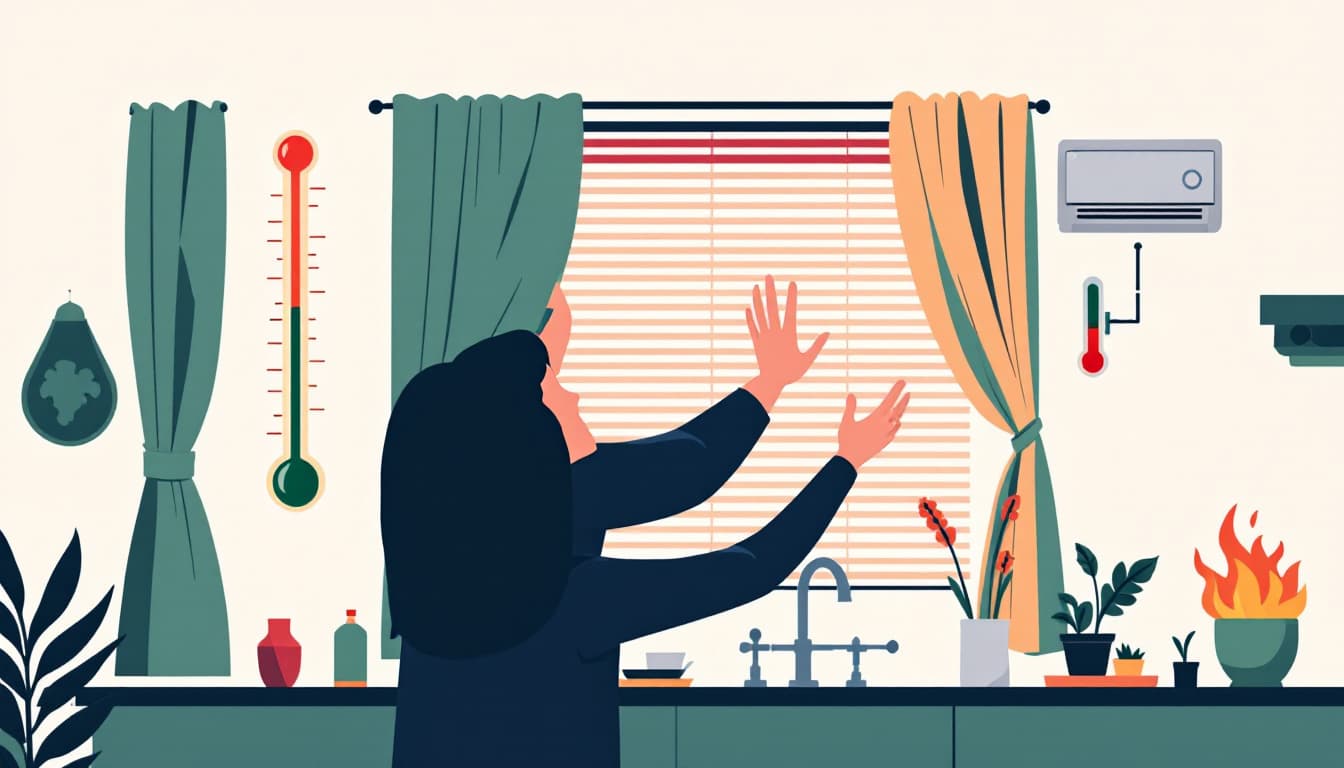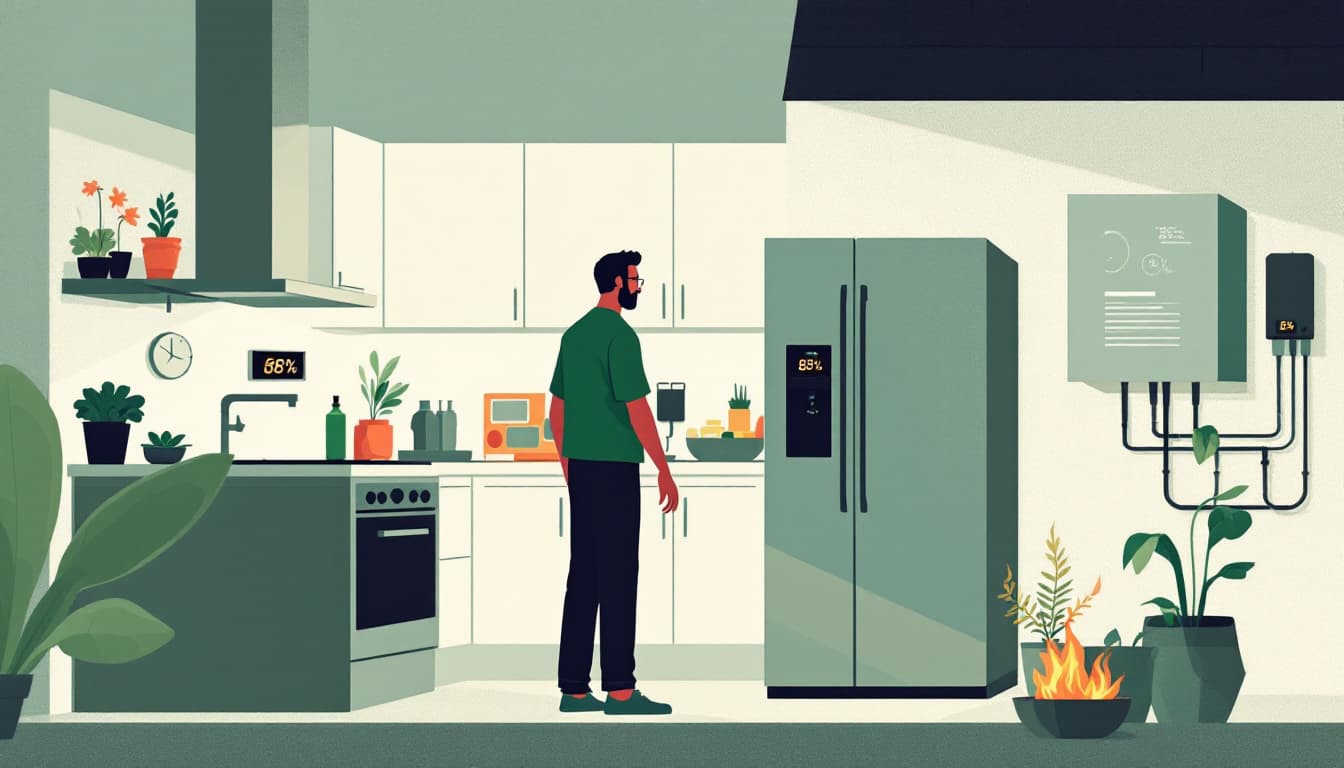
Picture a family in Sacramento in late July. They bought a 10-kilowatt-hour home battery two summers ago — not the cheapest one, not the most expensive. They tested it once, right after installation. On day two of a five-day heat event, the battery ran down by 10 a.m. The air conditioner had been cycling since midnight.
They were not naive people. They had read the product specs. They just hadn't done the math the right way.
The gap between rated and useful
Every battery storage system sold to homeowners carries a nameplate capacity — the total energy it can store under ideal lab conditions. What the marketing materials treat as a footnote is the usable capacity, which is typically 80–90% of nameplate once you account for the depth-of-discharge limits built in to protect battery chemistry.
A 10 kWh unit is realistically a 8–9 kWh unit before you've turned anything on.
That's not a scam. It's just physics. But the second number — the one that actually matters — rarely appears in bold on the product page.
Then there's the load side of the equation, which is where most households make their real error.
A central air conditioning system pulling 3–4 kilowatts runs roughly 30–40 minutes out of every hour during a heat event. Call it an average draw of 1.5–2 kWh per hour once you factor in cycling. Add a refrigerator (roughly 1–1.5 kWh per day, but more during a warm house event), a few lights, phone charging, and a modem — you're looking at somewhere between 2 and 3.5 kWh per hour of actual consumption when it's 100°F outside and the grid is down.
At that rate, a realistically usable 8 kWh battery lasts two to four hours.
Not two days. Not overnight. A long evening.
Why households get this wrong
Part of the problem is that battery backup is often marketed alongside solar as an independence story — "energy freedom," "your home running on sunshine." That framing encourages buyers to think about average conditions, not peak stress conditions. On a mild spring day with rooftop solar recharging the battery by noon, that story is true. On day two of a grid outage during a heat dome, with no solar generation at night, it isn't.
The other part is that preparedness culture has a bias toward the dramatic. We plan for weeks-long grid collapses (rare, and the subject of our earlier piece on why you shouldn't obsess over them) more than we plan for the 18-to-36-hour outages that actually hit tens of thousands of households each summer. Those shorter events are long enough to spoil a full refrigerator and freezer — a $300–600 loss — and dangerous enough to be a medical emergency for anyone in the home who is elderly or on certain medications.
An 18-hour outage is unglamorous. It's not a survival story. It's a slow drain on your finances and your safety margin, and it's the kind of event that a correctly sized and correctly understood battery could actually handle.
Walking the math for a real household
Say you want true overnight coverage: 10 hours, air conditioning running at moderate duty cycle, refrigerator, basic lighting and devices.
Conservative estimate: 18–22 kWh of consumption.
To cover that from storage alone, you need roughly 22–25 kWh of usable capacity — meaning 25–30 kWh of nameplate capacity, depending on your system's depth-of-discharge ceiling. That's two or three stacked battery units, depending on the product, not one. At current installed prices, that's a significant investment.
If that's out of reach, the more honest planning question becomes: what can you protect with what you have?
One battery unit + a window AC unit in a single bedroom (drawing roughly 0.5–1 kWh per hour) + the refrigerator on a managed schedule = 8–12 hours of meaningful coverage. That's a survivable night for most households, with medication staying cold.
What to do this week
- Pull your last three utility bills and identify your average daily kWh consumption during summer months. Most utility portals show this.
- Find the "usable capacity" spec for your current battery or any unit you're considering — not the nameplate number.
- Calculate your critical load: refrigerator + one window AC unit + medical devices if applicable. Most homeowners have never done this calculation.
- If you have solar + battery, confirm with your installer that your system is configured for "islanding" — some grid-tied systems shut down during outages by default as a safety measure, defeating the backup purpose entirely.
- If you don't have battery storage, a 2,000-watt inverter generator ($400–700) and a 5-gallon fuel can with a fuel stabilizer gives you the equivalent of 8–10 hours of critical load coverage for a fraction of the cost, with the tradeoff of fuel management and outdoor operation requirements.
The bigger picture
Battery storage is a genuinely useful technology. It will continue to get cheaper and more capable. But buying one without understanding the consumption math is the same mistake as buying a three-day water supply and calling yourself prepared for a two-week event.
The slow-leak risk here isn't the battery failing — it's the household operating on a false sense of coverage. That false sense is what causes people to skip the manual precautions (pre-cooling the house, moving medications to a cooler, checking on elderly neighbors) because they believe the equipment has it handled.
Equipment doesn't handle anything. Households do, when they've done the math first.