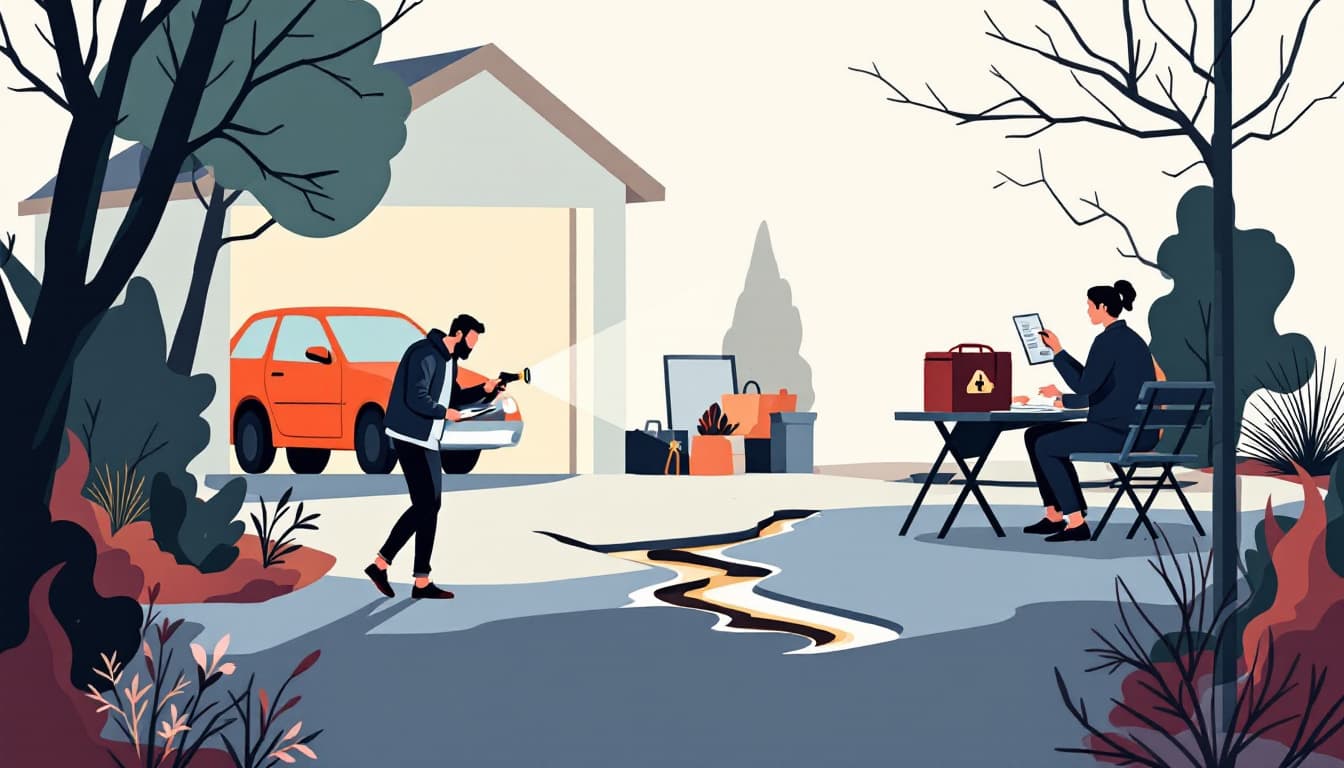
A concrete slab on US 69 near Greenville heaved upward this week under extreme heat, forcing a lane closure and drawing a TxDOT statement, according to a report from WFAA. The mechanism is straightforward physics: concrete expands as it heats, and when slabs have nowhere to go, they push against each other and pop. What made this worth noting is that it happened on a major state highway, not a forgotten county road, during what TxDOT is calling extreme heat conditions.
That is the signal. The news story covers the lane closure. It doesn't cover what happens to your household when roads fail during the part of summer when you are most likely to need to move quickly.
What's actually changing
Texas summers have always tested infrastructure, but the combination of higher sustained temperatures and aging road stock creates cumulative stress that maintenance schedules don't fully absorb. TxDOT manages roughly 80,000 centerline miles of roadway — the largest state highway system in the country — and heat-related pavement distress is not rare. What changes the calculus for households is that failures now cluster during the same windows when evacuation orders, medical emergencies, or power outages are also most likely.
A buckled road is not just an inconvenience. It can blow a tire, damage a rim, or cause a driver to swerve at highway speed. If your family has an emergency departure plan, and that plan runs along a specific route, you have a single point of failure you have probably never tested in August.
The secondary issue is your own property. Driveways, garage aprons, and the concrete slabs under AC condenser pads face the same physics as highway slabs. A cracked or heaved driveway doesn't make news, but it can trap a car, damage a tire, or create a trip hazard for the person in your household least able to recover from a fall.
What we'd actually do
Map at least two exit routes from your neighborhood, and check their current condition now. Pull up TxDOT's online road condition map or the DriveTexas app and look at your primary and backup routes. Do this before you need them. If you live in Hunt County or nearby areas north of Dallas, US 69 itself may be on your mental map as a route east. Know the detour. Save it in your phone offline, because cell service compresses during regional emergencies.
Check your tires before the next long drive, not after. Heat accelerates tire degradation, and underinflated tires are more vulnerable to impact damage from a road irregularity. Tire pressure drops roughly one PSI for every 10°F of temperature change — check cold pressure in the morning, not after the car has been sitting in a Texas parking lot. If your tires are more than four years old, look at the DOT date code on the sidewall. Age matters independent of tread depth.
Walk your concrete driveway or garage slab this week. Look for cracks wider than a quarter-inch, lifted edges between slabs, or sections that rock when you step on them. These are not cosmetic problems in August — they worsen fast under repeated heat cycling. If you have an attached garage, a failed apron can trap the door track. A $15 tube of concrete crack filler from any hardware store is not a permanent repair, but it slows water infiltration that accelerates freeze-thaw damage come January.
Put a paper copy of your emergency routes in the glove box. Phones die. Towers go down. A single laminated sheet with two routes out of your area, key phone numbers, and the address of wherever you'd go costs nothing and takes twenty minutes to make. The Greenville closure was a lane restriction; a larger failure or a concurrent weather event could mean a full detour in low-visibility conditions.
Talk to elderly or mobility-limited neighbors about their plans. Road failures disproportionately strand people who don't have flexible departure windows. If you know someone on your street who would struggle to reroute on short notice, a five-minute conversation now is more useful than a rescue attempt later.
The goal here isn't to treat every cracked highway slab as a harbinger. Roads buckle in Texas summers; they have before and will again. The point is that infrastructure stress and household stress compound during the same seasonal windows, and the families who come through August intact are the ones who did five minutes of boring maintenance and route-planning in early August rather than improvising in the middle of it.
Durability doesn't look dramatic. It looks like knowing which road to take when your first choice is closed.