A flash flood warning for eastern Shelby County, reported this week by FOX13 Memphis, lasted a matter of hours. For most households in the affected area, it passed without incident. That's exactly the condition under which families stop taking these warnings seriously — and start making the decisions that get people killed.
Tennessee sits at a geographic crossroads that makes it one of the more flood-prone states in the country, and not just along the Mississippi corridor. The Cumberland River system, the tributaries feeding the Tennessee River, and the creek networks running through the Shelby County bluffs can all rise fast. The Mid-South's clay-heavy soils shed water quickly when they're already saturated, and summer convective storms — the kind that drop three inches in ninety minutes — are a routine feature of Tennessee June through September.
Flash floods do not behave like river floods. There is no multi-day forecast window. There is no visible crest coming downstream. The NOAA Weather Prediction Center defines flash flooding as flooding that occurs within six hours of the rainfall event. In practice, it often happens faster than that.
What's actually different about where you live
The phrase "flash flood warning" covers enormous variety. A warning for eastern Shelby County, which includes suburban and semi-rural terrain east of Memphis proper, is a different situation than one for downtown Nashville's Cumberland River floodplain or a warning in a steep-sided holler in Carter County in the Appalachian region.
What matters is your specific address:
- Are you in a FEMA-designated Special Flood Hazard Area? The FEMA Flood Map Service Center (msc.fema.gov) lets you look this up by address. It's free, takes four minutes, and most Tennessee homeowners have never done it.
- Do you have a creek, drainage ditch, or culvert within a quarter mile? These are the first overflow points in a fast-rain event.
- Is your property downslope from a parking lot, road, or roof-heavy development? Impervious surface upstream of your home accelerates runoff significantly.
FEMA maps are also known to underrepresent actual flood risk in some Tennessee counties — they are based on historical data and don't fully account for land-use changes or shifting precipitation patterns. If your neighbors have flooded and your map says you're fine, your map may be wrong.
What we'd actually do
Check your specific address on the FEMA flood map this week, then cross-reference it with your insurance policy. Standard homeowners insurance in Tennessee does not cover flood damage. Flood insurance through the National Flood Insurance Program or a private carrier requires a separate policy, and most policies have a 30-day waiting period before they take effect. If a warning was issued in your county this week and you don't have flood coverage, you cannot buy it in time to help you for the next storm. Do the lookup now, not after the next warning.
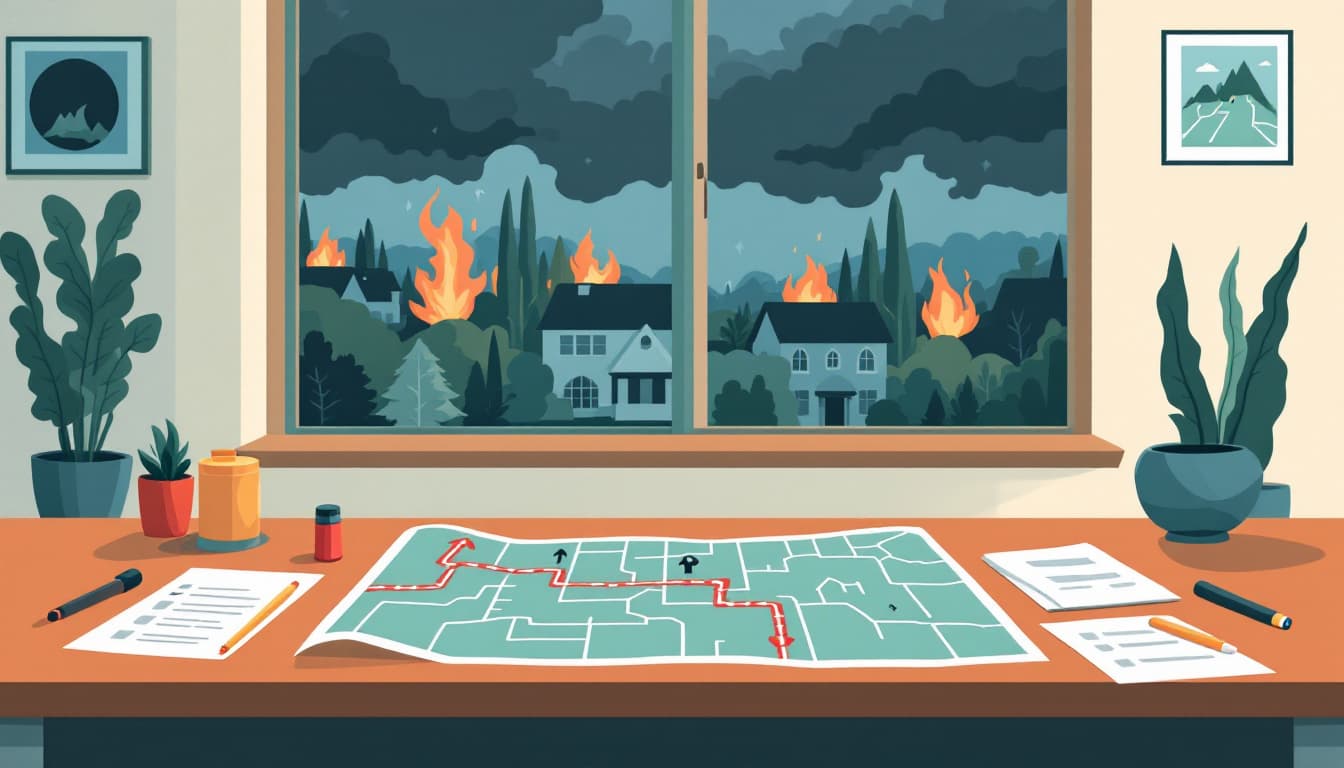
Build a 90-minute response habit, not a 90-item bug-out bag. The useful prep for flash flooding is simple: know the two routes out of your neighborhood that don't cross low-water bridges, keep your car parked facing out when heavy rain is forecast, and have one dry bag or waterproof container with your critical documents (insurance card, IDs, a small amount of cash) that can be grabbed in under two minutes. The Tennessee Emergency Management Agency recommends having an evacuation plan that doesn't rely on GPS alone — low-water crossings that look passable have killed people at just 12 inches of depth.
Know the difference between a Flash Flood Watch and a Flash Flood Warning. A Watch means conditions are favorable for flash flooding — you have time to prepare. A Warning means flooding is occurring or imminent — you act immediately. A large number of flood fatalities in Tennessee involve people who treated a Warning the way they treat a Watch.
Sign up for Shelby County's emergency alert system if you're in that area — or your county's equivalent. Every Tennessee county has an emergency notification system, most tied to Wireless Emergency Alerts and an opt-in text/email service. The opt-in version gives more specific, earlier information than the broad wireless alert. Search "[your county] TN emergency alert signup" — it takes three minutes and costs nothing.
If you rent, talk to your landlord about what's upslope. Renters have almost no flood insurance penetration nationally, and Tennessee is no exception. Renters insurance with flood riders exists and is inexpensive relative to the cost of replacing a household's worth of belongings after six inches of water moves through a ground-floor apartment.
The bigger picture
Flash flood warnings will keep getting issued in Tennessee. The state's topography and summer storm patterns guarantee it. The goal here isn't to live in low-grade fear of every forecast — it's to complete a small set of one-time actions (map check, insurance review, alert signup, document bag) that remove most of your exposure to the worst outcomes. That's durability. It takes an afternoon, not a lifestyle.