A creek in Cocke County or a drainage channel running through a Knox County subdivision looks harmless in June. By mid-July, after back-to-back rain events pile up on already-saturated Appalachian soil, those same channels can overtop their banks in under an hour. That is the situation East Tennessee households are sitting in right now.
WVLT issued a First Alert this week for continued heavy rain and elevated flood risk across East Tennessee. The coverage is accurate as far as it goes. What it doesn't cover is what a household in Sevier, Blount, Hamblen, or Washington County should actually be doing before the next band arrives.
What's actually changing
East Tennessee's terrain concentrates risk in ways that flat-state residents don't face. The French Broad, Nolichucky, and Holston river systems drain large upstream watersheds, and when those watersheds get consecutive rainfall events, downstream neighborhoods feel it fast. The Tennessee Valley Authority manages reservoir levels on the main-stem rivers, but tributary creeks and roadside drains are not managed — they respond directly to whatever falls upstream.
The core problem in July is antecedent soil moisture. Ground that absorbed June rains holds less new water before runoff increases. Flash flooding, the kind that moves vehicles and cuts roads, requires less total rainfall when the soil is already at capacity. The National Weather Service office in Morristown, which covers much of East Tennessee, has been tracking this pattern closely, and their flash flood guidance products — available free at weather.gov — are more precise than broadcast alerts.
This is not a catastrophic scenario unique to 2026. Flooding is East Tennessee's most common and most costly natural disaster, full stop. What changes with a sustained wet pattern is how little additional rain it takes to push a marginal situation into a dangerous one.
What we'd actually do
Check your specific address on the FEMA Flood Map Service Center before this weekend. Go to msc.fema.gov, enter your address, and look at your flood zone designation. If you're in Zone AE or Zone A, you are in the 1-percent-annual-chance floodplain, and your risk this week is not theoretical. If you're in Zone X, you're lower-risk but not zero-risk — a significant share of flood claims come from Zone X properties. This takes five minutes and costs nothing.
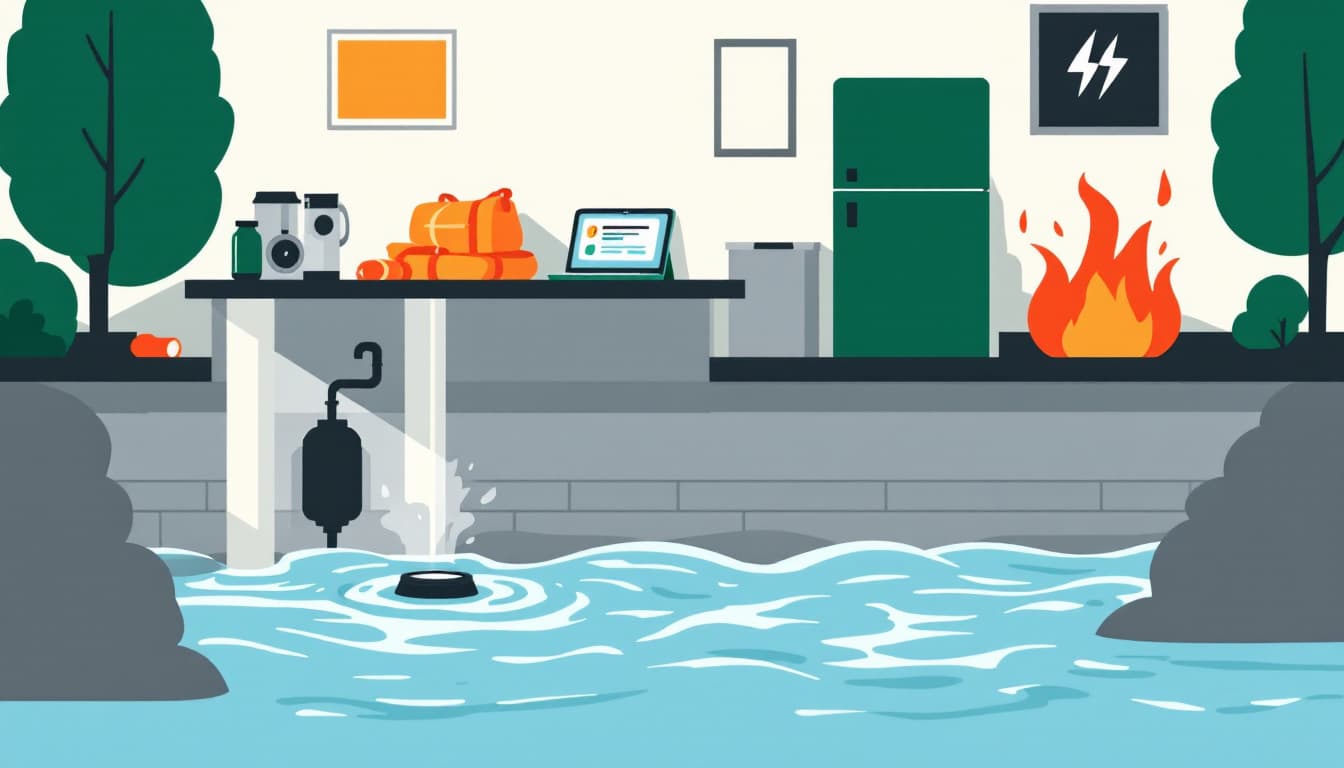
Locate your main water shutoff and your electrical panel tonight. In a fast-rising flood, the sequence that matters is: grab people and pets, then kill power to the affected area if you can do it safely, then exit. Many households in East Tennessee's older housing stock — particularly in Morristown, Newport, and Greeneville — have panels and shutoffs in basements or crawl spaces that become inaccessible once water enters. Know now where yours are and whether you can reach them from above-grade.
Move critical documents and irreplaceable items above the 30-inch line. Birth certificates, passports, medication lists, insurance policies, and external hard drives should not be in a basement or on a low shelf. A waterproof document bag costs less than $20. Put it on a high closet shelf or take it with you when you leave. Paper records destroyed by flooding cannot be recovered quickly, and replacing them during a declared disaster is a slow, frustrating process.
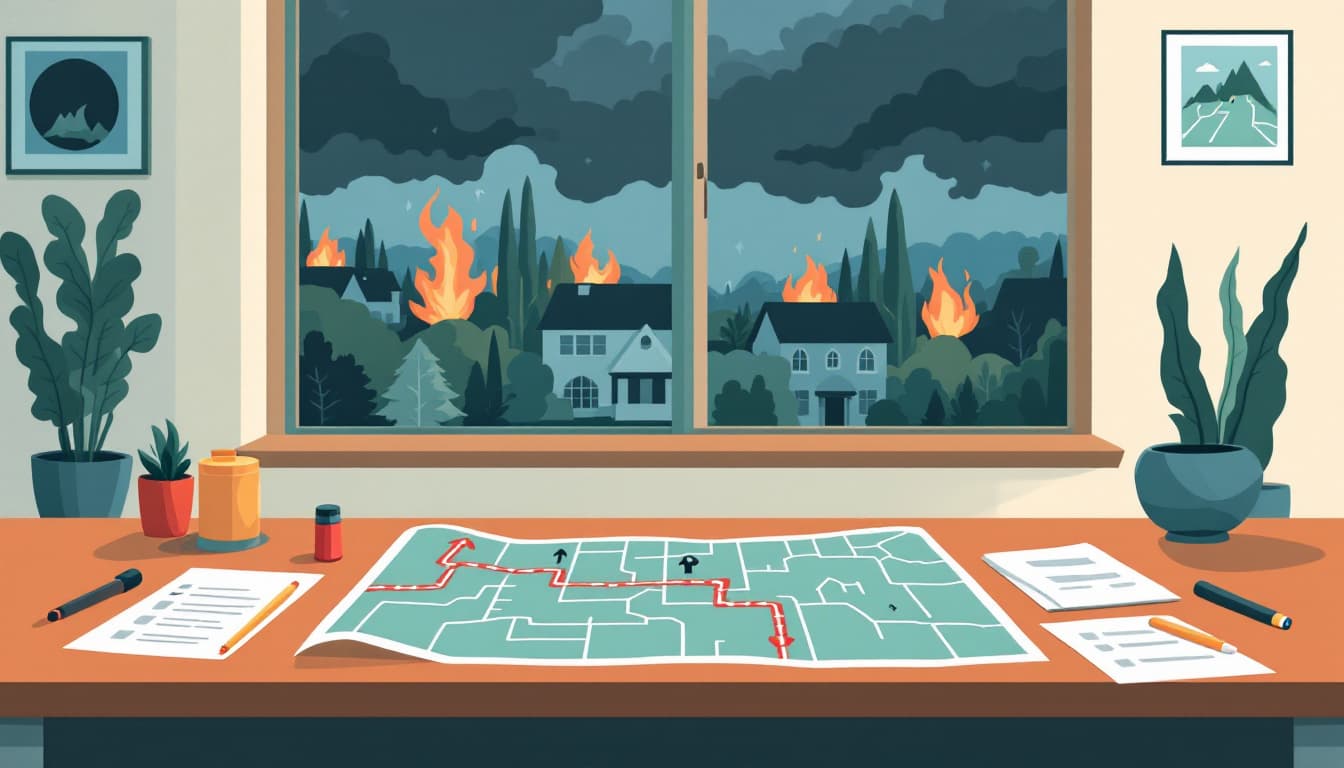
Pre-identify two exit routes from your neighborhood. East Tennessee road networks are heavily dependent on creek-adjacent roads and low-water bridges. TN-32, portions of US-411, and dozens of county roads in the Foothills area flood before surrounding neighborhoods do, which can trap residents. Pull up Google Maps now, identify your default route, and note the alternative. Tell everyone in your household both options.
Keep your vehicle's gas tank above half. This is the simplest, most underrated flood-preparedness action. Evacuation delays often happen not because roads are blocked but because someone needs to stop for gas during an emergency. In a regional flood event, gas stations lose power. A half tank or better costs nothing extra over time and eliminates one category of problem entirely.
The bigger picture
Tennessee Emergency Management Agency (TEMA) maintains real-time incident tracking and county-level emergency declarations at tn.gov/tema. Bookmark it. Sign up for your county's emergency alert system — most East Tennessee counties use CodeRED or a similar platform, and registration is free.
Flood preparedness is not about fear. It is about reducing the number of decisions you have to make under stress when a creek is rising faster than the news can report it. Most of the work happens on a dry Tuesday, not in the middle of a storm.
The households that come through flood events with the least disruption are not the ones with the most gear. They're the ones who knew their risk, knew their routes, and had already moved the stuff that mattered.