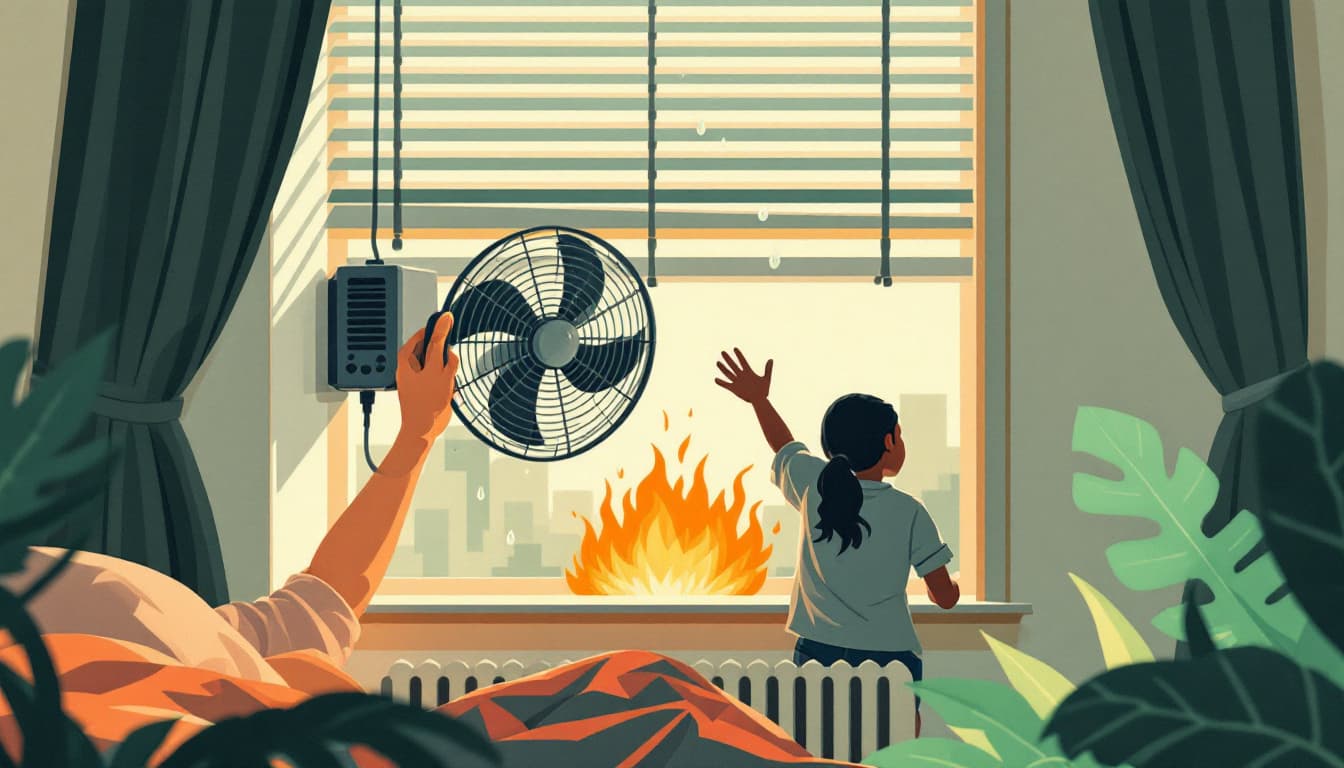
A report this summer from The Cool Down described a Tennessee tenant whose apartment climbed above 90°F after her air conditioning broke during a heat wave — and who had little immediate recourse to fix it. The story is frustrating on its surface. It gets more frustrating when you understand why it keeps happening.
What Tennessee law actually says — and doesn't
Tennessee's landlord-tenant law requires rental units to be "habitable." It does not set a maximum indoor temperature. The Tennessee Uniform Residential Landlord and Tenant Act (which applies in counties that have opted into it, including Shelby, Davidson, Knox, and Hamilton) requires landlords to maintain "reasonable" heating and cooling systems, but the word "reasonable" has no numerical floor or ceiling attached. Counties outside the opt-in list operate under common-law standards that are even murkier.
That gap is not a bug someone forgot to fix. It is a structural feature that renters have absorbed the cost of for decades. During a Memphis or Nashville heat event — when overnight lows stay above 75°F and daytime humidity makes 88°F feel like 102°F — a broken A/C unit is not a minor inconvenience. It is a health event. The CDC links extreme indoor heat to cardiovascular stress, heat exhaustion, and death, particularly in adults over 65 and children under five.
Tennessee also sits in a climate corridor that has seen its number of days above 95°F increase measurably over the past two decades, according to NOAA historical records. That trend is not reversing.
What's actually changing right now
This summer has already produced prolonged heat events across Middle and West Tennessee. When demand spikes, HVAC technicians book out. Parts backorder. A landlord's "I've called someone" timeline stretches from two days to two weeks. Meanwhile, the tenant is sleeping in a unit that holds heat like a car with the windows up.
The other change worth tracking: utility costs. TVA residential rates have increased multiple times in the past three years. Running a portable A/C unit or window unit as a backup costs real money — typically $50 to $90 per month in additional electricity at current TVA rates during peak summer use. That math matters when you're deciding whether to buy one before you need it.
What we'd actually do
Document your unit's current A/C condition in writing, today. Send your landlord or property manager an email — not a text — stating that you are confirming the A/C is functional. If it's already broken or struggling, this email starts your paper trail. Tennessee courts look for documented notice before awarding rent escrow or repair-and-deduct remedies.
Know which statute applies to your county. Pull up the Tennessee Attorney General's tenant rights summary online and check whether your county is an opt-in jurisdiction under the URLTA. If it is, you have stronger grounds to demand timely repair. If it isn't, your path is slower and runs through civil court. Knowing this now means you're not learning it at midnight during a heat event.
Own at least one window unit or portable A/C you can deploy without landlord permission. A basic 5,000–8,000 BTU window unit costs $150–$250 at most hardware stores and can make a single bedroom survivable. This is not a luxury item in Tennessee summers. Treat it like a smoke detector — something you own regardless of what the building provides.
Identify your county's designated cooling centers before you need them. Every major Tennessee county — Shelby, Davidson, Knox, Hamilton, and most others — maintains cooling center locations updated each summer, typically through the county health department or emergency management agency website. Find the nearest one to your home and your workplace. This takes ten minutes and costs nothing.
If your A/C fails, formally request repair in writing within 24 hours. Under the URLTA, once a landlord receives written notice of a condition affecting habitability and fails to act within a reasonable timeframe (courts have generally read this as 14 days for non-emergency conditions, shorter for genuine health hazards), tenants gain remedies including repair-and-deduct up to $500 or one month's rent, whichever is less. That's a limited tool, but it's the one Tennessee gives you.
The bigger picture
A single broken A/C story out of Tennessee is not a signal that society is collapsing. It is a signal that the systems renters depend on — landlord responsiveness, HVAC supply chains, utility affordability — have thin margins when heat stress peaks simultaneously. Durable households don't wait for those systems to fail before building a single layer of independence: a window unit in storage, a written communication habit, a list of cooling centers bookmarked on your phone.
None of that is dramatic. It's the opposite of dramatic. That's the point.