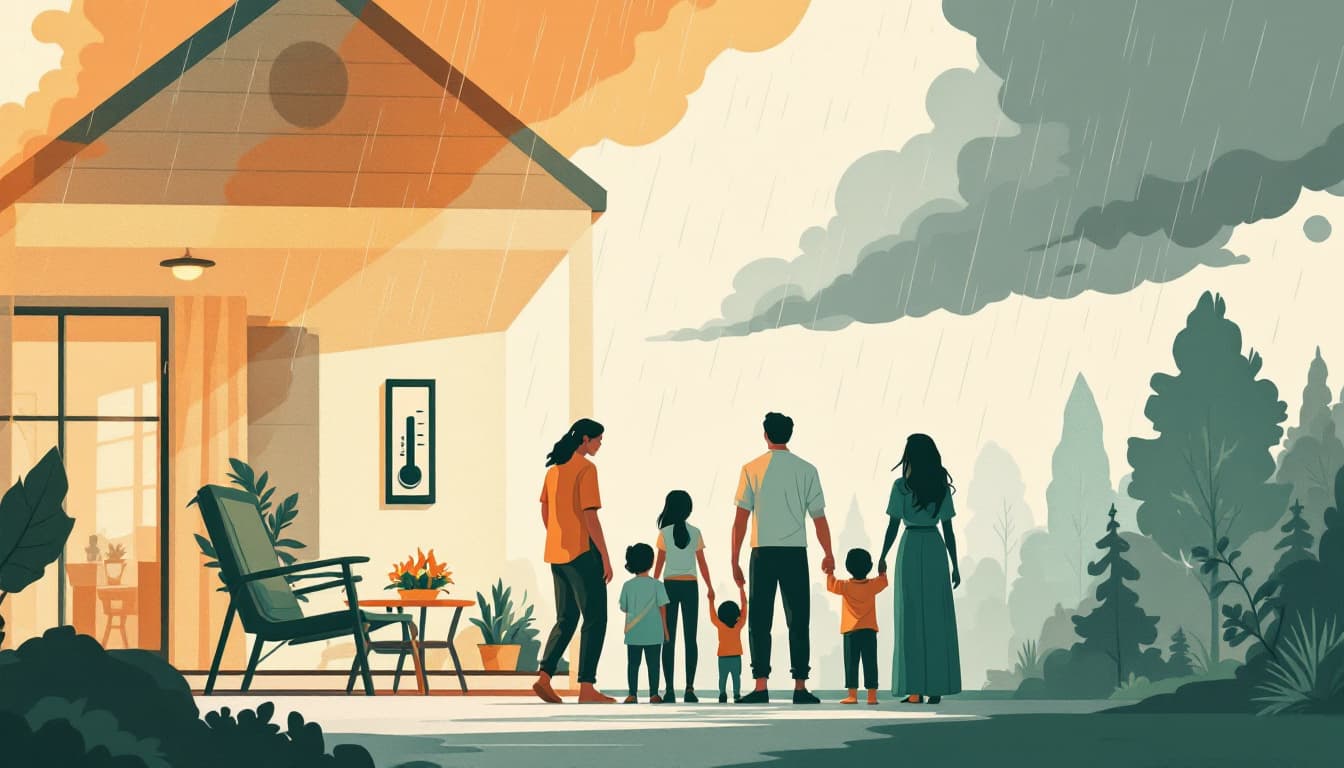
A CBS News report this week put three words together that no South Florida household should ignore: heat, flooding, and wildfire smoke — simultaneously, the same week. Each one is a manageable problem on its own. All three at once is a systems problem, and that's where most households' prep quietly breaks.
What's actually happening
South Florida is no stranger to brutal June heat or afternoon deluges. But wildfire smoke arriving at the same time as a flooding rain pattern is not a typical combination, and it collapses some of the ordinary coping strategies.
Normally, you manage dangerous heat by opening windows at night and circulating air. You can't do that when air quality is degraded by smoke. Normally, you manage flooding risk by moving freely — getting family members out of low-lying areas, running errands early. You can't do that safely when heat indices push conditions toward heat stroke within 30 minutes of outdoor exertion. And if you lose power — which FEMA data consistently shows is the most common consequence of severe Florida weather events — all three problems get worse at the same time.
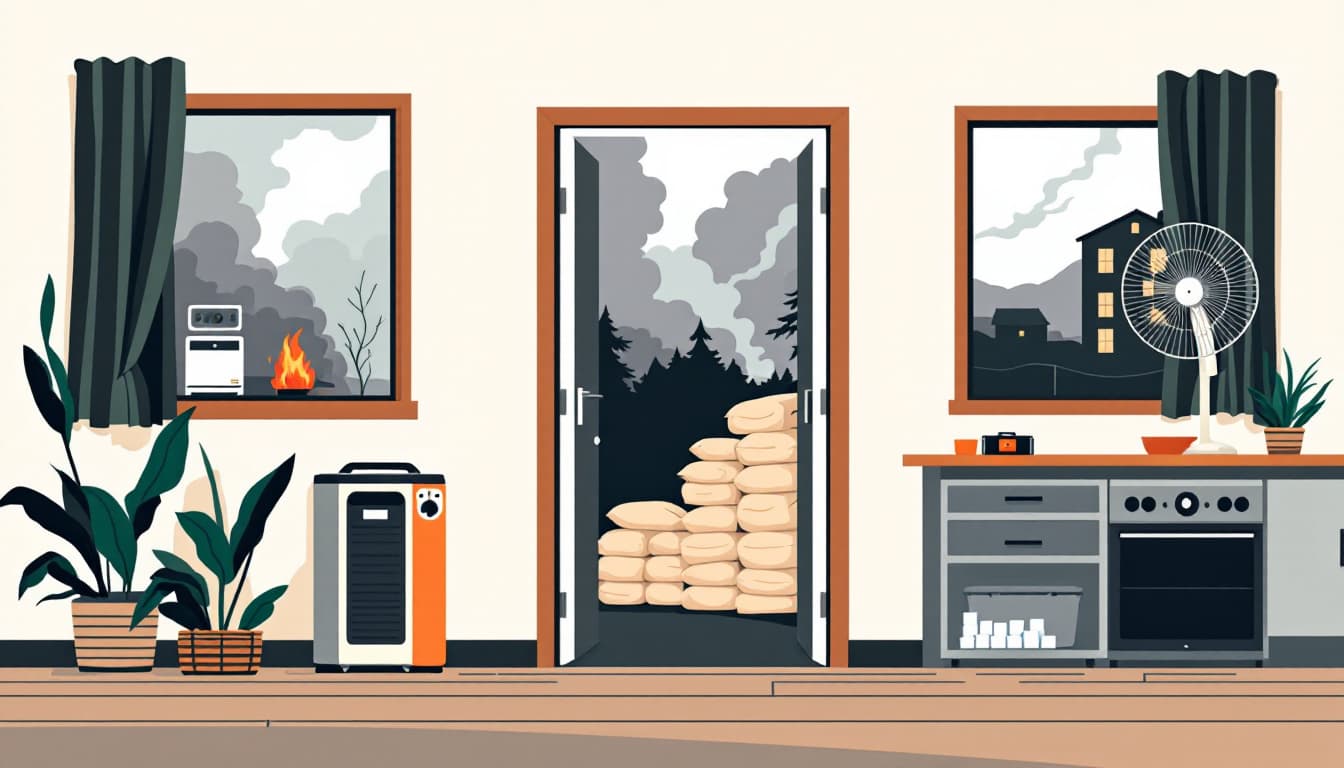
The compounding is the point. Florida households have generally gotten good at single-hazard response. Hurricane shutters go up. Flood insurance paperwork is filed. But triple-overlap weeks like this one expose the gaps: Is your home actually sealed well enough to keep smoke out while you run AC? Do you have enough water if you can't leave the house for 48 hours? What's your plan if a family member has a respiratory condition and the air quality index spikes indoors?
What we'd actually do
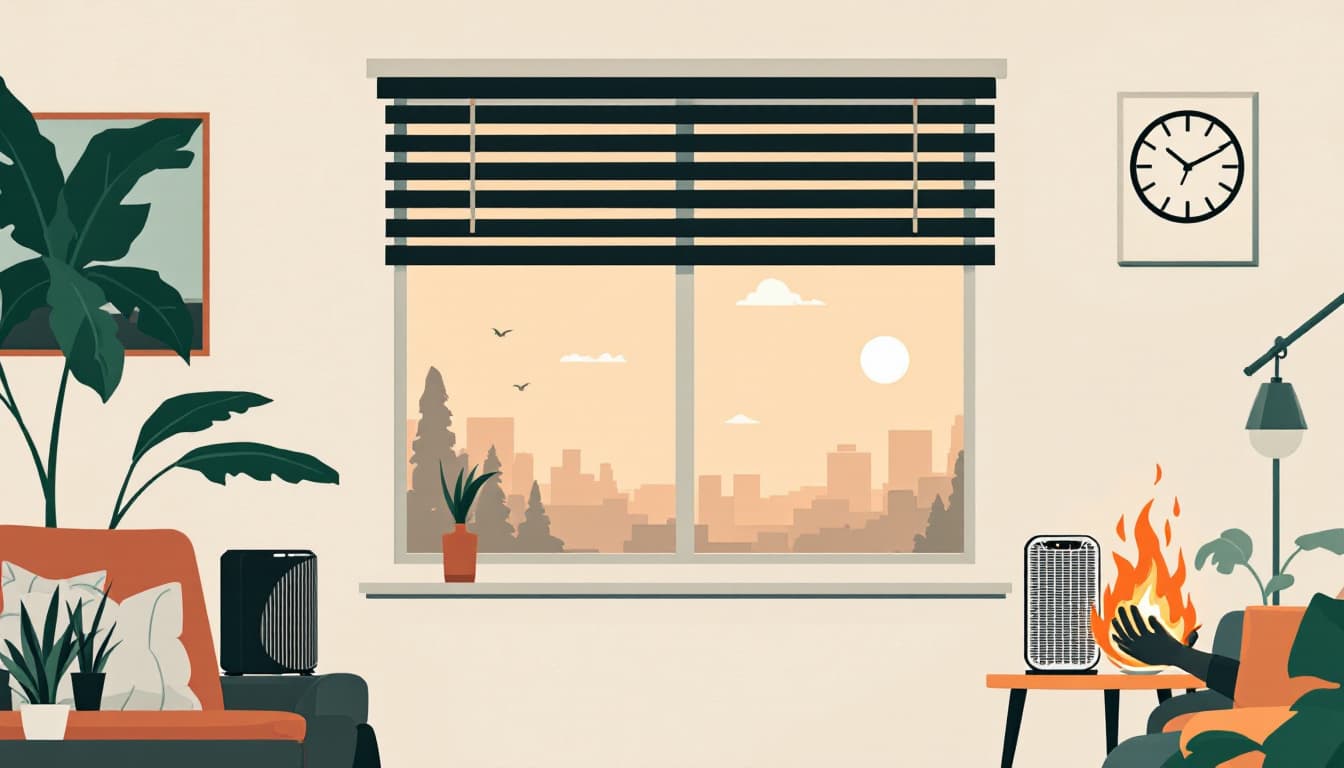
Seal the house now, before smoke concentrations rise. Run your air conditioning on recirculate — not fresh-air intake — and check that your HVAC filter is less than 90 days old. A MERV-13 or higher filter will capture a meaningful fraction of fine particulate matter; a clogged MERV-8 will not. Close fireplace dampers if you have them. Check window weatherstripping on the windward side of the house. This costs nothing if you already have the filter on hand.
Build a 72-hour water buffer specifically for heat. The standard "gallon per person per day" guidance was written for hydration only. In Florida heat, you're sweating through clothes. Active adults in high-heat conditions need closer to two gallons per person per day for drinking, minimal hygiene, and keeping infants or elderly family members safe. Fill your largest clean containers today. If you have a bathtub, fill it. This doesn't require any purchase — it requires doing it now.
Identify one cool, smoke-controlled indoor space as your family's fallback. This could be a single interior bedroom where you run a window unit on recirculate and close the door. It could be a relative's house with better insulation. It could be a county cooling center — Miami-Dade, Broward, and Palm Beach counties all operate them during declared heat emergencies, and they are free. Know the address before you need it, not during. Florida Division of Emergency Management maintains a county-by-county resource locator at floridadisaster.org.
Keep your car's gas tank above half. During multi-hazard events, gas stations lose power. Pumps go down. If you need to move your family in a hurry — because of a flash flood watch, a worsening air quality alert, or a power outage that kills your AC — you want to be moving, not waiting in a line at a generator-powered station on US-1.
Check on neighbors who are older or have respiratory conditions. This is not sentiment — it's a force multiplier. Heat-related illness kills more Floridians per year than hurricanes do, and it disproportionately takes people who are isolated. A 10-minute check-in costs nothing and covers a real gap.
The bigger picture
Florida households have learned to think in terms of hurricane season, a single category of threat with a well-understood playbook. What this week demonstrates is that the state increasingly faces weeks where multiple hazard types stack on top of each other outside of any named storm. That doesn't require a new bunker or a new gear list. It requires that the resilience you've already built is actually integrated — that your heat plan doesn't assume clean air, that your flood plan doesn't assume you can drive freely, that your power-outage plan accounts for 95-degree indoor temperatures.
Durability looks like a household that can function for 72 hours without outside input under uncomfortable conditions. Most Florida families are closer to that than they think. This week is a useful test.