At some point this spring, a family ordering dinner three nights a week through a delivery app started paying meaningfully more than a family cooking those same meals at home — not a little more, the way it's always been, but structurally more, in a way that compounds month over month.
DoorDash's Q2 2026 State of Local Commerce update puts numbers behind what a lot of households have been feeling. According to the report, household goods are showing price stability, while restaurant prices continue their upward trend. The gap between eating in and eating out is widening, not stabilizing.
That's the signal. Here's the household analysis.
What's actually changing
Grocery prices have been volatile since 2021, but recent BLS data shows goods-side inflation cooling more than services-side inflation. Food at home has largely absorbed the post-pandemic commodity and logistics shock. Food away from home — which includes restaurant meals, delivery, and fast food — hasn't.
The reason isn't mysterious. Restaurants are labor-intensive businesses in a tight labor market. Delivery platforms layer fees, tips, and surge pricing on top of menu prices that are already rising. A meal that costs $12 to make at home might appear on a menu at $18, then arrive at your door for $28 after fees. That delta was always there. It's just bigger now, and it's not temporary.
What DoorDash's report signals — even if this wasn't its intended message — is that household goods represent a category where patient, planned purchasing still works. The delivery economy, by contrast, is pricing in convenience at a premium that keeps expanding.
For a prepared household, this is not a doom signal. It's a directional one. The families who will feel this least are the ones who have already shifted a portion of their food spending toward cooking capacity: staple inventory, equipment that works, and the habit of cooking in quantity.
What we'd actually do
Audit the last 30 days of food spending by category. Pull your bank or credit card statement and separate food-at-home from food-away-from-home. Most families underestimate the delivery and restaurant line by 20 to 40 percent. You need the real number before you can make a real decision.
Knowing the actual split is the only honest starting point. If restaurant and delivery spending is above 40 percent of your total food budget, you're exposed to a cost category that is structurally harder to control. That doesn't mean eliminate it — it means know it.
Build a two-week meal rotation around eight to ten core recipes. Meal planning doesn't require a rigid schedule; it requires a short list of meals your household will actually eat, anchored to ingredients that store well. The goal is reducing the friction that makes delivery feel necessary at 6:30 pm on a Tuesday.
Decision fatigue drives delivery spending more than laziness does. A rotation removes the "what are we having" negotiation and replaces it with a low-effort default.
Stock the staples that close the gap fastest. Rice, dried or canned legumes, pasta, canned tomatoes, olive oil, and frozen protein cover the base of most weeknight meals. A month's supply of these items costs less than four delivery orders and takes up less space than you'd expect.
This isn't about survivalism. It's about having enough inventory that an unplanned busy week doesn't automatically become a $200 delivery week.
Rethink the delivery app as a budgeted luxury, not a default. Set a monthly ceiling — a number you've chosen deliberately, not one that emerges from accumulated impulse decisions. One or two delivery nights a week at a predetermined budget is sustainable. Open-ended access to the app is not.
The platforms are designed to reduce purchase friction. That design is working. Introducing friction yourself — a weekly cap, a rule that you check the fridge before opening the app — is a simple countermeasure.
The bigger picture
DoorDash publishing this data isn't altruistic. They're signaling confidence in the delivery market despite rising prices, and positioning household goods stability as evidence of a healthy consumer environment. Read past the framing.
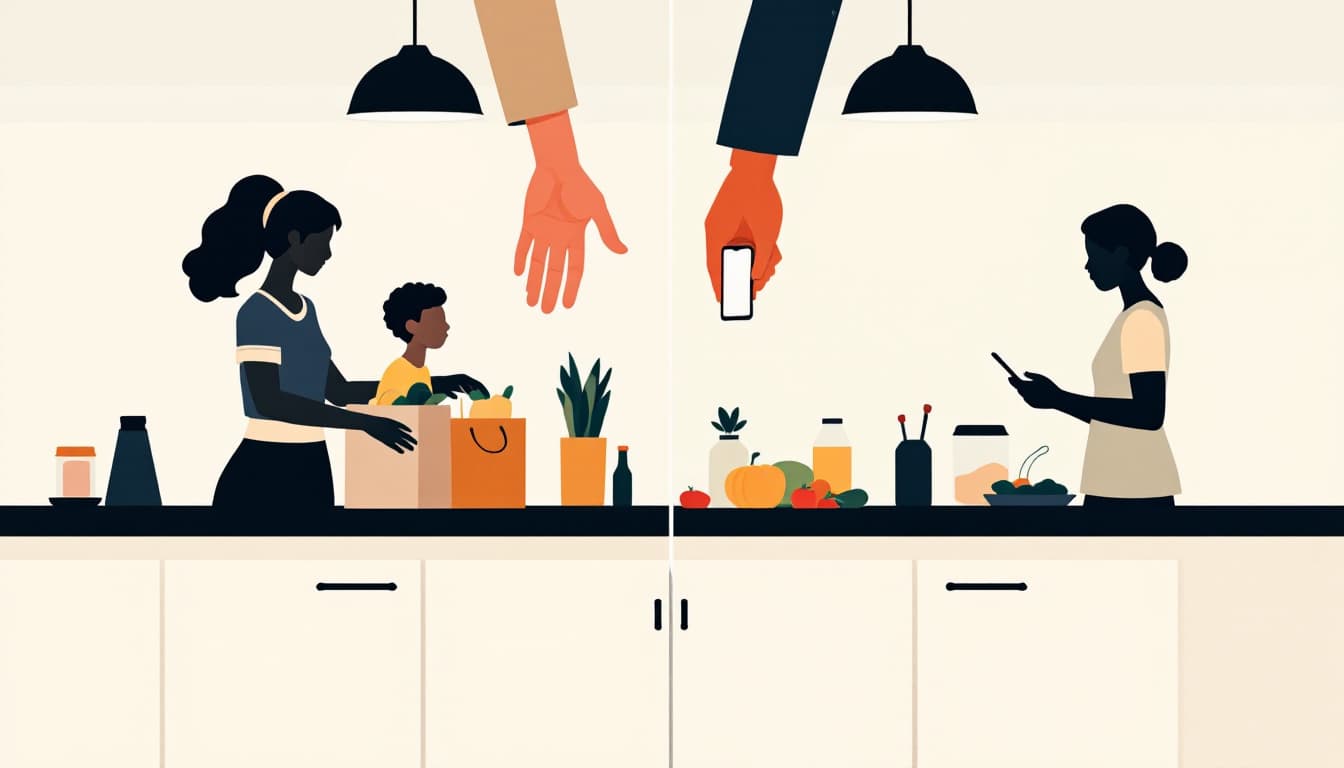
What the data actually shows is a bifurcating food economy: a relatively stable goods market that rewards households who plan, and a services market that keeps repricing convenience upward. Preparedness, in this context, isn't about stockpiling for a grid-down scenario. It's about having enough cooking capacity and staple inventory that the expensive, volatile side of the food economy becomes optional rather than necessary.
Durable households aren't the ones with the most gear. They're the ones with the most flexibility.