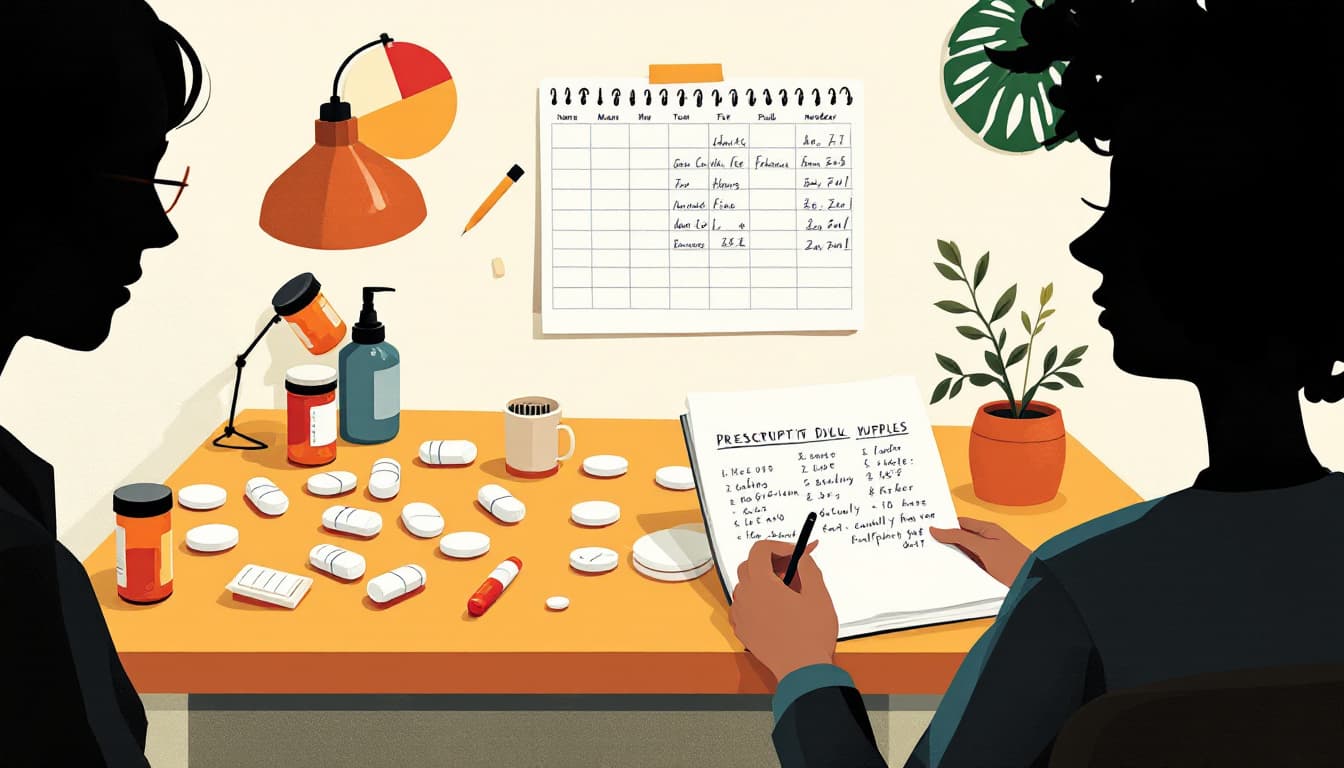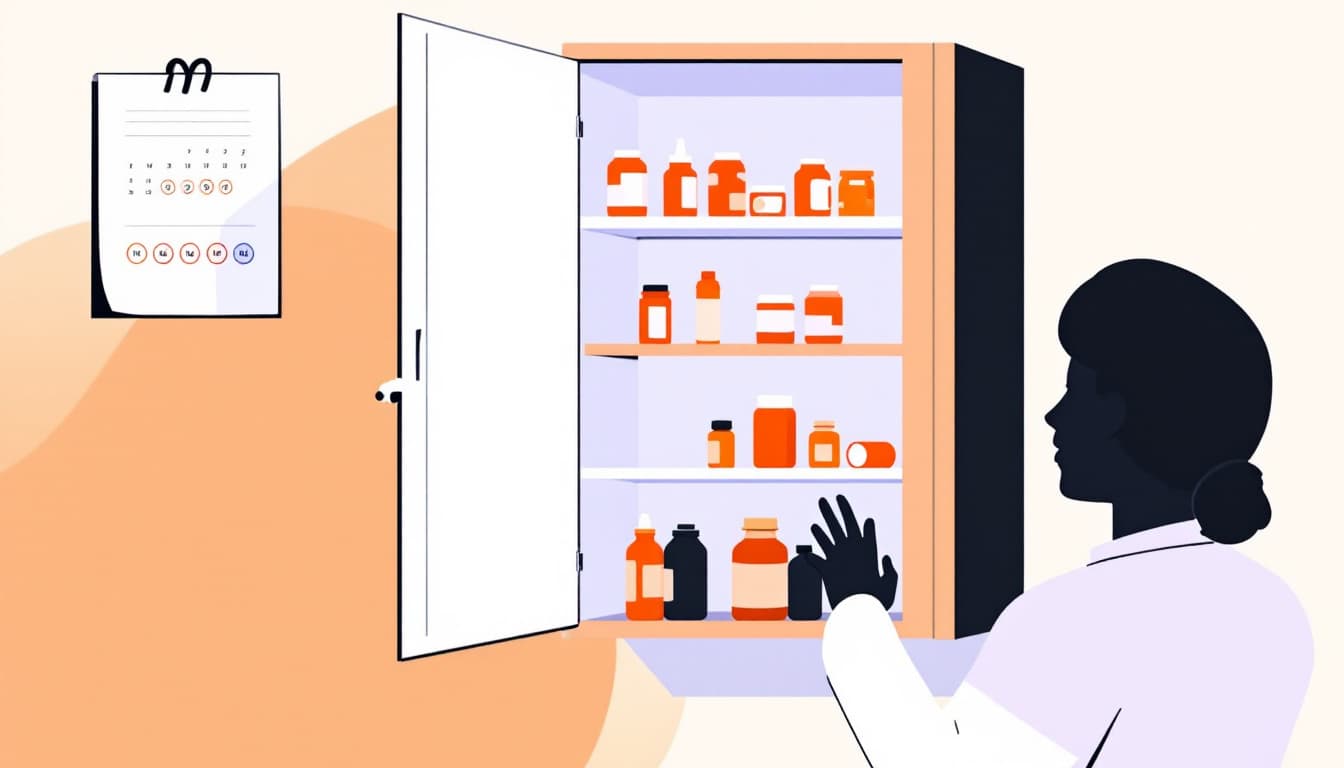
Here is a quiet exercise. Go to your medicine cabinet right now and count the actual pills in every bottle that someone in your household takes daily. Not the refill date. Not the number printed on the label. The physical pills. Divide by the daily dose. Write down the number.
For the majority of households managing at least one chronic condition — and somewhere north of half of American adults are — that number is probably between eight and eighteen days. Not thirty. Not ninety. Eight to eighteen.
That gap is the slow-leak risk almost nobody audits.
The prescription supply chain is longer and more fragile than most patients understand. A significant share of active pharmaceutical ingredients — the chemical cores of common generics — are manufactured overseas, predominantly in India and China. Finished tablets then move through a domestic wholesaler tier before reaching a pharmacy. A standard insurance plan's "30-day supply" assumes that chain never hiccups. But the chain hiccups regularly: manufacturing holds, port congestion, unexpected demand surges, or a single facility's quality-control failure can create regional shortages that last weeks. The FDA's drug shortage database has consistently listed 100–200 active shortages at any point over the past several years. That's not catastrophic. It's chronic.
The deeper problem is behavioral. Insurance plans typically allow a refill when roughly 75 percent of the previous supply has been used — sometimes called the "days supply" rule, enforced to prevent stockpiling and to manage costs. In practice, that means a patient who picks up a 30-day supply on day 22 of the previous cycle starts the new bottle with a buffer of eight days. Miss a refill pickup, have a travel conflict, run into a pharmacy computer issue, or find that your specific drug is temporarily out of stock at your usual location — and that eight-day buffer is not a buffer at all. It's just lead time before a miss.
The math gets sharper when you introduce a second variable: drug holidays and cognitive friction. Studies on medication adherence consistently show that a large fraction of patients on long-term prescriptions — estimates run from 20 to 50 percent depending on the condition and measurement method — take unplanned breaks or inconsistent doses. This is often framed as a compliance failure, but it's also a rational response to a system that creates friction at every refill. Friction accumulates. A household running two or three chronic prescriptions across different people is managing two or three separate refill cycles, two or three insurance rules, and two or three potential shortage points simultaneously.
Why do most households underweight this? Partly because the failures are usually invisible. When a drug is backordered, the pharmacy often substitutes a different manufacturer's version of the same generic — you never know it happened. When a person runs out for three days, the consequences are usually manageable rather than acute. The system absorbs small failures quietly, which masks its fragility. This is the definitional shape of a slow-leak risk: the absence of dramatic failure events prevents calibration.
It's worth distinguishing this from prepper catastrophism. The scenario worth preparing for is not a years-long pharmaceutical collapse. It is a two-to-four-week regional shortage of a specific medication — the kind that happens a few dozen times per year somewhere in the United States — coinciding with your household being at the low end of its buffer. That's not a doomsday scenario. It's a moderately bad month that becomes a medical crisis because the margin was already thin.
The practical version of this problem looks like: a common blood pressure generic goes on shortage in August. Your pharmacy has enough for existing patients through week two. You are on day nineteen of your current supply when they tell you this. You have eleven days. They're not sure when the next shipment arrives. Your doctor is responsive but prior-authorization paperwork for a brand-name alternative takes five business days. You are now doing arithmetic in a way you never expected to.
The 90-day supply option, where it exists, is the most structurally obvious mitigation — and it is genuinely underused. Many insurance plans offer it through mail-order pharmacy at reduced copay, yet uptake remains low because it requires a deliberate opt-in and a short-term cash-flow commitment. The buffer it creates, roughly 60–75 days of runway instead of 8–18, changes the arithmetic of a regional shortage from a crisis to an inconvenience.
Running the numbers on your household's specific medications — which ones have documented shortage histories, which have single-source manufacturing, which have no therapeutic substitutes — is the kind of audit that preparedness frameworks often gesture at without making concrete. Our water and food calculator is built on the same principle: translating abstract "days of supply" into a household-specific number changes how seriously people take the gap.
The medicine cabinet exercise at the top of this piece isn't rhetorical. It is, for many households, the first time anyone has looked.