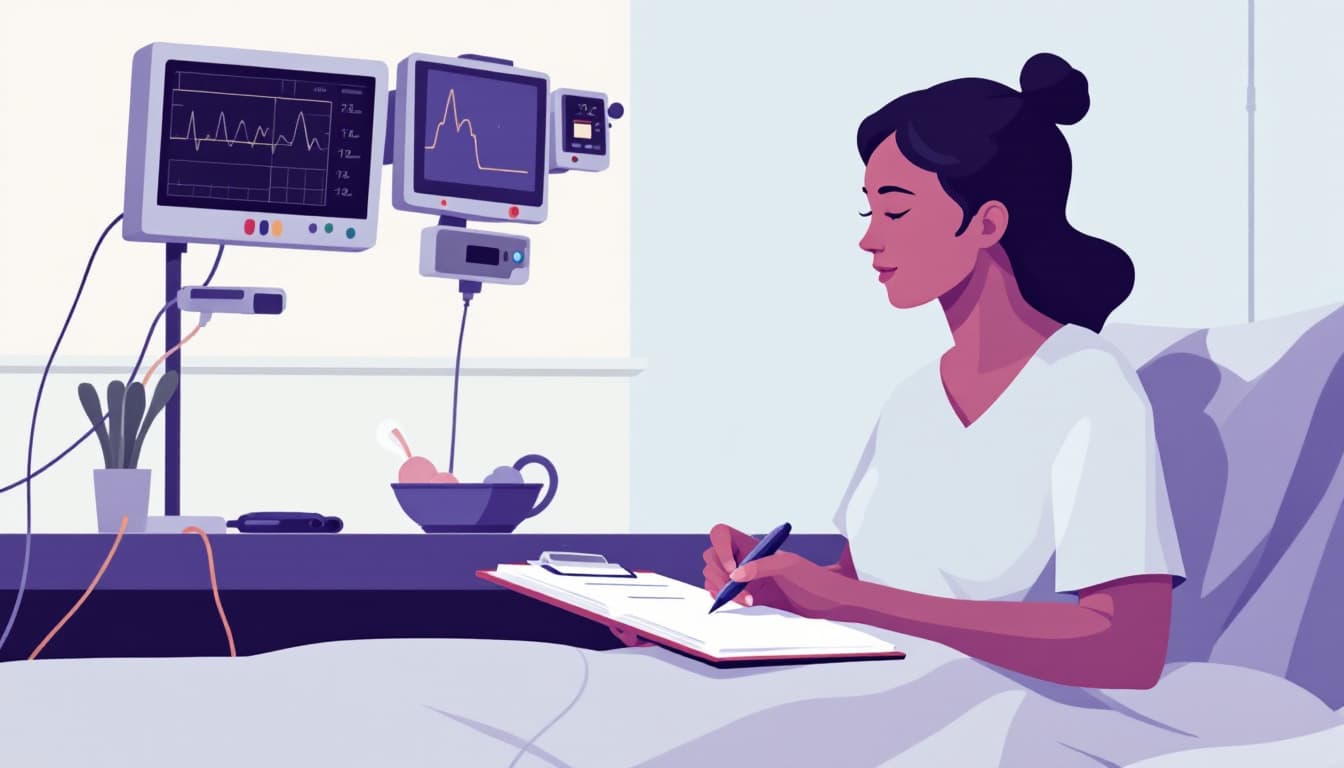
A Kaiser Permanente nurse, according to a Local News Matters report published this week, described spending more time correcting AI-generated documentation than she previously spent writing it herself. That is not a productivity win. That is a system that has redistributed cognitive load downward onto the people least positioned to absorb it — and away from the patients in the next room.
This is not abstract. If someone in your household is hospitalized, managed for a chronic condition, or waiting on a specialist referral inside a large integrated health system, the workflow shaping that care is changing faster than the clinical outcomes data can track.
What's actually changing inside large health systems
AI tools are now embedded at multiple points in the clinical encounter: transcribing doctor-patient conversations, surfacing treatment recommendations, flagging medication interactions, and generating the billing codes that determine what your insurer pays. Simultaneously, the nurses and techs operating alongside these tools are being monitored — time-on-task, documentation speed, response intervals — in ways that reward throughput over judgment.
The Local News Matters piece focuses on Kaiser, which is one of the largest integrated health systems in the country, but the pattern is not Kaiser-specific. Hospitals across the country have been deploying ambient AI documentation tools and workforce analytics platforms over the past two years. The nurses quoted in that report describe a specific failure mode: the AI confidently produces a wrong or incomplete clinical note, and the correction burden falls on already-stretched staff. Meanwhile, the surveillance layer registers only that the note was completed, not whether it was accurate.
For families, the practical consequence is a health system where your nurse may be more focused on reconciling a software output than on catching the thing the software missed.
What we'd actually do
Ask who documented your care and how. When you or a family member is admitted or seen in a complex clinical encounter, ask directly: is AI being used to transcribe or document this visit, and will a clinician review it before it becomes part of my record? This is not an aggressive question. It is the same logic as confirming your pharmacist checked for drug interactions. You are not auditing the hospital; you are a participant in your own care.
Most patients do not know they have the right to review their medical records in real time under federal law. The 21st Century Cures Act requires most healthcare providers to give patients timely access to their health information, including clinical notes. After any significant encounter, pull your records through your patient portal — often MyChart inside Kaiser — and look for clinical notes that feel generic, misattributed, or inconsistent with what you remember discussing. Flag discrepancies in writing through the portal, which creates a documented record.
Build a one-page medical summary and bring it. A simple document — current medications with doses, allergies, relevant diagnoses, the name and number of your primary physician — handed to any intake nurse immediately reduces the risk that an AI transcription error compounds an already-incomplete picture. Keep it updated. Keep a copy in your phone's photos and one printed in your go-bag.
Designate a second set of ears for anything consequential. For an ER visit or a procedure, having a family member or friend present serves a function that no AI tool currently performs: a human who knows you, who notices when the clinician seems to be reciting a recommendation rather than explaining it, and who can ask "can you walk us through why?" without feeling like they're slowing down the system. In a surveilled, throughput-optimized environment, a patient advocate is friction that protects you.
Know your health system's escalation path. Every large system has a patient advocate or patient relations office. The name varies. Find it before you need it. If you believe a clinical error has been made — including a documentation error that affected your treatment — contacting that office in writing is faster and more effective than a complaint made verbally at discharge.
The bigger picture
Efficiency tools built for administrators do not automatically become safety tools for patients. That gap is not new — it predates AI. But AI accelerates the gap because it scales the failure mode. One bad template, one miscalibrated recommendation engine, one metric that rewards speed over accuracy can propagate through thousands of encounters before a pattern becomes visible in outcomes data.
The nurses at Kaiser speaking publicly about this are performing exactly the function that a well-run system should protect: the human in the loop who notices what the system misses. The fact that they feel they have to speak publicly suggests the internal feedback loop is not working as designed.
For families, the takeaway is not fear. It is engagement. The most durable form of household healthcare preparedness is not a stockpile of medication or a home defibrillator — it is knowing how to be a present, documented, and persistent participant in your own care.