Thursday morning, air quality monitors across the Portland metro are already trending in the wrong direction. A report from KOIN.com this week confirmed what the smoke smell already told many residents: wildfire smoke from fires to the east is moving west through the Gorge corridor, and conditions are expected to deteriorate through the day.
Oregon's Air Quality Index (AQI) runs through Oregon DEQ's real-time monitoring network — airnow.gov aggregates the same data into an easy national map. When AQI climbs above 150, the "Unhealthy" threshold, fine particulate matter (PM2.5) becomes a genuine respiratory hazard for everyone, not just vulnerable groups. Portland's geography makes this worse than average: the Columbia River Gorge acts as a natural funnel, channeling east wind and smoke directly into the metro.
What's actually happening
Wildfire smoke is not the same as campfire smoke or car exhaust. PM2.5 particles are roughly 30 times smaller than a human hair. They pass through standard fiberglass furnace filters, settle deep in lung tissue, and linger indoors for hours after the outdoor air clears. A tightly sealed modern home offers some protection. An older Portland bungalow with single-pane windows, a crawl space, and a kitchen exhaust fan that vents to outside — common across inner SE and NE — offers much less.
The other issue is duration. A single smoky afternoon is an inconvenience. A multi-day smoke event, which Oregon has logged repeatedly since 2017, changes the calculus. Running a household on recirculated air for 48-72 hours requires a plan, not just a closed window.
What we'd actually do
Check DEQ's real-time map before opening anything Thursday morning. Oregon DEQ publishes hourly AQI readings at oregon.gov/deq. This takes 90 seconds. If the number at the closest monitor is above 100, keep windows closed and skip the morning run. The number matters more than the general forecast, because smoke plumes move unevenly.
Seal the house's biggest leaks before the smoke peaks. Most infiltration happens at the same three or four points: exhaust fans in bathrooms and kitchens (close the damper or block with a folded towel), the gap under exterior doors (a rolled bath towel works), and dryer vents if the home has a gas dryer on an exterior wall. Caulk and weatherstripping help over time; towels help today. Don't bother with interior doors — concentrate on the building envelope.
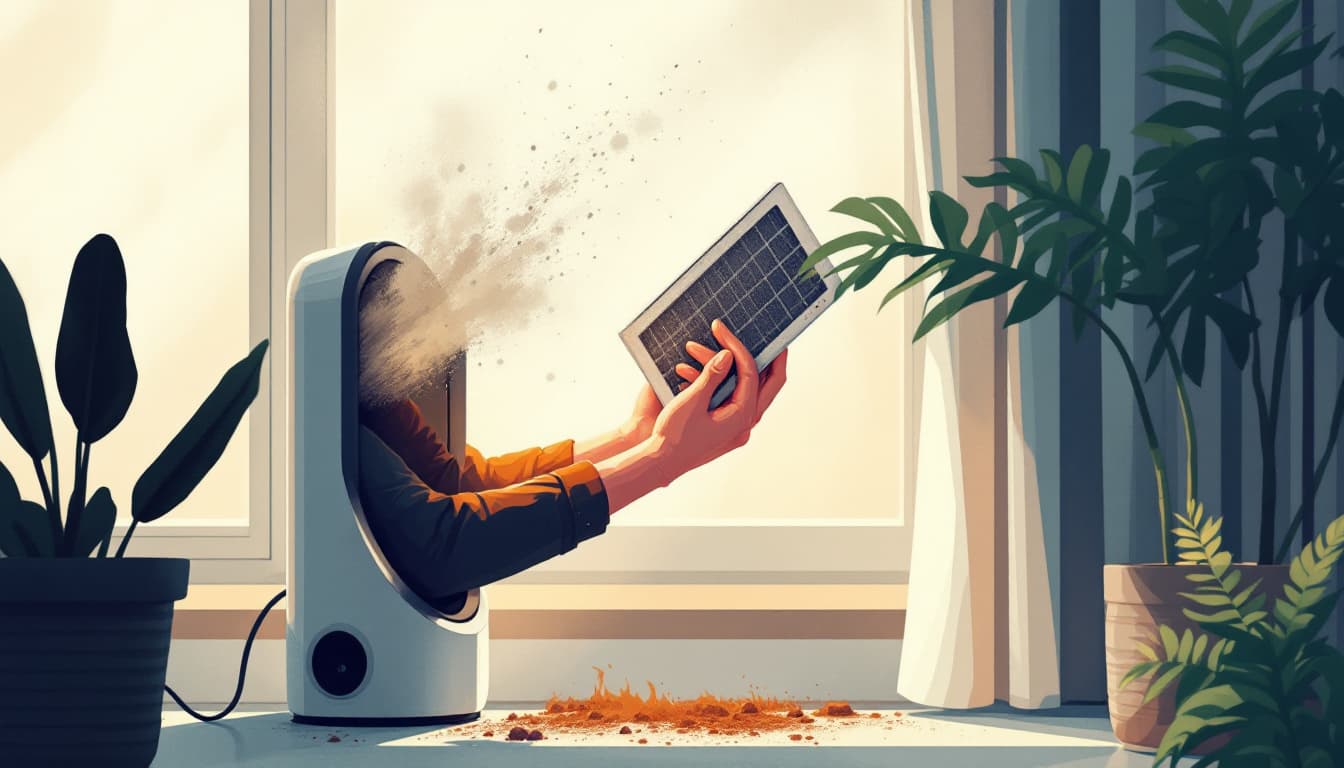
Run the highest-rated filter your HVAC can handle, on "fan only" mode. Most forced-air systems in Portland homes can accept a MERV-13 filter, which catches a meaningful fraction of PM2.5. Set the system to circulate air continuously without heating or cooling — this costs a few dollars a day in electricity and noticeably reduces indoor particle counts within two to three hours. Replace the filter after a sustained smoke event; they saturate. If your system can't handle MERV-13, a box fan taped to a 20x20 furnace filter (the "Corsi-Rosenthal" design) runs about $40 in parts from any hardware store and works.
Have N95 masks that actually fit, per person. A bandana does nothing for PM2.5. An N95 or KN95 worn with a proper seal — no beard gap, straps behind the head not the ears — filters the vast majority of fine particles. Oregon households with kids should note that most adult N95s don't seal on children's faces; small or pediatric-sized masks exist and are worth sourcing before the next event.
Keep vulnerable people inside for the duration. Asthma, COPD, pregnancy, and age over 65 all lower the threshold at which PM2.5 causes measurable harm. "Run out for a quick errand" logic does not apply during a multi-day smoke event for these groups. Plan grocery runs and medical appointments around the air quality forecast, not the calendar.
The bigger picture
Oregon's fire season now reliably overlaps with late summer heat, which means households are sometimes caught choosing between keeping windows open to stay cool and keeping them closed to stay safe. That tension is real, and it's not going away. The honest answer is that a window unit or a portable AC that recirculates indoor air — not one drawing fresh outside air — solves both problems simultaneously. That's a medium-term investment, not a this-week fix.
For this week, the goal is simpler: know your AQI number, seal the obvious leaks, filter what you can, and keep the most vulnerable people in your household away from the windows. Durability through smoke season is built from small habits repeated across many events, not from a single piece of gear bought in a panic.