A report this week from The Detroit News confirmed what anyone living east of the Cascades already knows by looking up: the smoke is back, and it has traveled far enough to tint skies as far away as Florida. That range is worth sitting with for a moment. When Oregon and Pacific Northwest fires push particulate matter across three time zones, it's not a regional inconvenience. It is a continental air event — one that originates largely from the landscapes Oregonians live in and around.
Oregon's fire season has compressed in one direction and expanded in another. The eastern Oregon high desert, the Klamath and Siskiyou ranges in the south, and the Cascade foothills can all be burning simultaneously by late July. The Oregon Department of Forestry posts daily fire and smoke outlooks, but those outlooks are reactive — they tell you what yesterday's fire behavior produced, not what tonight's wind shift will bring to your street by morning.
What's Actually Changing
The problem for Oregon households isn't just intensity — it's duration and unpredictability. A smoke event that used to last two or three days can now stretch across weeks if back-to-back fires overlap and winds stay static. AirNow.gov, which aggregates EPA monitoring station data, is useful but spotty in rural Oregon. There are meaningful gaps between monitors in places like Lake County, Harney County, and the Coast Range. If you're in those areas, the nearest official reading may not reflect what's actually in your yard.
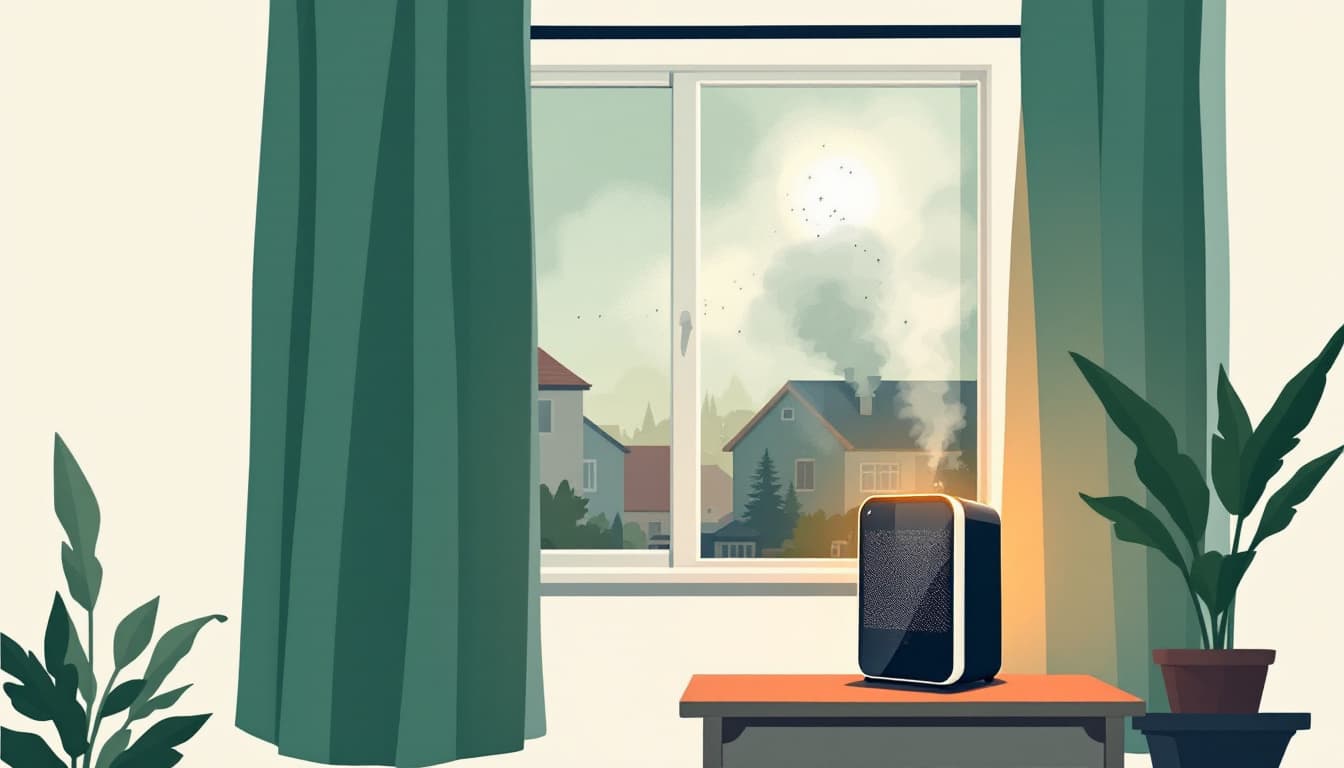
Indoor air quality during a prolonged smoke event is what separates a miserable week from a manageable one. The average Oregon home is not built tight enough to passively exclude fine particulate matter (PM2.5) during heavy smoke. Crawl spaces, gaps around window frames, and older HVAC systems without MERV-13 or better filtration all act as funnels.
What We'd Actually Do
Check and upgrade your furnace filter this week, before the next smoke spike. A standard fiberglass HVAC filter does almost nothing for PM2.5. A MERV-13 filter — available at most hardware stores for $15–$25 — captures a significant portion of fine smoke particles. Check that your system can handle the increased airflow restriction first; most modern residential systems can, but older ones may need a MERV-11 as a compromise. Set a reminder to replace it every 60 days through October.
Build a box-fan air cleaner for each sleeping room. The Corsi-Rosenthal box fan design uses standard 20x20 furnace filters taped to a box fan and has been independently validated as highly effective at reducing indoor PM2.5. You can build one for under $60. The instructions are freely available from university extension programs. This is not a gimmick — it is the same physics as a commercial air purifier at a fraction of the cost.
Download the ODF and AirNow apps now and configure alerts for your county. Oregon Department of Forestry's fire activity map and AirNow's fire and smoke map are both free. Setting a location alert means you're not relying on local news to tell you conditions have changed. During fast-moving smoke events, TV coverage often lags by hours.
Identify your household's clean-air room. Pick the room with the fewest windows, the best sealing, and ideally an interior location — often a bedroom or interior bathroom. Tape a towel at the base of the door during heavy smoke days. This is where children, elderly household members, and anyone with asthma should spend most of their time until the AQI drops below 100.
Stock two weeks of any maintenance asthma or COPD medications. Oregon's rural pharmacies face supply constraints that urban ones don't, and a wildfire that closes Highway 97 or Highway 20 can cut off resupply. If anyone in your household depends on an inhaler, talk to your physician now about a backup prescription or extended fill.
The Bigger Picture
The smoke reaching Florida this week did not originate in Florida. It came from somewhere with standing timber and dry conditions in late July. Oregon is one of those places. That doesn't mean every summer is catastrophic, and it doesn't mean families should spend September in a bunker. It means that wildfire smoke is now a routine summer stressor for Oregon households — not a once-a-decade emergency but an annual logistics problem with well-known, low-cost solutions.
Durability isn't about surviving the worst case. It's about not being caught off guard by something that was predictable.