A Portland city councilor made news this week in OregonLive.com for drawing a line: loyalty card data should not be used to set individualized prices at the grocery checkout. The statement was a warning shot, not a confirmed policy — but the fact that a city official felt the need to say it publicly tells you something about where grocery retail is heading.
The technology that would make personalized grocery pricing possible isn't speculative. Digital shelf labels already exist in hundreds of U.S. stores. Retailers have years of purchase-history data tied to loyalty accounts. The infrastructure for price discrimination at the household level is largely assembled. What's missing, for now, is the social and regulatory permission to use it openly.
What's actually changing
Dynamic pricing in grocery isn't the same thing as a sale or a coupon. A sale is uniform — everyone pays $2.49 for the soup this week. Dynamic pricing means the soup costs $2.49 on your app because you bought it three times last month and the algorithm knows you'll pay that, while a new customer sees $1.99 as an acquisition price.
Airlines and hotels have operated this way for decades. Ride-share surge pricing is now unremarkable. The grocery sector has been slower because of thin margins, complex supply chains, and the raw political sensitivity of food costs. But loyalty program data is extraordinarily detailed. A major grocery chain with a well-established rewards program knows not just what you buy but when your pantry runs low, which brands you trade down from during tight months, and whether you're price-sensitive on proteins versus dairy.
The Portland councilor's pushback reflects a real tension: retailers argue that personalization can mean better deals for loyal customers, while critics note it can also mean worse deals for people who have fewer alternatives and less flexibility to shop around.
Both things can be true at once.
What we'd actually do
Stop treating your loyalty card as neutral. Every swipe builds a profile that could, in a world of dynamic pricing, work against you. That doesn't mean cancel your account — the discounts are real right now. It means being conscious about what you scan and where.
Grocery loyalty programs are among the most data-rich consumer relationships most families have without realizing it. If your store offers a loyalty discount at checkout, you're already in an exchange: your purchase history for a reduced price. That's a reasonable trade today. It may not be a reasonable trade in five years if the same data is used to set your baseline price rather than discount from it. Keep a mental note of which chains you're enrolled with and what data-sharing policies you've agreed to.
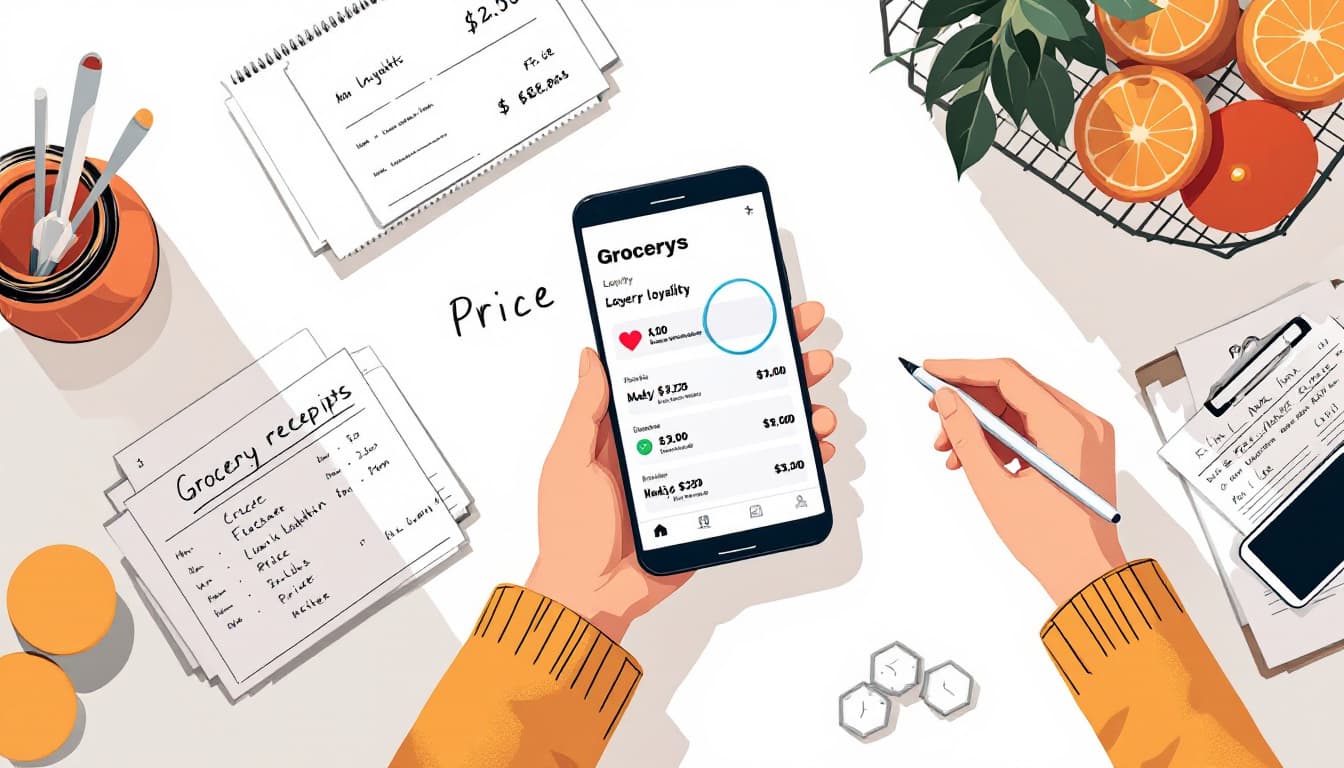
Run a 90-day grocery audit before prices change. Pull the last three months of grocery receipts or bank statements and calculate your actual per-category spend: proteins, produce, dairy, shelf-stable goods. Most families are surprised. The audit gives you a real baseline so that if prices shift — from inflation, from dynamic pricing, or from supply disruption — you notice it in the data rather than in vague financial unease.
Build category-level price memory, not just brand loyalty. Know what ground beef costs per pound in your market, what a dozen eggs should run, what your go-to pasta brand normally sells for. Apps that track grocery prices exist, but a simple notes file on your phone works. If dynamic pricing arrives in your zip code, this is how you detect it: your known-good prices stop matching what you see.
Shift a meaningful share of your staples to channels that don't have loyalty-linked pricing. Ethnic grocery stores, co-ops, local butchers, and warehouse clubs all use different pricing models. This isn't about boycotting major chains — it's about not being 100% dependent on one retailer's algorithm for your family's nutrition. Even shifting 20-25% of your monthly grocery spend to alternate channels gives you price-comparison leverage and reduces single-point exposure.
The bigger picture
The Portland story is local, but the underlying pressure is national. Grocery margins are thin, digital infrastructure is maturing, and the behavioral economics of dynamic pricing are well understood by retail executives. Regulatory friction — like a city councilor saying "not here" — may slow the rollout, but it won't stop the technology from existing.
Preparedness has never been only about storing food. It's about maintaining your ability to make rational economic decisions with real information. A family that knows their actual food costs, shops across multiple channels, and understands what data they're sharing is better positioned than one that simply has a full pantry.
Durability is the goal. Not panic-buying. Not paranoia about loyalty cards. Just clear eyes on a system that is shifting, and the habit of paying attention before the shift costs you money you didn't see coming.