A report this week from The Daily Reflector confirms that Pitt County — home to Greenville and a broad stretch of eastern North Carolina's agricultural belt — remains classified under extreme drought conditions. That's two steps below the worst category on the U.S. Drought Monitor's five-level scale, and it's not a label that gets applied lightly. It means topsoil moisture is severely depleted, stream flows are well below normal, and municipal water systems are drawing harder on reserves than their seasonal models expect.
Most households read "drought" and think: don't water the lawn. That's the wrong frame.
What extreme drought actually changes
Extreme drought triggers a specific set of downstream effects that matter beyond the yard. Greenville Utilities and other eastern NC water providers typically activate tiered restriction plans once drought classifications reach this level — meaning outdoor water use bans can arrive with 48 hours of notice, not weeks. Well-dependent households in Pitt, Beaufort, and surrounding counties face a harder problem: residential wells can drop or go dry when aquifer levels fall, and there's no municipal backup to switch to.
The agricultural strain compounds household economics. Eastern North Carolina grows a significant share of the state's sweet potatoes, tobacco, and hogs. When irrigation costs spike and yields fall, farm-dependent supply chains — including local grocery distribution — tighten. Prices on produce at regional stores like Compare Foods or Piggly Wiggly in smaller eastern NC towns tend to move faster than at large-format retailers, and this summer's conditions will show up in receipts before the drought map changes color.
There's also fire risk. The NC Forest Service has been issuing burn bans across the coastal plain this summer, and extreme drought extends the ignition window well into the evening hours when humidity typically offers some buffer. Households with propane grills, fire pits, or rural acreage should treat this as an active hazard, not a background condition.
What we'd actually do
Check your water provider's drought response plan before restrictions hit. Greenville Utilities publishes its drought contingency plan online; most NC municipal providers do. Find the stage your county is currently in and read what triggers Stage 3 or higher. This takes 20 minutes and tells you exactly when outdoor water use becomes restricted and what the fine structure looks like.
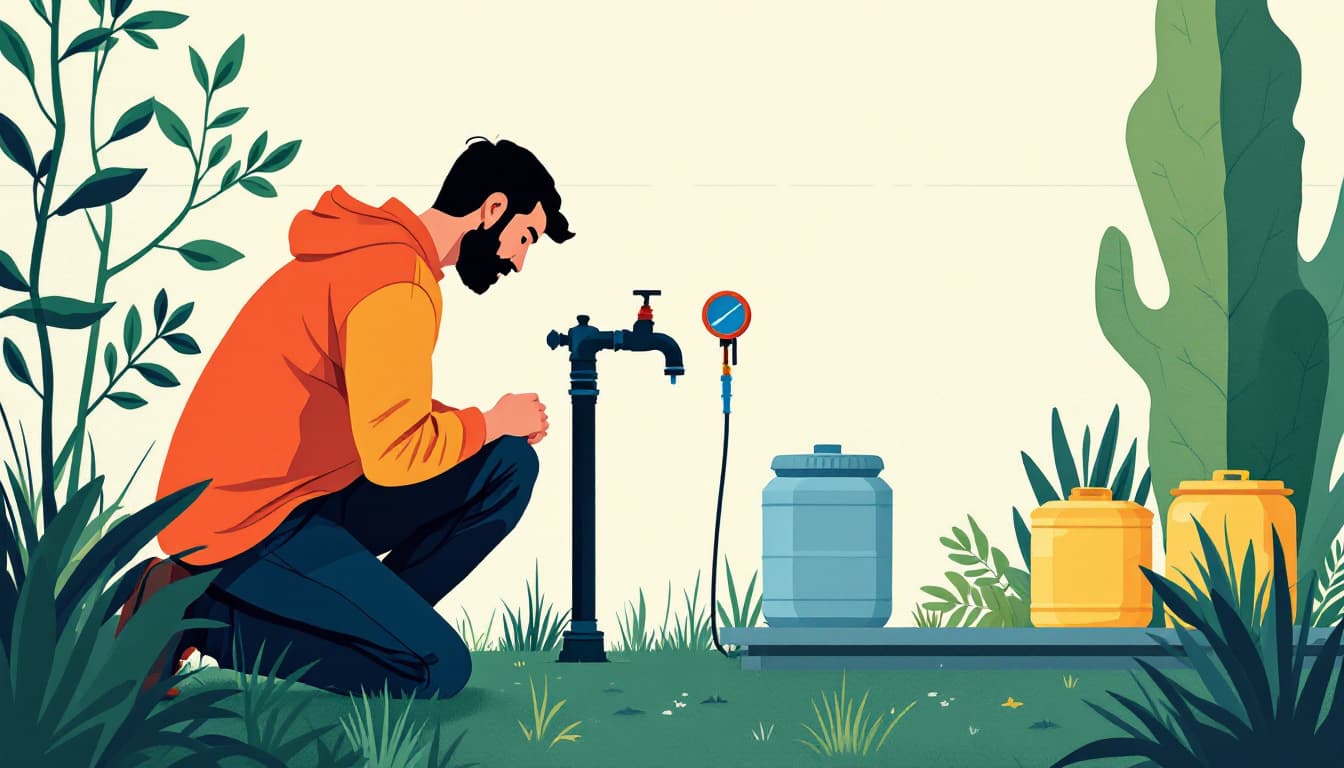
Fill and rotate a two-week drinking water reserve. FEMA's standard recommendation is one gallon per person per day. For a family of four, that's 56 gallons for two weeks — achievable with a combination of commercial 5-gallon jugs and food-grade 7-gallon containers (roughly $10–$15 each at Academy Sports or Tractor Supply in Greenville or Rocky Mount). Don't buy more than you can rotate every 6–12 months. Label each container with a fill date.
Audit your water consumption by category. The average American household uses roughly 80–100 gallons per person per day. Most of that is toilets, showers, and laundry — not drinking. A low-flow showerhead ($12–$25) and full-load-only laundry discipline can cut household consumption 15–20% without meaningful lifestyle disruption, which matters if restrictions force metered limits.
If you're on a well, know your system's depth and recharge rate. Call the company that drilled your well or check your well completion report (filed with the NC Division of Water Resources) to find the static water level. If you don't know this number, you can't assess your risk. A well drilled into a shallow aquifer in sandy coastal plain soils is meaningfully more vulnerable to extended drought than one hitting deep bedrock formations.
Harden your kitchen pantry against regional price pressure. A month of shelf-stable staples — dried beans, rice, canned tomatoes, oats — costs roughly $80–$120 for a family of four and insulates you from the supply-side disruptions that drought drives through agricultural regions. This isn't hoarding; it's the same logic as buying gas before a hurricane forecast.
The bigger picture
Pitt County's drought classification isn't a freak event. The NC Climate Office has documented a pattern of intensifying summer dry spells across the eastern piedmont and coastal plain over the past decade, punctuated by flood events that don't fully recharge aquifers before the next hot season arrives. That cycle — too much water fast, then not enough slow — is exactly the kind of slow-building pressure that catches households unprepared.
The goal isn't to panic-prep for a water crisis. It's to build enough slack into your household systems that a two-month drought doesn't become a two-month emergency. Pitt County's situation this July is a useful, specific prompt to do that work now.