Walk into any major preparedness forum and you'll find someone arguing that you need a year's worth of freeze-dried food because "supply chains are one bad day away from collapse." The argument usually invokes container ships, just-in-time inventory, and whatever the most recent port disruption happened to be.
It sounds airtight. It isn't.
What actually happened in 2020 — and why it matters
The toilet paper shortage of spring 2020 is the Rosetta Stone of supply chain panic. If you were there, you remember it viscerally: empty shelves, rationing signs, people driving between three stores. It felt like a harbinger of something much worse.
But here's what actually happened: commercial toilet paper and retail toilet paper are manufactured on different machinery, in different roll sizes, with different packaging lines. When offices, restaurants, and hotels shut down overnight, commercial demand collapsed while residential demand spiked. The supply existed. The distribution system couldn't pivot fast enough. Within eight to twelve weeks, most regions had stabilized.
That pattern — a mismatch problem, not a collapse problem — is the dominant pattern in virtually every major consumer shortage on record. The 2021–2022 baby formula crisis was a single-facility contamination event at one plant that held roughly 40% of U.S. market share. The microchip shortage was a demand-forecast error compounded by long lead times unique to semiconductor fabrication. Both were severe. Neither indicated that the broader supply chain was structurally fragile in the way preparedness culture often implies.
The framework: distribution failures vs. production failures
Most supply disruptions fall into one of two buckets, and they behave very differently.
Distribution failures are fast and usually self-correcting. A hurricane disrupts a port. A labor action slows a rail corridor. A sudden demand spike (panic buying, stimulus checks, a viral product moment) outruns retailer replenishment algorithms. These create real gaps — sometimes for weeks — but the underlying supply exists, and normal commercial incentives push hard to restore flow. Shortages of this type rarely last longer than two to three months for any broad category of goods.
Production failures are slower and more serious, but also narrower. They tend to affect specific SKUs, specific geographies, or specific categories that rely on concentrated manufacturing. Baby formula was a production failure. The shortage was real and genuinely dangerous for families without alternatives — but it affected one category, not the household as a whole.
The scenario that preparedness culture fixates on — a cascading, multi-category collapse that makes it impossible to buy food, fuel, and medicine for months — would require simultaneous production failures across dozens of independent supply chains. That combination has no modern peacetime precedent in the United States or any comparable economy.
Why this particular fear is so sticky
Three reasons.
First, 2020 gave everyone a visceral shelf-shock experience. The shelves were actually empty. That image is hard to dislodge with statistics.
Second, the preparedness industry has a financial interest in maximizing the perceived probability of long-duration, wide-spectrum shortages. Freeze-dried meal buckets are a high-margin product. So are certain water filters, generator fuel systems, and chest freezers marketed as "supply chain insurance." Fear sells.
Third, there's a grain of truth buried in the concern. You really should keep a reasonable buffer of staples on hand. Not because collapse is imminent, but because distribution failures are frequent enough that a household with no margin gets caught every few years. The question is what size buffer makes sense — and "a year of freeze-dried food" is the wrong answer for nearly every middle-class household.
What to do this week
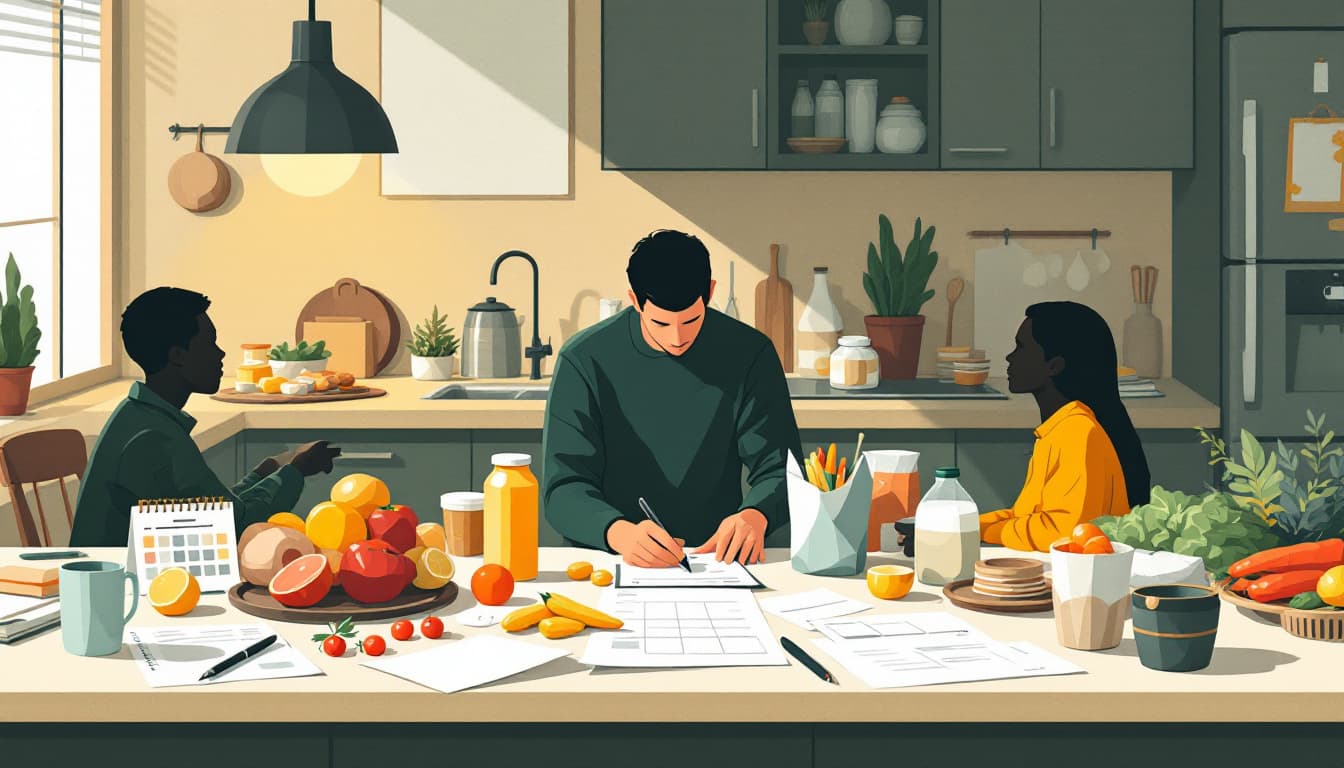
Audit your actual pantry depth. Not your emergency kit — your everyday pantry. For each major food category you actually eat, how many days of normal meals do you have on hand right now? Two weeks is a practical, evidence-based target for most households. Beyond that, you're storing against genuinely unlikely scenarios.
Identify your one or two real vulnerabilities. Baby formula, specific medications, dietary staples you can't easily substitute — these deserve specific attention. The general pantry buffer handles general distribution failures. Your specific vulnerabilities need specific plans.
Stop rotating expensive specialty food. If you have freeze-dried buckets you bought during a panic and never touch, calculate what you actually spent and compare it to the cost of simply keeping four extra cans of beans and a few extra bags of pasta on your shelf at all times. The math is not close.
Buy a little extra of what you already use, consistently. This is the entire strategy. One extra can per shopping trip, rotated properly, builds a two-week buffer in roughly two months without meaningful cost or storage strain.
The bigger picture
Resilience against supply disruptions is a real and legitimate household goal. A two-to-four-week food buffer, a basic medication reserve, and cash on hand will handle the vast majority of realistic scenarios you will actually face in your lifetime.
The fear that you need six months of freeze-dried calories to survive an imminent supply chain collapse is not preparedness thinking. It's marketing dressed up as analysis. The actual history of supply disruptions is boring, inconvenient, temporary, and quite manageable — which is good news, if you let it be.