On a cloudless August afternoon in South Florida, a dark roof with no tree cover can reach surface temperatures above 150°F. The air conditioning unit sitting on a concrete pad in full sun is working harder than it needs to. So is everyone inside.
A report this week from Yahoo News Canada covered Palm Beach County officials and advocates pushing for more urban tree canopy as extreme heat intensifies across the region. The story framed it as a policy and infrastructure question. That framing is correct, but incomplete. The canopy debate is also a household balance sheet question, and most Florida families haven't run the numbers on their own property.
What's actually changing
Florida's summers have always been brutal. What's shifting is duration and floor temperature — the overnight lows that used to offer relief are staying higher, which means homes that were marginal ten years ago are now genuinely strained. Palm Beach County is not unique. The same heat load pressure applies across Broward, Miami-Dade, Orange, Hillsborough, and Pinellas counties.
The policy response — planting trees in public rights-of-way, requiring shade in parking lots, expanding urban forestry programs — will take years to mature. A live oak planted today doesn't provide meaningful canopy for a decade. Municipal programs are real and worth supporting, but they are not a household solution on any timeline that helps you this summer or next.
The gap is this: most Florida households have never audited their property for heat vulnerability the way they'd audit it for flood or wind risk. They know their flood zone. They probably don't know how many hours per day their AC condenser runs in direct sun, or what their roof color is costing them in electricity, or whether a $200 shade sail over the west-facing patio would cut indoor temperatures by 4°F in the late afternoon.
What we'd actually do
Get a power company energy audit before October. Florida Power & Light, Duke Energy Florida, and Tampa Electric all offer free or subsidized home energy audits. Request one now while summer data is fresh. The audit will flag exactly where your home is hemorrhaging cooling capacity — attic insulation gaps, single-pane windows, unshaded west walls. That report becomes your prioritized repair list for fall.
Utilities run these programs because reducing peak demand is cheaper for them than building generation capacity. You benefit from their incentive. The audit costs you nothing and typically surfaces $300–$800 in annual savings that most households are leaving on the table.
Map your property's sun exposure for the west and southwest faces. Shade on the west side of a Florida home matters more than shade on any other side. The afternoon sun hits at a low angle and drives the worst heat gain of the day. Walk your property at 3 p.m. and note what's shaded and what isn't. A single well-placed crape myrtle or a shade sail on the patio pergola reduces the thermal load your AC fights during peak hours. This is not a long-term canopy investment — it's a 90-day project.
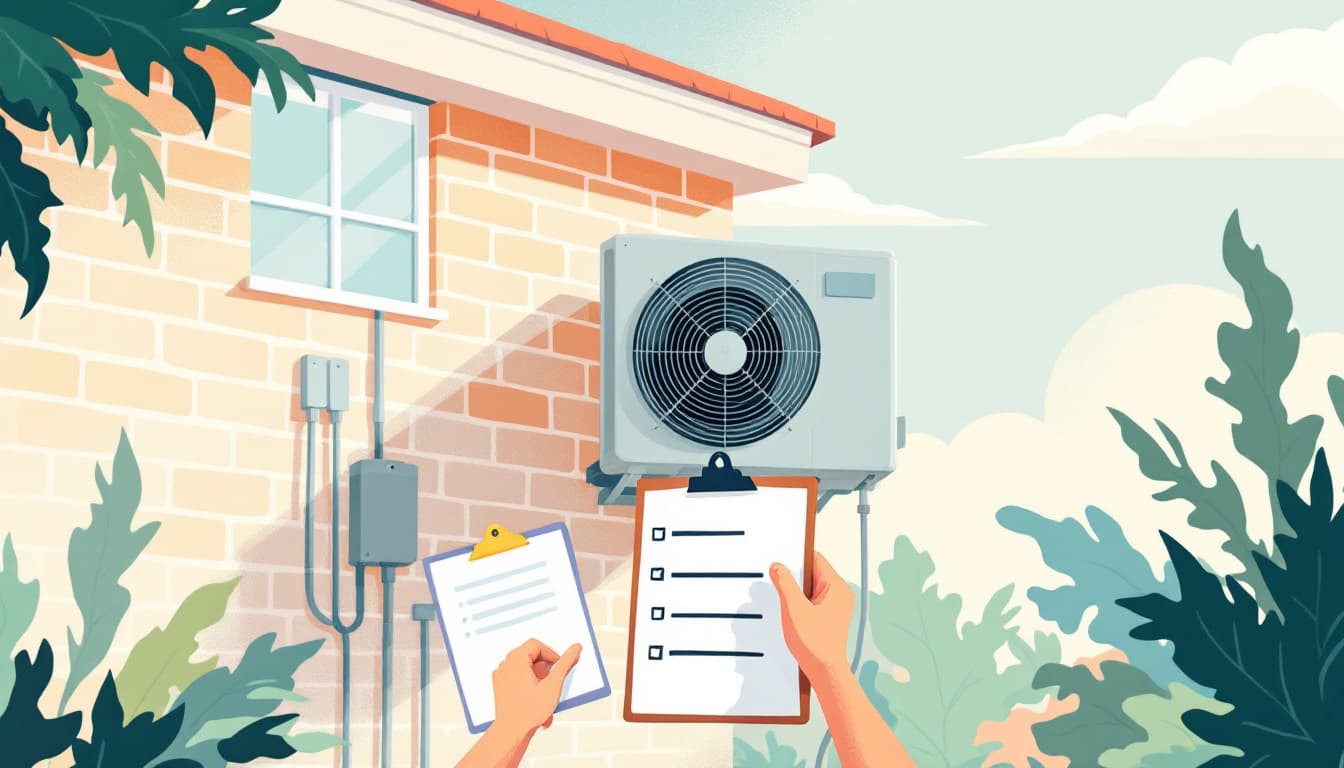
Check whether your AC condenser is in direct afternoon sun. This is underappreciated. A condenser sitting in full afternoon sun works measurably less efficiently than one in shade. You don't need a new unit — you may need a lattice shade structure or a strategically placed shrub (planted far enough away not to restrict airflow, typically three feet minimum). HVAC contractors in Florida see this constantly and rarely mention it unless asked.
Register for your county's urban forestry or tree giveaway program now. Palm Beach County has active canopy programs; so do Orange, Hillsborough, and Miami-Dade. These programs distribute free native trees — live oaks, Southern magnolias, Simpson's stoppers — to residents. The wait lists open at different times of year, often in fall. Native species are already adapted to Florida's wet-dry cycle and require almost no supplemental irrigation after establishment. A tree planted in October 2026 starts providing meaningful shade by year three.
Build a heat event kit that isn't just bottled water. A realistic Florida heat emergency means extended power outages after a storm, or a grid strain event during a peak heat week. The minimum useful kit: a battery-powered fan rated for at least 12 hours, a supply of oral rehydration salts (not just water — electrolyte replacement matters for anyone working outdoors or managing heat stress), a battery or hand-crank thermometer to monitor indoor temperature, and a written list of the nearest county cooling centers. Palm Beach County maintains public cooling centers during heat emergencies; find them at pbcgov.org before you need them.
The bigger picture
Palm Beach County's canopy push is good policy. It is also a years-long project that will benefit the people who plant the trees less than the people who live there fifteen years from now. That's fine — that's how municipal infrastructure works.
Your household operates on a shorter timeline. The actions above are achievable before the end of this calendar year, most of them at low or zero cost. The goal isn't to survive a catastrophe. It's to make your home slightly more durable than it was last August, and then slightly more durable again the August after that. That compounding is what resilience actually looks like.