A report this week from Oregon Public Broadcasting describes ranchers and private landowners actively helping suppress wildfires in Central Oregon — pulling equipment, cutting lines, coordinating with state crews. It reads like a feel-good community story. It is also a quiet signal about how thin the formal response infrastructure actually is once you get east of the Cascades.
What's actually changing
Oregon's wildfire seasons have stretched longer and burned hotter over the past decade. The Oregon Department of Forestry and local rural fire protection associations were never built to handle simultaneous large ignitions across Deschutes, Lake, Harney, and Crook counties. The gap between what those agencies can cover and what the landscape demands gets bridged, routinely, by people who own the land — ranchers with bulldozers, farmers with water tenders, neighbors who know the terrain better than any incident commander brought in from out of state.
That's not a failure of government, exactly. It's a structural reality of low-density land with high fire potential. But it has a direct implication for households: if private citizens are suppression assets, then the formal warning and evacuation system is also under pressure. OPB's reporting confirms that response timelines in rural Central Oregon are not the same as response timelines in a city.
Oregon's Level 1, 2, and 3 evacuation system — managed through county sheriff offices and communicated via the Oregon Office of Emergency Management — is the official framework. It's a good framework. It assumes, though, that you're monitoring it and that you can move when it says move. In low-density fire country, Level 3 ("Leave Now") can follow Level 1 faster than most households expect, especially when fire weather pushes a run at night or during afternoon wind events.
The families who get hurt are the ones who treat Level 1 as a reason to watch the sky instead of a reason to load the car.
What we'd actually do
Sign up for your county's emergency alert system today, not when smoke appears. Deschutes, Jefferson, Crook, Lake, and Harney counties each use different platforms — some use Nixle, some use Everbridge, some feed into the statewide OEM alert system. Go to your county sheriff's website and confirm you're enrolled with a cell number that receives texts. Don't assume your landline or a neighbor's call will be enough.
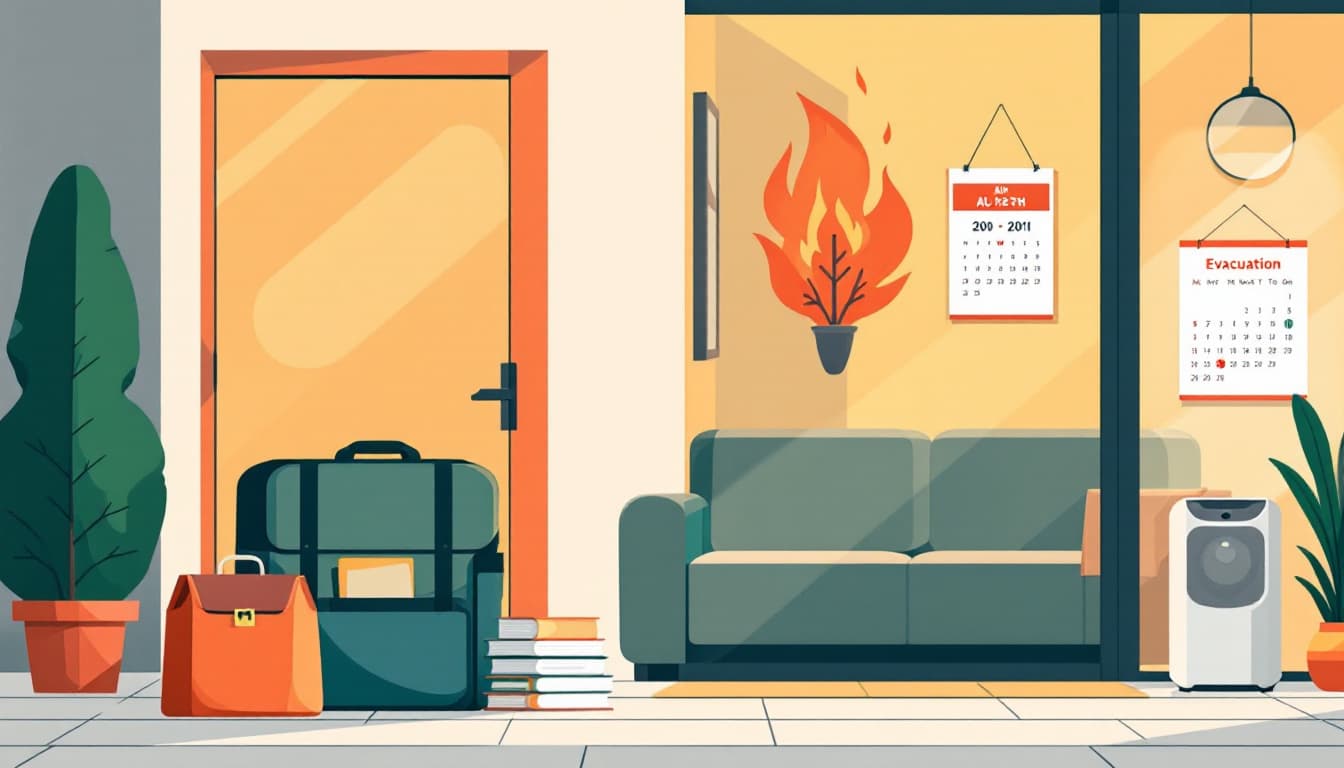
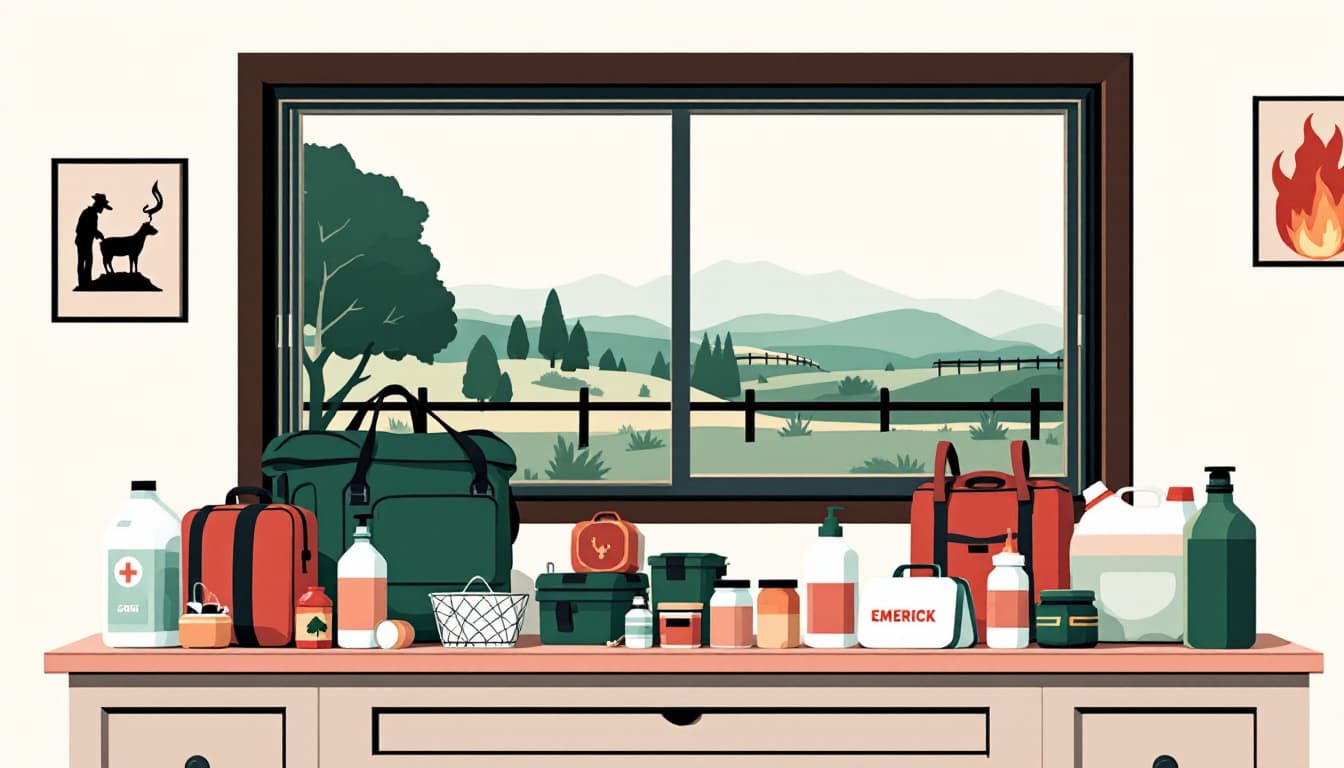
Build a tiered "go bag" that reflects three realistic scenarios: two hours, two days, two weeks. Most preparedness advice treats evacuation as one event. Wildfire evacuation in Central Oregon can mean sheltering in Bend for a night, or it can mean a family member can't return to a property for weeks while a fire investigation is open. Stage your bag accordingly — documents and medications in one pouch that leaves the house in under five minutes, a 48-hour kit in the car from July through October, and a longer-stay box at a family member's address west of the mountains.
Map two exit routes from your property and drive both before fire season peaks. Smoke reduces visibility faster than you expect. A road that appears open on your phone's map app may be closed by a sheriff's deputy or impassable due to spot fire activity. Know the paved alternative and the dirt alternative. If you live on a private road off a county road in Central Oregon, find out now whether that access road has a turnaround wide enough for an engine crew — it will affect whether anyone can help you.
Talk to your neighbors about what assets each household has. OPB's story is essentially about informal mutual aid. That network already exists in ranching communities. Suburban and semi-rural households in places like Redmond, Sisters, Prineville, and La Pine often don't have it yet. A five-minute conversation about who has a trailer, who has medical training, and who leaves early versus late is more valuable than most gear purchases.
Photograph and cloud-backup your property and contents annually. Insurance claims after wildfire depend on documentation. A 10-minute walkthrough video of your home uploaded to cloud storage — done once a year, in June — is the kind of thing you will either be glad you did or wish you had.
The bigger picture
The ranchers helping fight fires in Central Oregon are not a heartwarming anomaly. They are evidence that resilience at the household and community level is not optional in low-density fire country — it's the actual plan. The formal system backstops it. It does not replace it.
Durability doesn't require buying expensive gear or treating every summer as a countdown to disaster. It requires knowing your county's alert system, knowing your exits, and having a conversation with the people next door. Those three things cost nothing and take an afternoon. Do them before September.