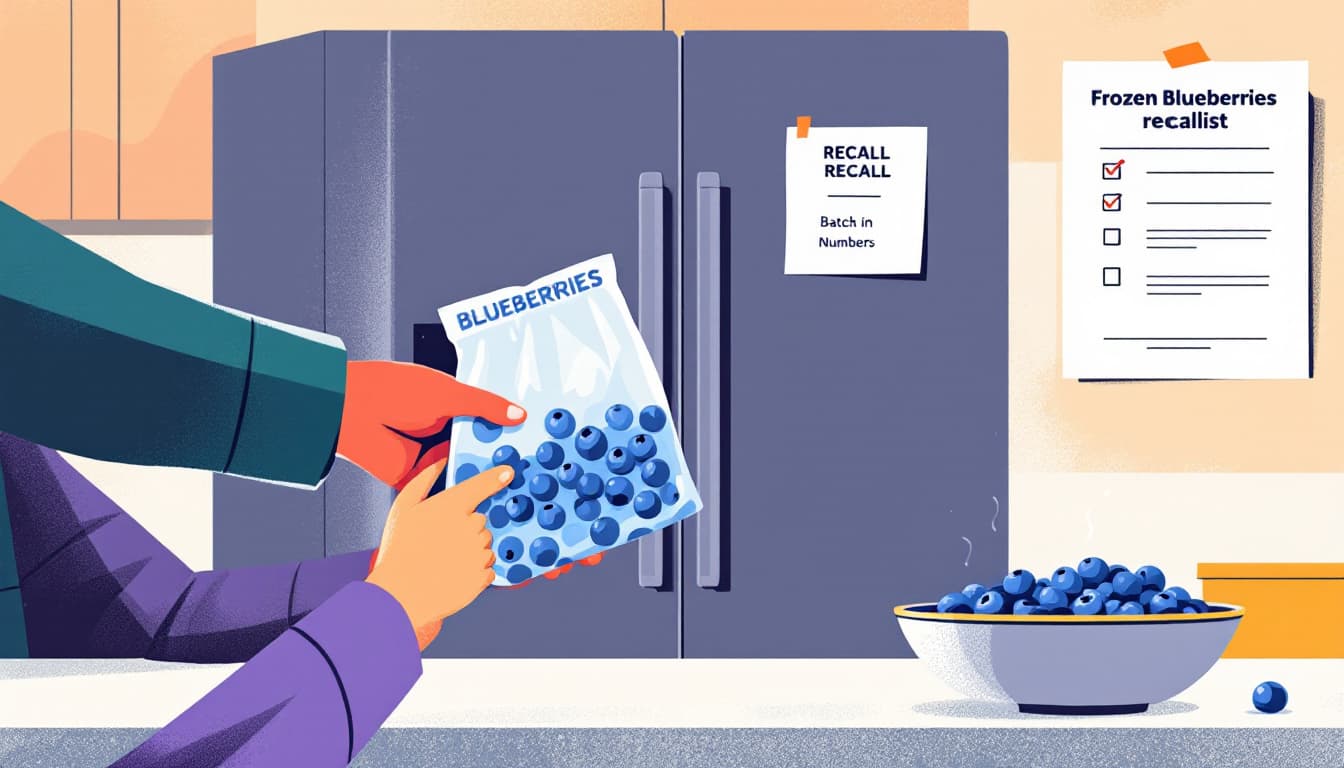
A report this week from ABC7 Eyewitness News disclosed that more than 55,000 pounds of frozen blueberries have been recalled due to possible listeria contamination. The recall affects product that has likely moved through retail and grocery supply chains across the country, including in Oregon — a state that sits at the heart of U.S. blueberry production, with the Willamette Valley alone accounting for a significant share of the Pacific Northwest's commercial berry harvest.
Listeria monocytogenes is a bacterium capable of causing listeriosis, a serious infection that poses elevated risk to pregnant women, elderly individuals, and anyone with a compromised immune system. Unlike many foodborne pathogens, listeria can survive and even multiply at refrigerator temperatures, which makes frozen and refrigerated products a particular concern when contamination is detected. The U.S. Food and Drug Administration maintains oversight of such recalls at the federal level, while the Oregon Department of Agriculture monitors in-state food safety and can issue supplemental advisories when recalled products are confirmed in Oregon distribution channels.
Oregon consumers who purchase frozen fruit — whether from Willamette Valley co-ops, Costco warehouses along the I-5 corridor, or regional grocery chains like Fred Meyer — should be aware that recalled lots can linger in home freezers for months or years before being consumed, a storage pattern that differs sharply from fresh produce. Preppers and long-term food storers who rotate frozen berries into deep-freeze stockpiles face a compounded exposure window compared to typical households: a bag purchased before a recall announcement and sealed into a chest freezer in a Eugene or Medford garage could go unconsumed — and unchecked — well past the point when most consumers have discarded their supply. Oregon's robust berry-growing infrastructure means that locally branded or regionally co-packed frozen blueberry products are common on store shelves here, and the state's food storage culture — driven in part by earthquake preparedness guidance from Oregon Office of Emergency Management — means frozen goods are widely held in quantity. Tracking recall notices through the FDA's enforcement database or the Oregon Department of Agriculture's recall alerts is one way those stockpiles stay safe over time; our chest freezer organization review touches on systems that make lot-number checks more practical for deep-storage setups.
The scale of this recall — 55,000-plus pounds — suggests the contamination concern spans multiple production lots or a shared processing facility, though specific sourcing details had not been fully disclosed at the time of the ABC7 Eyewitness News report. Anyone who has purchased frozen blueberries recently is advised to check the FDA's recall database directly for lot numbers and brand names as that information is released.