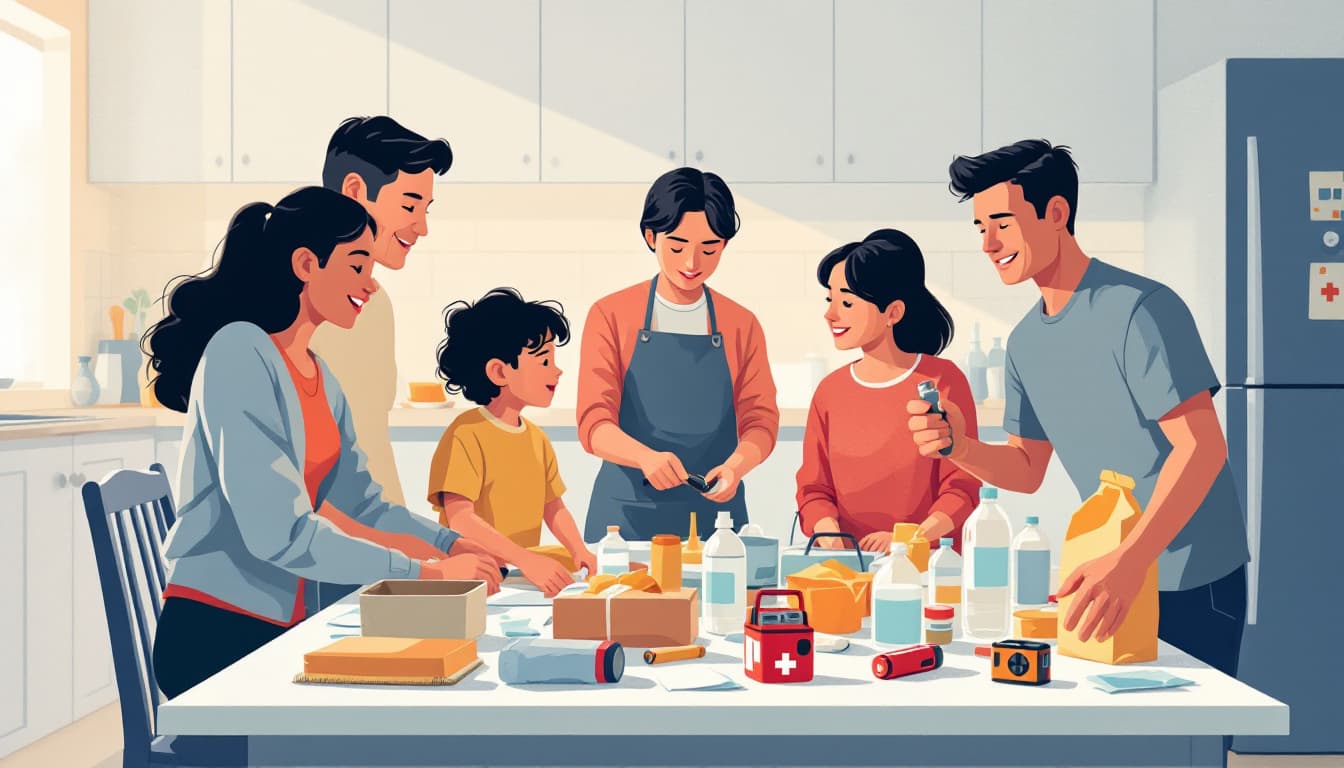
A post this month on the Tailscale blog walked through advanced networking tricks for jailbroken Kindles — using the decade-old e-ink hardware as a functioning proxy node and tunnel endpoint. The audience was developers and tinkerers. But the signal underneath the technical details is worth unpacking for anyone trying to build a household that keeps working when the internet doesn't.
What's actually changing
E-ink Kindles from roughly 2012 onward run a stripped-down Linux kernel. They have long battery life, readable screens in direct sunlight, and — if you unlock them — the ability to run software Amazon never intended. The Tailscale writeup was about network routing. The preparedness implication is different: these devices can store and serve knowledge locally, independent of any cloud.
This matters because the default posture of most households in 2026 is cloud-dependent. Recipe apps, medication reference tools, home repair guides, first-aid instructions — nearly all of it requires a live internet connection to function. That's fine until it isn't. Wildfire evacuations, extended power outages, and regional grid events routinely take cellular data networks down alongside the power. FEMA's own guidance on information access in disasters consistently notes that households underestimate how quickly they lose access to reference material they assumed was "always there."
The preparedness community has long promoted printed binders. That's not wrong, but a single e-ink device with a locally-stored offline wiki, a first-aid manual, regional topographic maps, and a water purification reference can hold more information than a shelf of binders, weigh less than a pound, and run for weeks on a single charge. You don't need to jailbreak anything to do most of this — though jailbreaking expands your options considerably.
What the Tailscale post illustrates is that the tinkerer community has already solved the technical half of this problem. The knowledge of how to repurpose cheap, low-power, long-battery hardware is public, tested, and well-documented. The gap is that most households haven't acted on it.
What we'd actually do
Pull an old Kindle out of a drawer and load it with offline reference material this week. Amazon's Kindle ecosystem lets you send PDFs directly to any device via email. The Wikimedia Foundation publishes offline snapshots of Wikipedia and other reference wikis in formats readable on e-readers. Kiwix, a free application, serves offline wiki content locally and has a companion reader. You do not need to jailbreak, void warranties, or spend money to do this. Start with a first-aid reference, a water sanitation guide, and your regional emergency management agency's preparedness handbook — most publish PDFs.
Designate one low-power device per household as your "dark mode" information terminal. This means it stays charged, it is not your daily driver, and it carries a curated set of offline documents. An old Kindle is ideal. A cheap Android tablet with airplane mode and a local document library also works. The goal is a device that can function when your phone is dead, your router is offline, and your cellular signal is gone. Treat it like you treat a paper map: boring until it isn't.
Audit what you actually can't access without the internet. Spend ten minutes opening the apps and bookmarks you'd rely on in an emergency — medication dosing, home repair how-tos, contact lists, insurance policy numbers — and check whether they work in airplane mode. Most won't. For anything critical, download a PDF version or copy the text into a local notes app that syncs offline. This exercise is uncomfortable because the gaps are larger than most people expect.
If you or someone in your household has technical comfort, explore Kiwix or a local home server. A Raspberry Pi or an old laptop running a local web server can serve offline reference material to every device on your home network. The Tailscale blog post's deeper implication is that this kind of local networking is no longer exotic — the tooling is mature, the hardware is cheap, and guides exist for every skill level. This is a weekend project, not a career.
The bigger picture
The pattern here is not about Kindles specifically. It's about the gap between how resilient households think their information access is and how resilient it actually is. Every year, the tools for closing that gap get cheaper and better-documented. The friction is almost entirely psychological — it feels like overkill until the moment it isn't.
Durable households don't need to be high-tech households. They need to be households that have thought one step past the assumption that everything will keep working. Loading a spare e-reader with offline reference material is the information equivalent of keeping three days of food in the pantry: unglamorous, low-cost, and quietly valuable exactly when you need it.