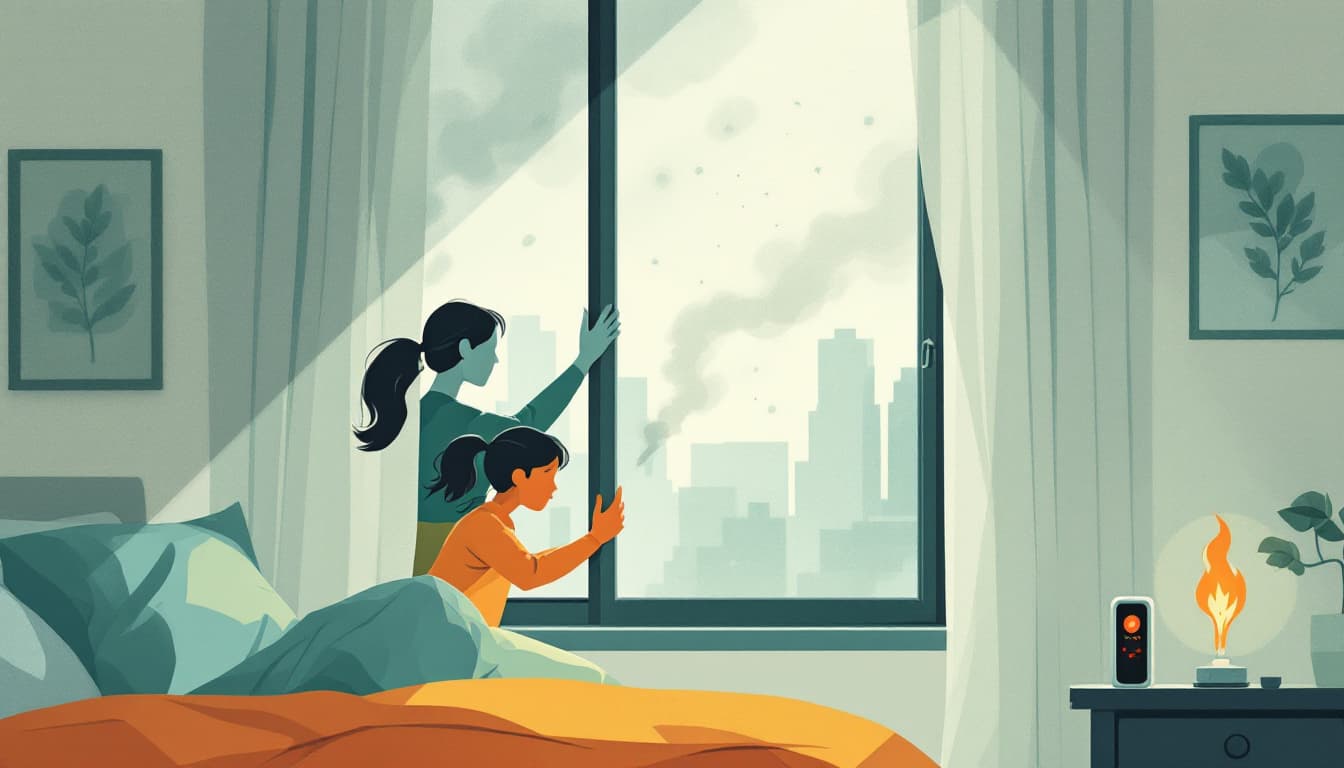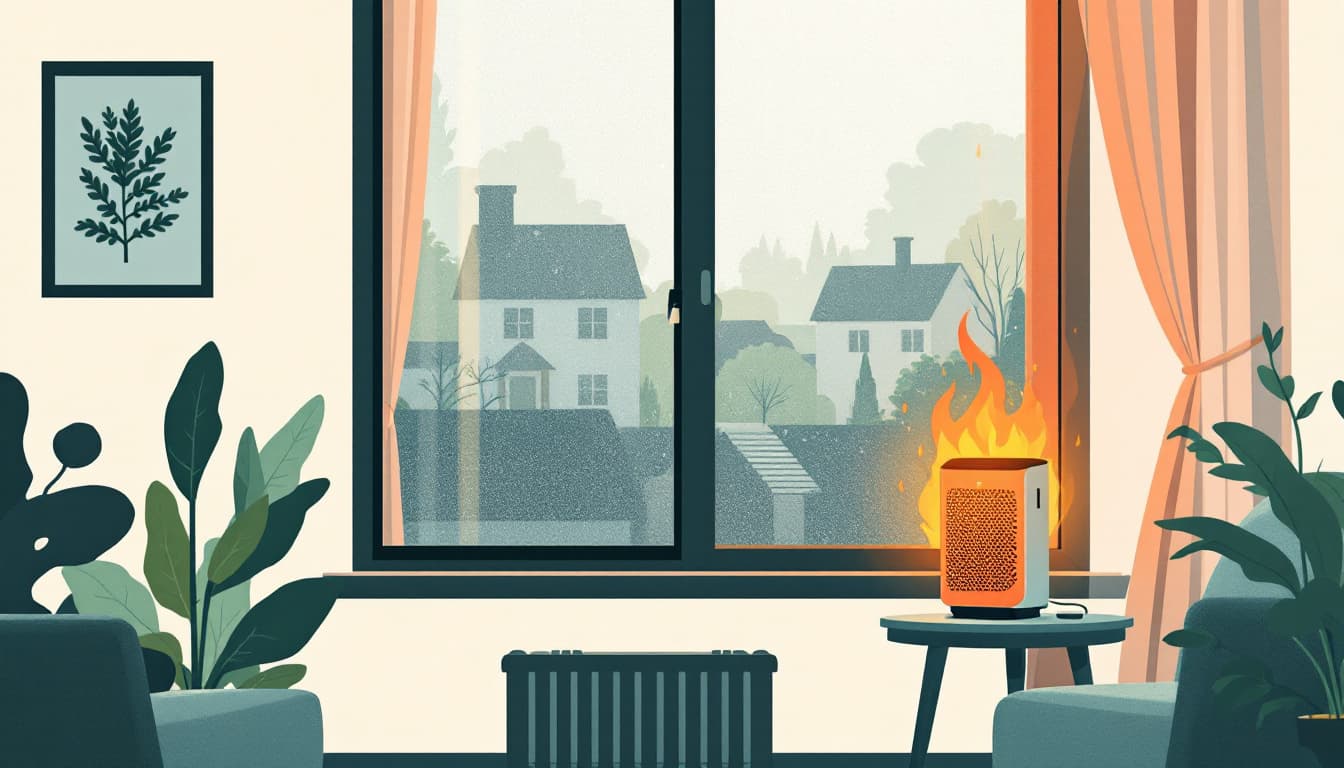
A New York Times air quality tracker published this week mapped active smoke plumes from Canadian and western U.S. wildfires drifting across the Southeast — and North Carolina sits squarely in the transport corridor. If you've noticed that particular flat, yellowish light over the Blue Ridge or smelled something faintly campfire-like in Raleigh or Charlotte, you weren't imagining it.
This isn't a freak event. The state sits at the end of the jet stream's preferred southeastward drift path during summer fire season. Western North Carolina's mountains also trap particulate matter in valley communities — Asheville, Boone, Waynesville — the same way they trap cold air in winter. Smoke events that look mild on a regional map can produce significantly worse local readings in those hollows.
What's actually different about smoke versus normal air pollution
Most NC households are calibrated to pollen season. Smoke is a different problem. Fine particulate matter from wildfire smoke — PM2.5, particles smaller than 2.5 microns — behaves differently from pollen. It penetrates HVAC filters rated for pollen. It penetrates gaps around windows and doors that pollen doesn't. And it accumulates indoors over multi-day events faster than most people expect.
The North Carolina Division of Air Quality issues Air Quality Index advisories and posts them at ncdeq.gov, but those readings are based on outdoor monitoring stations. Your indoor air can be measurably worse than the outdoor AQI suggests if your home is leaky or your HVAC filter is more than a few months old.
One more thing: the health burden isn't evenly distributed. Households with young children, anyone over 65, and people with asthma or COPD face serious risk at AQI levels that feel fine to healthy adults. If anyone in your household is in those groups, the threshold for action is lower than you might think.
What we'd actually do
Check the NC DEQ air quality forecast before outdoor morning routines, not after. The ncdeq.gov Air Quality Forecast page posts next-day AQI predictions by region. A 90-second check the night before tells you whether tomorrow's run, your kid's outdoor sports practice, or that deck project should move indoors. The problem with smoke events is they often look fine at 7 a.m. and deteriorate by noon.
Upgrade your HVAC filter to MERV-13 and check it now. A standard MERV-8 filter — the blue fiberglass kind sold everywhere — stops almost nothing at PM2.5 scale. A MERV-13 filter, widely available at hardware stores for $15–25, captures a substantial fraction of fine smoke particles. If your system can handle the added airflow resistance (most modern forced-air systems can; check your equipment manual or call your HVAC contractor), swap it in before the next smoke event, not during one. If your system can't handle MERV-13, MERV-11 is a meaningful improvement over MERV-8.
Build one clean room with a box-fan filter. Take a 20x20 box fan, duct-tape a MERV-13 filter flat against the intake side, and run it in one room — ideally where you sleep. This is sometimes called a Corsi-Rosenthal box; researchers at UC Davis documented its effectiveness during western U.S. wildfire events. It's not elegant, but total materials cost under $40 and it genuinely reduces indoor PM2.5. During a multi-day smoke event, having one room your kids can breathe well in matters.
Keep N95 masks accessible, not buried. An N95 rated by NIOSH, properly fitted, provides meaningful protection for outdoor time during elevated smoke events. The KN95 masks that proliferated during the pandemic provide less consistent protection. Buy a small supply and keep them somewhere you'll actually find them — near your car keys, not in a go-bag under the bed.
Know your evacuation triggers if you're in the WNC mountains. Wildfire smoke reaching the Piedmont usually means active fire somewhere upwind. For households in Haywood, Transylvania, Jackson, or other western NC counties, the calculus is different — smoke can precede a local fire event. Review NC Forest Service fire restriction notices at ncforestservice.gov during dry stretches, and know which roads out of your hollow are available if conditions change.
The bigger picture
North Carolina is not the American West. The state has different fire ecology, different humidity, and different infrastructure. That's not a reason to dismiss wildfire smoke as somebody else's problem — it's a reason to calibrate your response to what the actual risk looks like here. Most NC households need modest, low-cost indoor air interventions, not bunkers or evacuation trailers. A MERV-13 filter and a box fan take care of most of the problem most of the time.
Durability is the goal. A household that can close the windows, kick on the filtered fan, and check the DEQ forecast is genuinely better positioned than one that owns $3,000 worth of gear but hasn't changed its HVAC filter since last fall.