On a July morning that looked unremarkable on the calendar, parts of western and central North Carolina woke up to roads closed by standing water — again. A report this week from FOX Weather documented another day of flood threats across the Carolinas following weeks of sustained heavy rainfall, with the broader storm system expected to shift toward Florida next. For North Carolina households, the shift south is not a relief. It's a pause.
What's actually changing
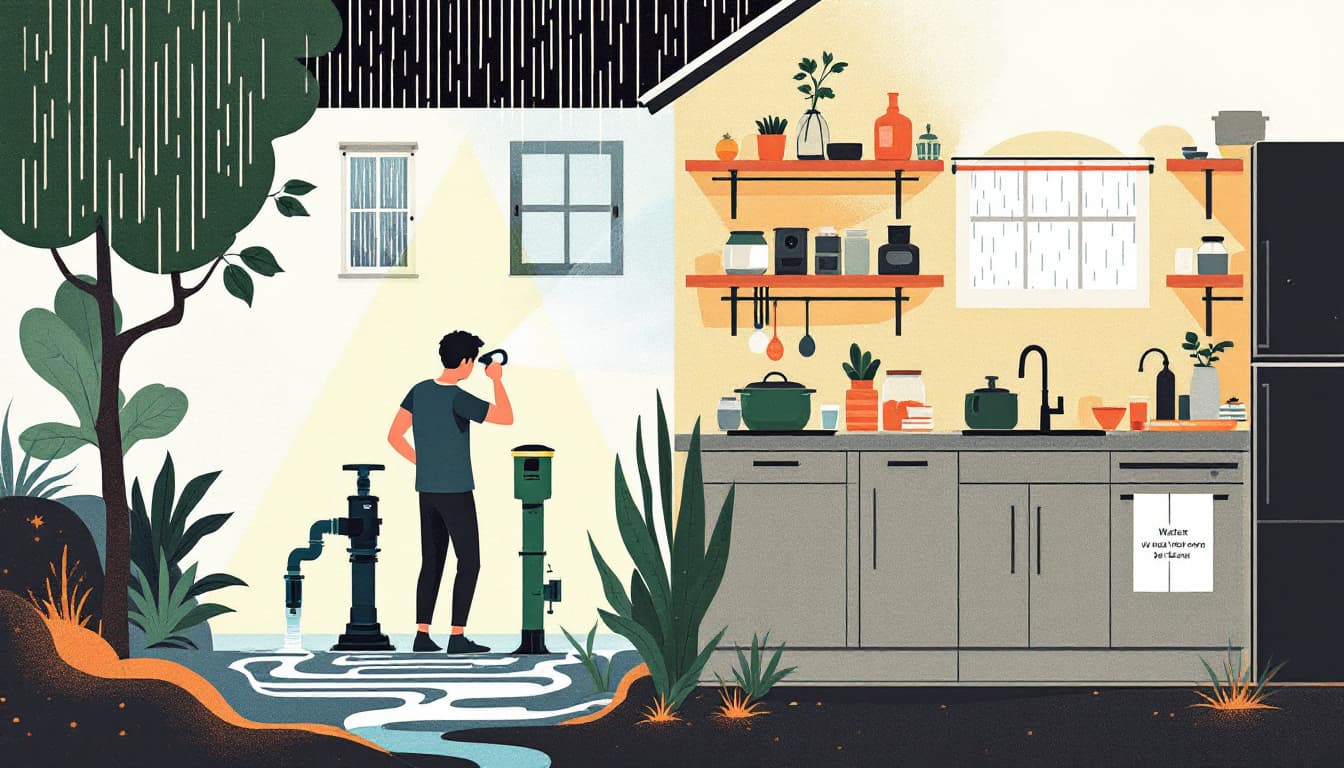
This is not a single storm event. It is a prolonged wet pattern, which behaves differently than a hurricane or a single severe cell. With prolonged rain, the ground reaches saturation faster than most residents expect. After saturation, every additional inch of rain runs off almost immediately — which is why the third week of rain produces flooding that the first week did not.
North Carolina's geography makes this particularly uneven. The mountains around Asheville and the piedmont areas near the Catawba River system absorb and channel water differently than the flat coastal plain east of Raleigh. A rain event that leaves Charlotte inconvenienced can put Kinston or Princeville — communities with documented flood histories — under several feet of water. The NC Department of Public Safety maintains flood inundation mapping tools that most households have never opened.
The practical risk for most families is not drowning. It is a cascade of smaller, expensive, and preventable losses: a flooded crawl space that takes three weeks to dry out, a car driven into a water-covered road because the depth was unclear, a sump pump that failed because the power went out, food spoiled when a basement refrigerator sat in two inches of water.
What we'd actually do
Pull your flood zone status today, not when the watch is posted. Go to FEMA's Flood Map Service Center and enter your address. North Carolina has tens of thousands of properties in moderate- to high-risk zones that carry no flood insurance because the owners assumed standard homeowners policies covered it. They do not. If you are in a Zone A or AE designation, a call to your insurer this week costs nothing. A claim without coverage costs everything.
Standard homeowners insurance excludes flood damage almost universally. This is not fine print — it is a structural gap that catches North Carolina families after every major event. National Flood Insurance Program policies have a 30-day waiting period before they take effect, which means the time to explore coverage is right now, not when the next watch is issued. Even a modest policy covering contents can offset the gut-punch of replacing appliances, flooring, and stored goods.
Photograph your possessions and store the images off-site. Walk through your home with your phone camera and record every room, every appliance serial number, every piece of furniture. Upload it to cloud storage or email it to yourself. Insurance adjusters work from documentation, and after a flood, the documentation that was sitting in the flooded drawer is gone. This takes thirty minutes and costs nothing.
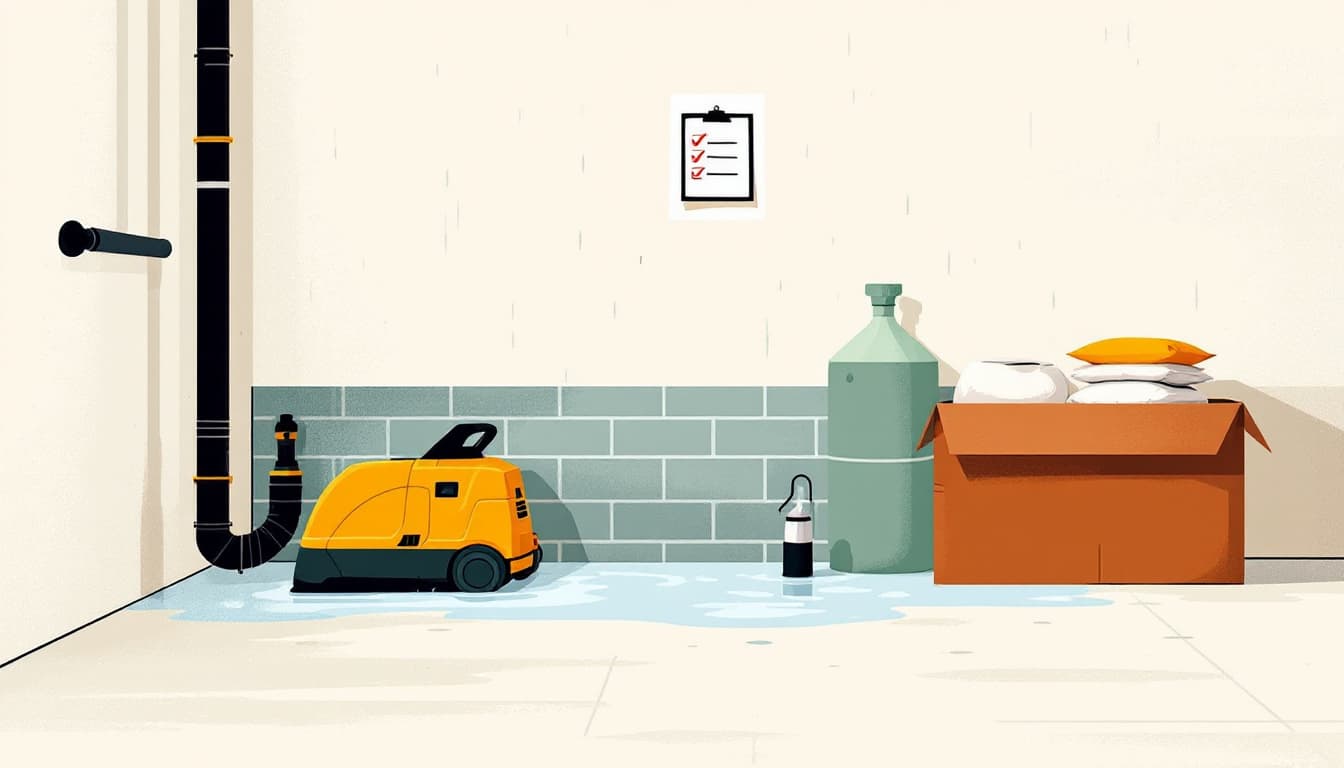
Test your sump pump before the next storm, not during it. Pour a five-gallon bucket of water into the sump pit. If the pump activates and clears the water, it is working. If it does not, a replacement pump costs between $100 and $200 at any hardware store and can be installed in an afternoon. A battery backup unit adds another layer of protection for the power-outage scenario, which is common precisely when pumps are most needed.
Build a go-bag that assumes a water event, not a fire. Most household emergency kits are designed around fire or shelter-in-place scenarios. A flood go-bag for a North Carolina household should include waterproof document storage for insurance papers and IDs, a battery-powered phone charger, cash in small bills (card readers go down when power is out), and a change of clothes per person in a sealed dry bag. Keep it on an upper floor, not in the basement.
The bigger picture
North Carolina's flood risk is not new, but the pattern of prolonged rainfall — rather than discrete named storms — makes it harder to treat seriously. There is no dramatic name, no landfall announcement, no clear before-and-after moment. The water just keeps coming. That is precisely the kind of slow-moving, undramatic risk that households underweight until it materializes in their crawl space.
Durability as a household does not require a bunker or a year's worth of freeze-dried food. It requires a current flood map printout, a tested sump pump, and a phone full of photographs that can survive whatever the next wet pattern delivers. The goal is to be the household that files a complete claim and moves on — not the one still arguing with adjusters in October.