Rural Radio Network reported this week that recent rainfall has eased extreme drought conditions across parts of central Nebraska. The U.S. Drought Monitor had flagged wide stretches of the region at D3 and D4 levels — severe to exceptional — for much of the spring. A few inches of rain in the right weeks can shift that designation and give farmers a window to recover. It can also make a household feel like the problem is solved.
It isn't.
What's actually changing
Drought in the Great Plains doesn't end with a rainy stretch. It retreats. Topsoil moisture recovers before subsoil does. Reservoir levels lag weeks behind precipitation totals. Aquifer levels — particularly in areas drawing from the High Plains Aquifer system, which underlies much of Nebraska — respond on a scale of months to years, not days. A wet July is good news. It is not recharge.
For households not thinking about water, this kind of headline is invisible. For those on municipal systems, drought stress shows up as use restrictions, surcharges, and occasional discoloration — inconveniences more than emergencies. But for the roughly one in six American households on private wells, a multi-season drought is a direct infrastructure problem. Shallow wells go dry. Pumps run hot. Water quality shifts when aquifer levels drop and mineral concentrations rise.
The food-supply angle is less visible but worth tracking. Central Nebraska is a significant cattle and corn production zone. Prolonged drought stress on that region — even partially relieved — affects hay prices, feeder cattle costs, and corn yields that ripple into grocery prices over the following two to four quarters. Recent USDA crop condition reports have noted that drought stress earlier in the season may already be priced into some commodity forecasts. Relief now helps; it doesn't erase the spring.
What we'd actually do
Check your water source's recent history, not just today's pressure. If you're on a private well, call your county extension office or well driller and ask whether wells in your area showed depth or quality changes this spring. That one conversation tells you more than the drought map does. Extension offices often have local well data that isn't aggregated anywhere online.
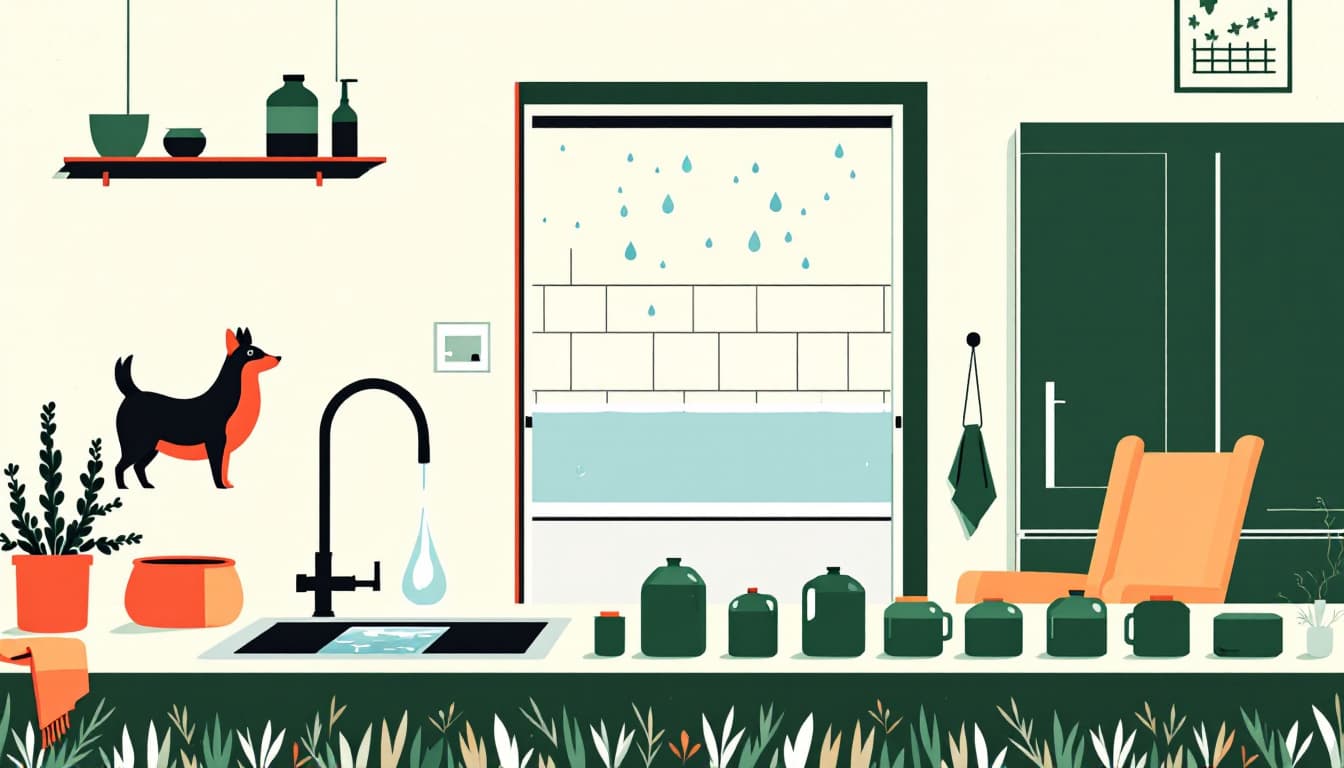
Store enough water to cover a 72-hour pump failure, minimum. Most preparedness guidance stops at 1 gallon per person per day, which is survival math, not comfort math. A realistic number for drinking, cooking, and basic hygiene is closer to 3 gallons per person per day. For a family of four, that's 36 gallons for three days — achievable with food-grade 5- or 7-gallon containers that run under $15 each at most farm supply stores. Fill them now, while municipal pressure and well levels are recovering.
If you're on city water, read your utility's most recent annual water quality report. Every community water system is required to publish one. Look for whether your utility draws from surface water (more drought-sensitive) or groundwater, and whether they flagged any supply stress in the past year. This report is usually buried on your city's website or mailed annually and ignored. It's worth 10 minutes.
For households with gardens or small livestock, model a reduced-water scenario. If your area re-enters drought conditions by late August — which the seasonal outlook from NOAA's Climate Prediction Center has flagged as a possibility for parts of the central U.S. — what crops or animals are most at risk? Planning one substitution now (a drought-tolerant cover crop, a smaller flock heading into fall) is cheaper than crisis management in September.
The bigger picture
Drought cycles in the central U.S. are not new. What's shifting is the combination of higher baseline temperatures, increased agricultural water demand, and aquifer drawdown that accumulates across decades. A single season's rainfall doesn't reverse that trajectory. It buys time.
The households that handle this well are not the ones with the largest water tanks or the most elaborate rainwater collection systems. They're the ones who know their actual water source, have a honest estimate of how long they could manage on stored water, and check in with local infrastructure conditions once a season rather than waiting for a crisis to prompt it.
A good rain in Nebraska is worth celebrating. It's also worth using as a reminder to run the numbers before the next dry stretch.