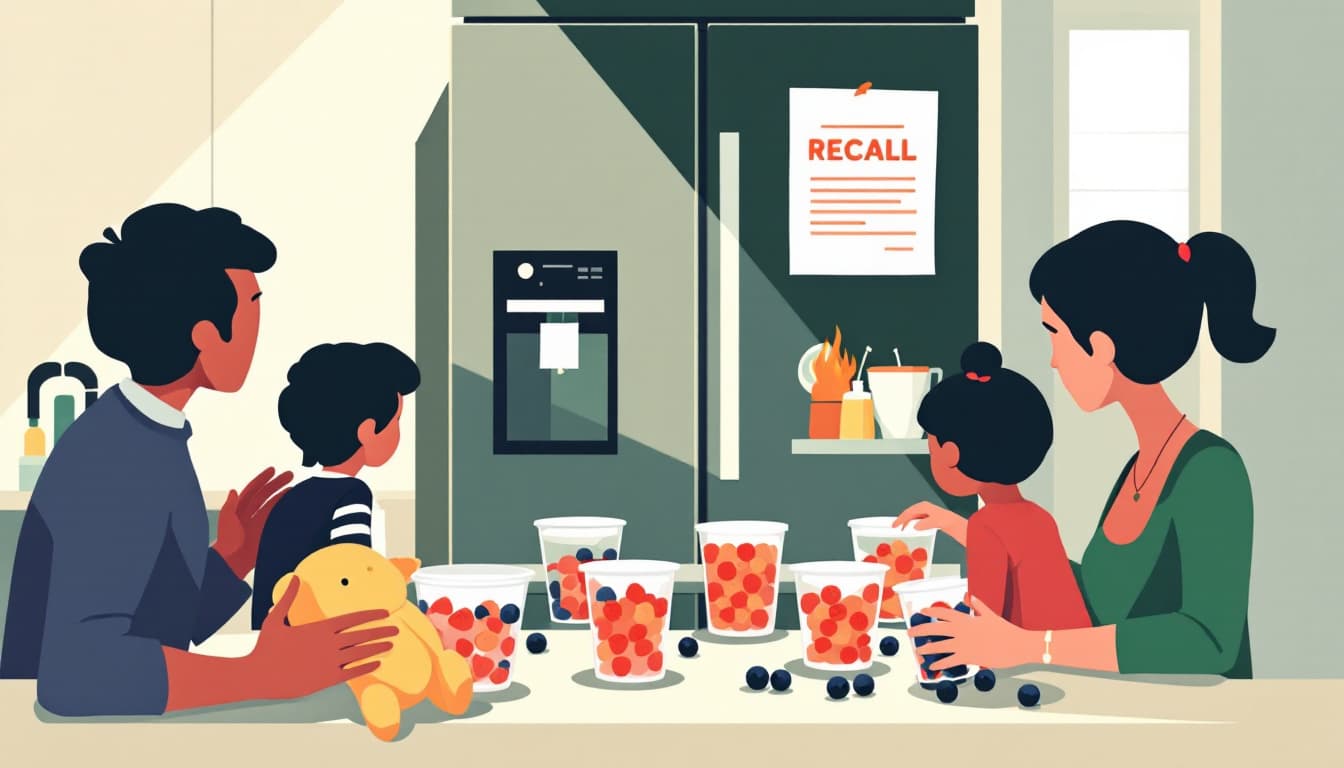
Publix operates more than 60 stores in North Carolina, from Wilmington to Asheville, and this week one of its house brands landed on the FDA recall list. A report circulating via facebook.com flagged that Publix's GreenWise organic berry line is being pulled due to E. coli contamination concerns. If you bought frozen organic berries at a North Carolina Publix recently, that bag may still be in your freezer right now.
What's actually happening
E. coli contamination in frozen produce is not a theoretical risk. Freezing does not kill E. coli — it suspends it. When the berries thaw in a smoothie or on a cutting board, the bacteria become active again. The strains associated with contaminated produce can cause illness severe enough to require hospitalization, particularly in young children, older adults, and anyone immunocompromised.
The "organic" label here is a red herring. Organic certification governs what pesticides and fertilizers are used. It says nothing about pathogen testing frequency or post-harvest handling. Contamination at the processing or cold-chain level affects organic and conventional products equally. GreenWise is a Publix house brand marketed as a premium, health-conscious choice — which is exactly why the gap between perceived safety and actual risk is worth naming.
Recalls in the U.S. are largely voluntary, initiated by the company or prompted by FDA findings. That means the speed of the process varies. By the time a recall is publicly announced, affected product has usually been on shelves — and in home freezers — for weeks.
What we'd actually do
Check your freezer before you read another paragraph. Pull out any GreenWise-branded frozen berry products — mixed berries, blueberries, strawberries — and cross-reference the product name, UPC, and lot code against the official FDA recall database at fda.gov/recalls. The facebook.com report names the brand and the contamination type; the FDA listing will have the exact lot codes. Do not rely on memory or the store's shelf status. The product in your freezer was purchased before the recall was announced.
Do not eat, cook, or blend the product to "kill" the bacteria. This is a persistent myth. The FDA guidance on recalled E. coli-contaminated produce is to discard it, not to heat it as a workaround. Place the product in a sealed bag before putting it in the trash so it doesn't contaminate surfaces on the way out.
Request your refund, even if it feels minor. Publix's standard practice for recalls is a full refund without requiring the original receipt. Bring the product or the packaging to customer service at any North Carolina Publix location. If the product is already gone, your bank or credit card statement showing a Publix purchase in the relevant date window is usually sufficient. The few minutes this takes is worth doing on principle — it also sends a signal through the supply chain.
Audit what else is in your freezer from the same shopping trip. If you bought the recalled berries, you likely made a larger grocery run. Check whether any other items came from the same GreenWise line or from the same produce supplier. The FDA's recall search lets you look up by brand and date range. This is a five-minute task.
Set up FDA MedWatch or the USDA FSIS recall email alerts. Both agencies offer free email notifications when new recalls are posted. North Carolina households that shop at regional chains — Publix, Harris Teeter, Food Lion — are exposed to a wide enough variety of national suppliers that a passive alert system pays for itself in attention the first time it catches something in your pantry.
The bigger picture
A single berry recall is not a reason to overhaul your food storage or distrust the grocery supply chain wholesale. It is a reason to treat your freezer as inventory, not a black box. Most households have no real-time awareness of what they've stored, when they bought it, or whether it's been flagged.
The preparedness habit worth building here is a simple one: a running note on your phone or a whiteboard in the kitchen that logs what's in the freezer and when it arrived. That habit costs nothing and would have caught this recall the moment you heard about it.
Durability in a household context means staying informed without getting rattled. Check the lot codes, return the product, set up the alert. Then move on.