The smell hits before the news does. If you're in Miami-Dade, Broward, or the surrounding counties right now, you may have noticed a haze sitting low over the skyline or caught a faint wood-smoke scent through an open window. That's not a distant problem. A USA Today report this week confirmed a large wildfire burning in the Miami area is generating smoke with far-reaching drift — the kind that degrades air quality across populated neighborhoods well outside the fire perimeter itself.
Florida's fire season peaks in late spring and early summer, when winter dry-downs collide with pre-rainy-season heat. The Everglades edge, the Homestead agricultural corridor, and the palmetto scrubland threading through western Miami-Dade are all capable of producing large, fast-moving fires. When they do, prevailing southeasterly winds push smoke directly into one of the most densely populated metro areas in the country.
What's actually changing
Wildfire smoke is not the same as a bad air day from traffic. The particulate matter — specifically PM2.5, particles small enough to penetrate deep into the lungs — can spike to hazardous levels miles from the active burn. Florida Division of Emergency Management and the Florida Department of Environmental Protection both track air quality index (AQI) data in near real-time, but those readings lag conditions by an hour or more. By the time the official AQI hits "Unhealthy," your family has already been breathing the air.
For most healthy adults, a day or two of elevated smoke exposure is an irritant, not an emergency. The real risk concentrates in three groups: children under 12, adults over 65, and anyone with asthma, COPD, heart disease, or pregnancy. In South Florida, that's a substantial slice of households. Miami-Dade's population skews older than the national average, and the region has high baseline rates of asthma, particularly in lower-income zip codes near industrial corridors.
There is also a timing problem. June in South Florida means windows are already closed for air conditioning much of the day — but HVAC systems cycling outdoor air can still pull smoke particulates inside if filters are old or undersized.
What we'd actually do
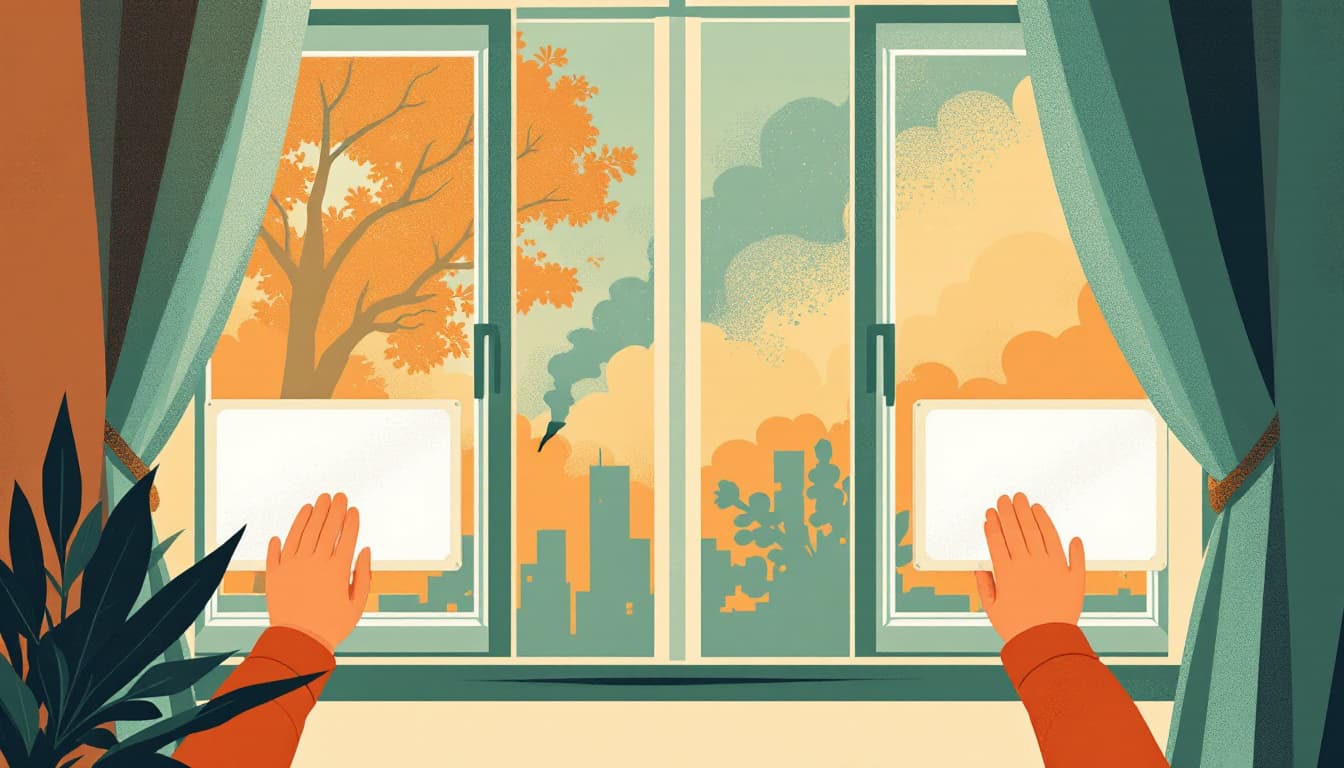
Check your HVAC filter right now, this week. A standard 1-inch MERV-8 filter does almost nothing for wildfire smoke. A MERV-13 filter — available at most hardware stores for $15–25 — captures a meaningful portion of PM2.5. Swap it in before you sleep tonight if smoke is visible or the AQI is elevated in your zip code. If your system can't handle a MERV-13 (check the blower specs or ask an HVAC tech), run a box fan with a MERV-13 filter taped to the intake face as a makeshift air cleaner.
Identify one interior room you can seal and shelter in. Pick a room with the fewest exterior air leaks — usually an interior bathroom or bedroom — and keep a roll of painter's tape and a folded towel there. This is not about disaster bunkers. It's about giving your highest-risk family member a cleaner-air retreat for sleeping during a multi-day smoke event.
Locate your household's respiratory medications and verify quantities. Inhalers, nebulizer solution, antihistamines, and any cardiac medications should be accounted for today. Florida's pharmacy supply chains are generally robust, but smoke events drive demand spikes for rescue inhalers at local pharmacies. If you're within 30 days of running out, refill now.
Download the AirNow app and set a location alert for your county. AirNow pulls EPA monitoring data and will push a notification when your area crosses into the Unhealthy range. It's free and takes four minutes. The Florida DEP also publishes county-level air quality forecasts at floridadep.gov — bookmark the air monitoring page, not just the homepage.
Talk to your kids' school or daycare about their smoke protocol. Many Florida schools lack a written outdoor-air policy for wildfire smoke. A brief email to the front office asking what their threshold is for keeping kids indoors during elevated AQI is a reasonable and low-stakes request. If they don't have an answer, that's useful information too.
The bigger picture
Florida's wildfire risk does not look like California's on television — there are no hillside neighborhoods consumed by crown fires — so it gets underestimated. But the state consistently ranks among the top five in the country for total acres burned in a given year, according to National Interagency Fire Center data. The fires tend to burn in flatlands and wetland edges rather than suburbs, which means the primary household impact is smoke, not flame. That makes air quality management the core skill, not evacuation planning.
Durability means being able to function well during a week of degraded air quality without a crisis. A better filter, a known shelter room, and a charged phone with one monitoring app get you most of the way there.