A rain gauge in Boyle County finally had something to report. After weeks of dry conditions that pushed parts of Kentucky into moderate to severe drought, recent rainfall began moving the region back toward normal, according to a report this July from The Advocate-Messenger. Fields that were stressed, lawns that had gone dormant, and municipal systems that had issued conservation notices all got a reprieve.
Good. And also: the reprieve is not the lesson. The shortage before it is.
What actually changed — and what didn't
Drought in the eastern and central United States follows a pattern that most households aren't tracking. It builds slowly, over six to ten weeks of below-normal rainfall. It doesn't look like an emergency until municipal water authorities start talking about pressure drops or voluntary restrictions. By then, the gap between what most homes have stored and what they actually need becomes visible fast.
Kentucky's situation this summer was not extreme by historical drought standards. But even moderate drought puts real pressure on well-fed municipal systems and especially on private wells, which serve a significant share of rural Kentucky households. Well pressure drops. Water tables fall. Water that was fine last month starts coming up cloudy or minerally different. Families on municipal supply who ignored conservation notices drew down shared reservoir capacity that their neighbors also needed.
The rain helped. The underlying vulnerability — that most households have fewer than 24 hours of stored water available to them — did not change when the clouds came.
What we'd actually do
Audit your actual water storage right now, not after the next heat dome arrives. Most families discover they have zero dedicated water storage when they need it. A case of 16-ounce bottles is not a plan. The standard household guidance — one gallon per person per day — sounds like a lot until you realize that covers drinking and basic cooking only, not hygiene, dishes, or flushing. Start with a realistic target for your household size: three to five days minimum, two weeks if you're in a rural area or on a private well.
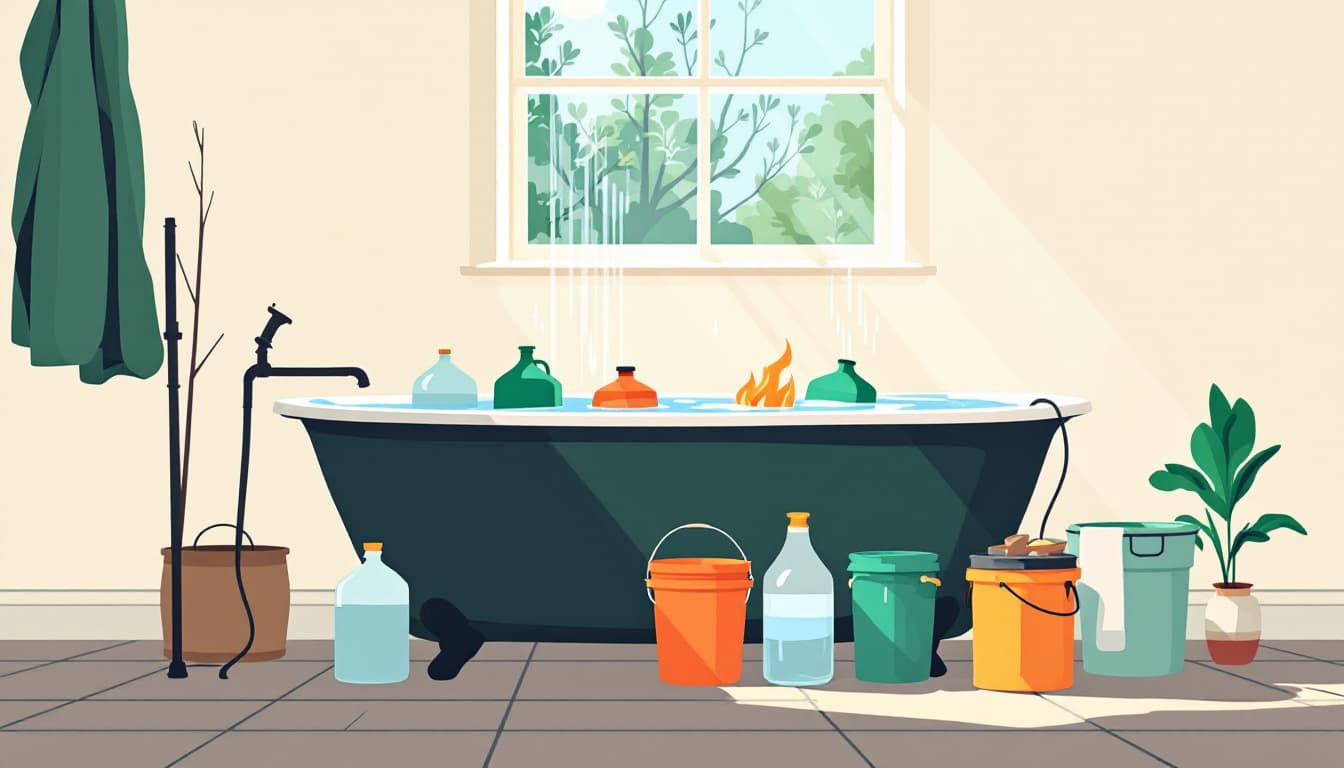
Buy or refill WaterBOB-style bathtub liners before the next drought watch, not during it. These liners, which hold 80 to 100 gallons using your existing bathtub, cost around $30 and store flat. They require a water source to fill, which means they're useless once your supply is already compromised. The only time to own one is before you need it. If you're in a region that saw drought conditions this summer, that's your signal.
If you're on a private well, get a basic water test done this season. Drought stress on an aquifer changes water chemistry in ways that a quick visual inspection misses. Many county extension offices across Kentucky and similar rural states offer low-cost or subsidized water testing. You're looking for changes in coliform bacteria, pH, and mineral content — especially if neighbors have reported changes. Don't wait for a taste difference to tell you something shifted.
Map your nearest non-tap water sources — but understand what they actually require. Rivers, ponds, and streams within reasonable distance of your home are potential emergency sources, but only if you can treat the water. A gravity-fed filter rated for protozoa and bacteria (Sawyer Squeeze, Katadyn BeFree, and similar products) turns a nearby creek into a viable backup. Know where the source is. Know how to use the filter before you're thirsty.
Set a weather alert for drought monitor updates for your county. The U.S. Drought Monitor publishes weekly maps that are free and genuinely useful. Subscribing to a county-level alert takes about four minutes and means you're watching the trend build, not reacting to a crisis that's already here.
The bigger pattern
Water preparedness sits in a strange blind spot for most families. Food storage gets most of the attention in preparedness culture — it's tangible, it's visible on a shelf, it feels like accomplishment. Water is harder to store, heavier, and less satisfying to look at. So most households skip it.
But in an actual emergency, water becomes critical within a day. Food takes weeks. The hierarchy of needs is not abstract: it's the order in which things go wrong.
Kentucky's rain returned. The next drought somewhere in the country is already building on this week's rainfall deficit maps. The goal isn't to never face a dry spell — it's to be the household that handles one without a crisis.