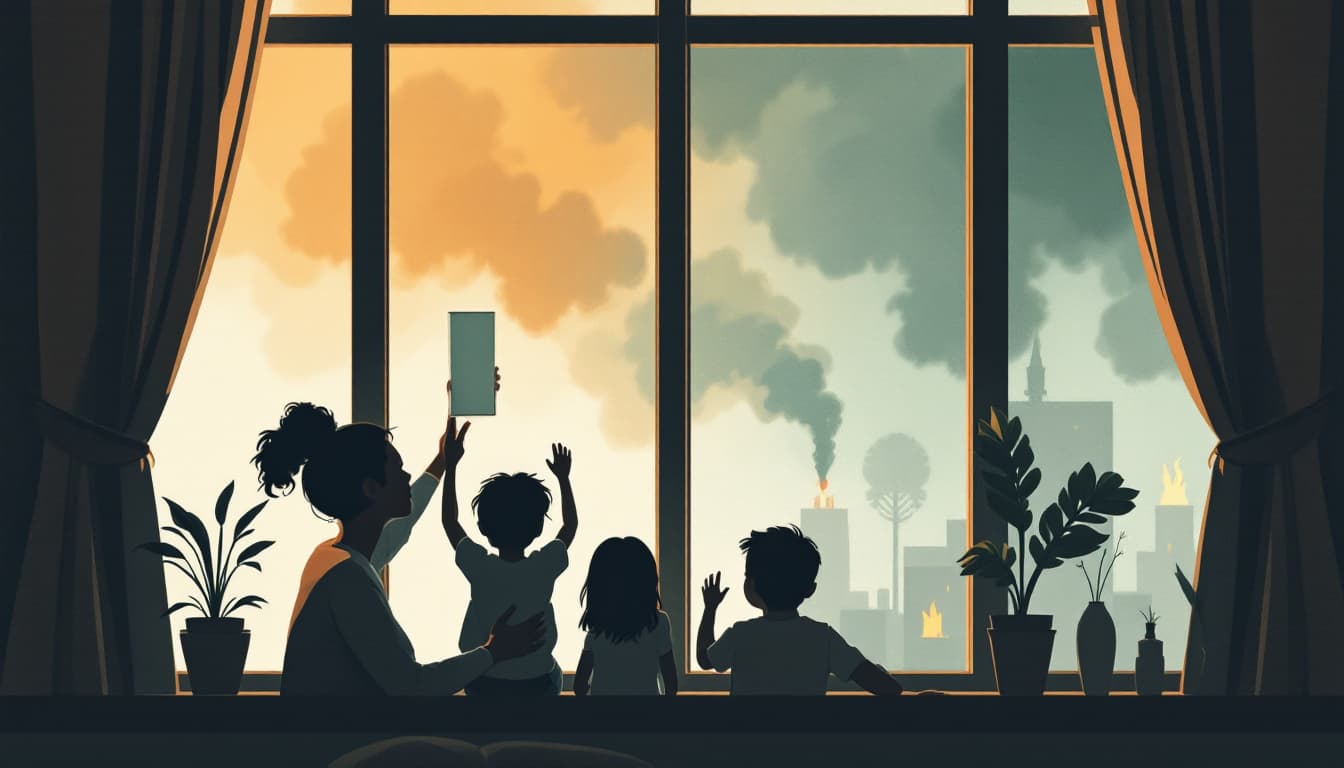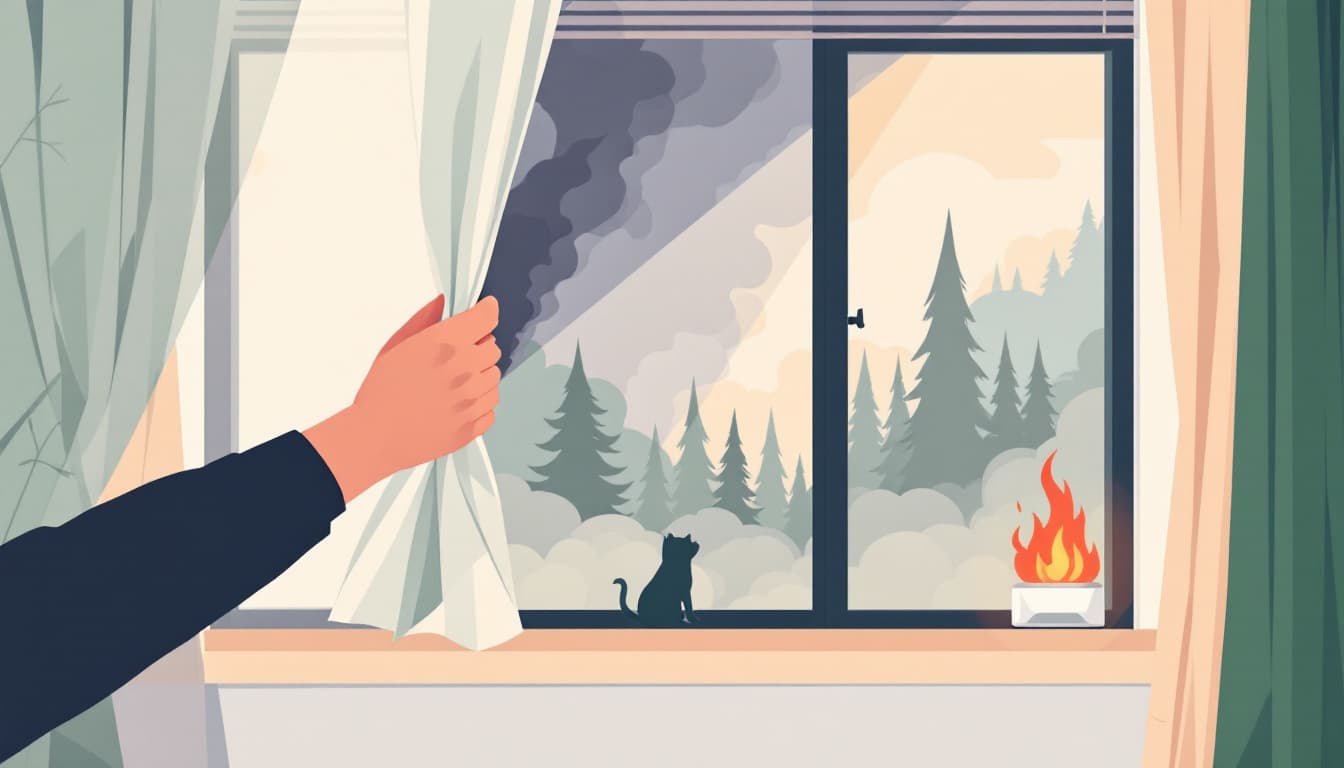
A wildfire burning in Kaiser Canyon drew a spotlight this week from IQAir, the air quality monitoring platform, as part of its ongoing wildfire map series tracking fires affecting regional air quality across the Pacific Northwest. The fire may not be the largest burning in the West right now, but IQAir flagged it for a reason: smoke doesn't respect county lines, and Washington households on both sides of the Cascades are already in the middle of the season where a single wind shift changes your day.
What's actually changing this smoke season
Washington's wildfire exposure isn't limited to Eastern Washington rangelands and ponderosa forest anymore. Smoke from fires east of the Cascades routinely pushes through gaps — Snoqualmie Pass, Stevens Pass, the Columbia Gorge — and lands unhealthy air quality days in Seattle, Tacoma, and Olympia. Western WA residents who think they're insulated because they don't live near timber are routinely wrong about this by August.
IQAir's real-time AQI data during events like the Kaiser Canyon Fire shows something worth understanding: the gap between an AQI of 100 (unhealthy for sensitive groups) and 150 (unhealthy for everyone) can close in under two hours when wind direction shifts. By the time a phone alert arrives, conditions outside may already be measurably worse.
The Washington State Department of Ecology publishes its own air quality index through its Northwest Clean Air Agency and regional offices, but those readings lag real-time monitoring tools by design. Pairing the state's official data with IQAir or AirNow gives you a fuller picture during active smoke events.
What's also changing: wildfire seasons in Washington are starting earlier and running longer, according to Washington's Department of Natural Resources annual fire reports. The overlap between school reopening in late August and peak smoke season is no longer a coincidence — it's a planning constraint.
What we'd actually do
Check your home's actual filtration capacity, not the filter's marketing label. Most residential HVAC filters are rated MERV 8 or lower, which does almost nothing for fine particulate matter (PM2.5) — the specific pollutant that makes wildfire smoke dangerous. A MERV 13 filter fits most standard residential HVAC systems and costs $20–$40 at hardware stores. If you haven't changed it since last fall, do it this week. Run your system in recirculation mode during smoke events and keep fresh-air intake dampers closed.
Build one designated clean room before the next smoke event, not during it. Pick the room with the fewest windows and least air leakage — often an interior bedroom. A box fan fitted with a furnace filter (the "Corsi-Rosenthal box" design, well-documented and free to build) can dramatically reduce PM2.5 in a single room for under $50 in materials. Instructions are publicly available through the EPA's wildfire smoke preparedness guidance. This is especially worth doing if anyone in your household has asthma, heart disease, or is over 65.
Download the AirNow app and set a location-specific AQI alert at 100. Don't wait for local news to tell you air quality is bad. An AQI alert at 100 gives you a decision window — close windows, bring kids and pets inside, postpone outdoor exercise — before conditions hit the genuinely hazardous range. IQAir's app offers similar functionality and includes hyperlocal sensor data. Use both if you want the fullest picture; neither costs anything.
Know your county's cooling and clean-air shelter locations before you need one. King, Pierce, Snohomish, and Spokane counties all maintain shelter-in-place and clean-air center programs during smoke emergencies. The Washington State Department of Health publishes a statewide directory. During a bad smoke week, these locations matter most for people without functioning AC or adequate home filtration — but you need to have found the list before the smoke rolls in, not while you're coughing.
Stock two weeks of any inhaled medication. Albuterol inhalers, nebulizer solutions, and nasal corticosteroids are the medications most likely to be needed urgently during smoke events. Washington pharmacies during peak smoke periods in recent years have seen localized shortfalls on rescue inhalers. Call your pharmacy now and confirm you have a current supply; most insurers allow a 90-day fill.
The bigger picture
Washington households don't need to prepare for the apocalypse. They need to prepare for two or three weeks a year when outdoor air in much of the state is genuinely hazardous, and those weeks are getting less predictable in timing and more concentrated in severity. The Kaiser Canyon Fire is this week's signal. The right response isn't panic-buying or fleeing the state — it's a clean filter, a clear room, and a phone alert set to tell you when to close the windows.
Durability is built in the ordinary weeks. The smoke weeks just test whether you did the work.