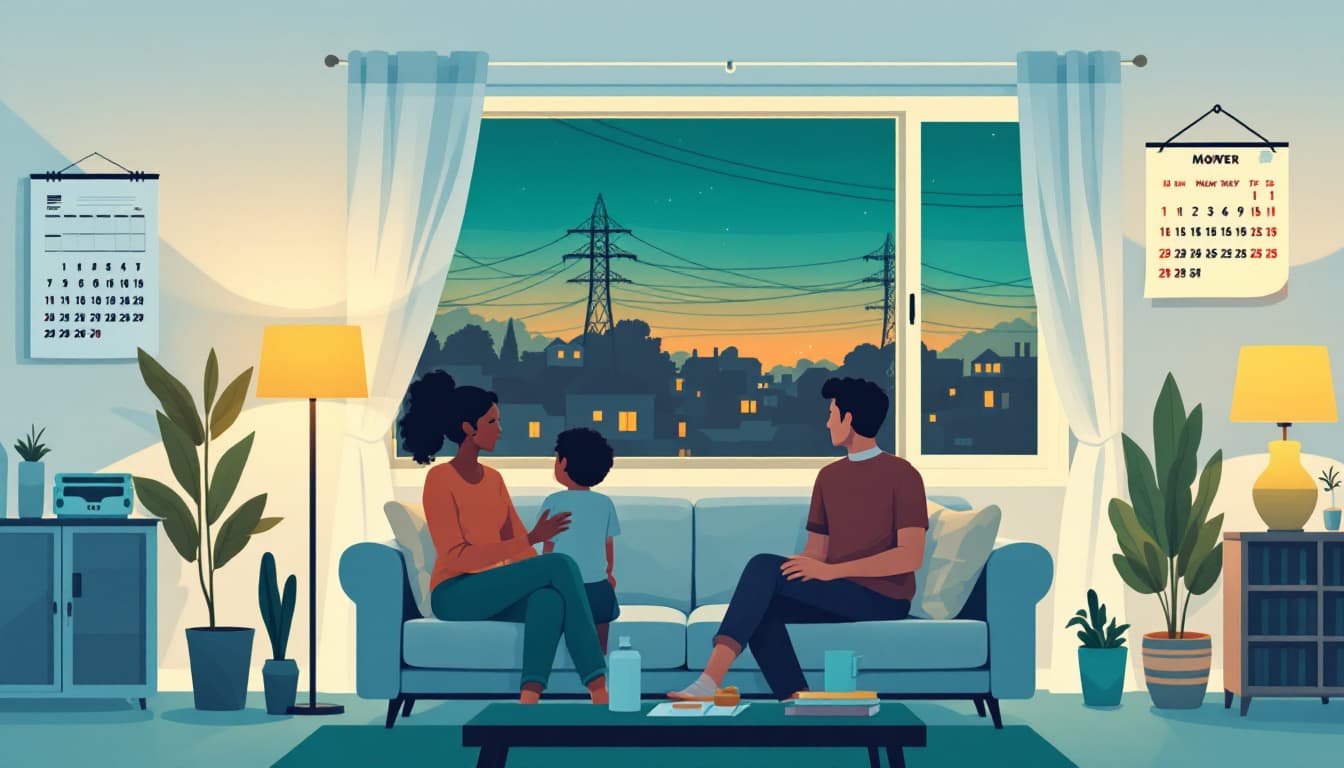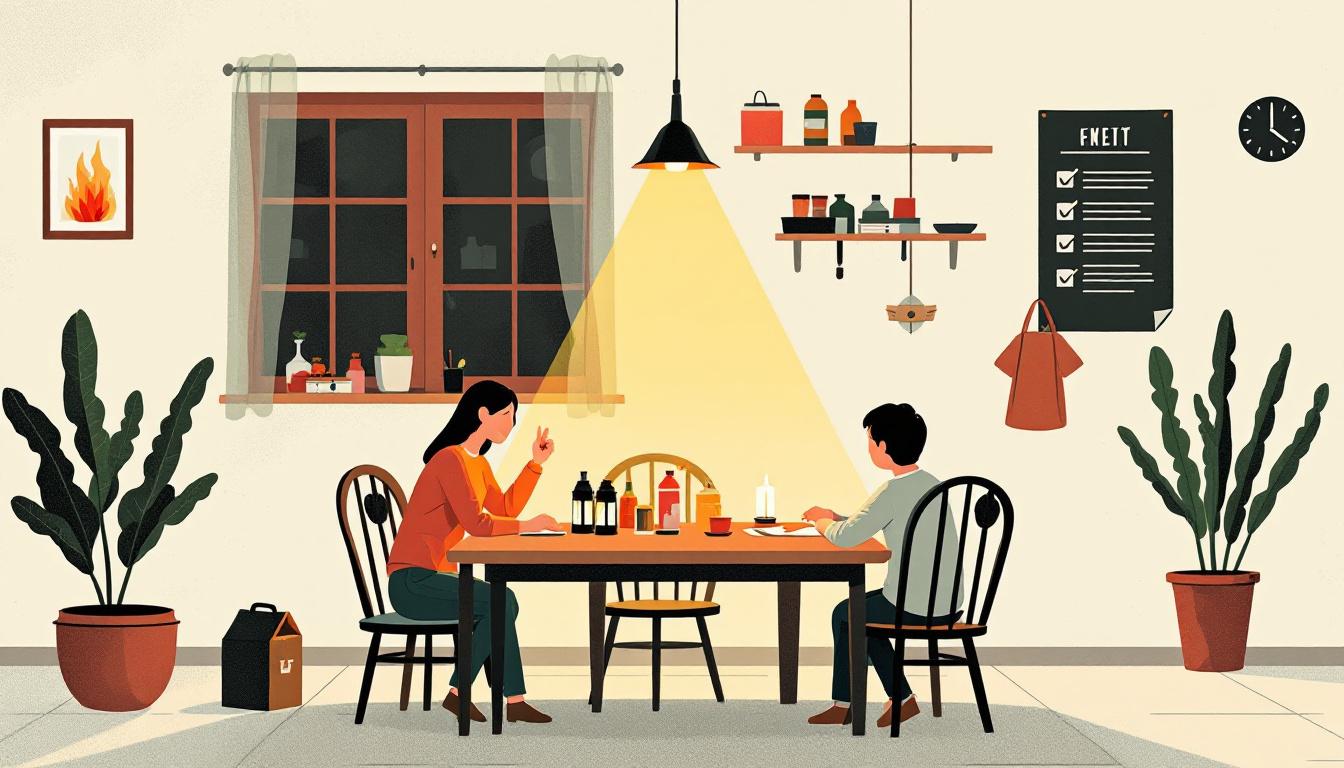
The bunker forums have a favorite villain: a cascading grid failure so vast and so sustained that it unmakes modern life across entire regions for weeks or months. It shows up in preparedness podcasts, in prepper fiction, in the gear lists of people who have invested serious money in solar arrays and Faraday cages and months of freeze-dried calories. The fear is vivid, specific, and — if you spend any time in those communities — nearly universal.
It is also, by most available evidence, a poor guide to what actually threatens your household's electrical continuity.
What the outage data actually shows
The US grid does fail — frequently, unevenly, and in ways that deserve serious attention. But the failure pattern is almost nothing like the civilizational-collapse scenario that dominates preparedness culture.
EIA data collected over recent years consistently shows that the median US customer experiences somewhere between one and two power interruptions annually, with an average duration under four hours per event. The long tail matters: some customers in rural areas, in storm corridors, or served by older distribution infrastructure see much worse numbers. But the distribution of outages is heavily skewed toward short and local.
The events that do cause extended regional outages — the kind measured in days rather than hours — share a recognizable profile. They almost always involve a named weather event: a hurricane making landfall, an ice storm collapsing distribution lines, a derecho cutting across the Midwest. The 2003 Northeast blackout, still the reference disaster in grid-collapse conversations, was a twelve-state, Canada-spanning failure that affected roughly 55 million people — and it lasted about two days for most customers. That is a genuine crisis. It is not a civilizational event.
Why the collapse scenario keeps winning
The multi-week, multi-region collapse has intuitive appeal for a specific reason: it is unfalsifiable on the household level. You cannot point to your own experience as evidence against it, because you've never experienced it. The absence of the disaster becomes, perversely, proof that you're not prepared for it.
There's also a selection effect at work in preparedness communities. The people most engaged in those spaces tend to index toward worst-case planning, which makes sense — you don't go deep on emergency prep if you're calibrated toward the median outcome. But that skew shapes the information environment for everyone who wanders in.
What actually fails American households with any regularity looks more like this: a summer thunderstorm knocks out a local substation for eighteen hours. A utility company implements rolling conservation measures during a heat dome. An ice storm takes down distribution lines in a neighborhood for three or four days. These are real, meaningful disruptions. They spoil food, they strand people on medical equipment, they create genuine hardship — especially for households that were already stretched thin.
But they are discrete, local, and temporary. The skills and supplies that help you manage them look very different from the skills and supplies that would help you manage a month-long regional grid failure.
The cost of calibrating to the wrong threat
Preparing for the collapse scenario is expensive. Not just in money, though that's real — a whole-home solar-plus-battery system capable of running essential loads for weeks runs well into five figures. The more insidious cost is cognitive. When your mental model of grid failure is catastrophic and total, you tend to dismiss the actual, recurring disruptions as not worth taking seriously until you have the "real" prep in place. That's backwards. The eighteen-hour outage is happening to your neighbors every year. The civilizational grid collapse has not happened in living memory in North America.
The infrastructure vulnerabilities that do merit attention — aging transmission equipment, the expansion of electrified loads onto a grid not designed for them, the specific fragility of hurricane-exposed coastal utilities — are worth following precisely because they inform the realistic risk envelope. They point toward more frequent, more intense versions of the disruptions we already see. Not toward something categorically different.
The right frame
The grid is a large, redundant, federally overseen system with significant institutional momentum behind keeping it running. That doesn't make it invulnerable, and it doesn't mean you should ignore it. It means your planning horizon for electrical failure should probably be calibrated in days, not weeks — and should weight heavily toward the specific failure modes that have actually put your zip code in the dark.
Understanding your own outage history, knowing your utility's reliability tier, and sizing your backup capacity to cover real disruptions rather than imagined ones is a more honest exercise than most preparedness content encourages. Our water and food calculator is built around that same principle: matching capacity to realistic exposure, not to the outer edge of the threat envelope.
The collapse isn't coming. The storm probably is.