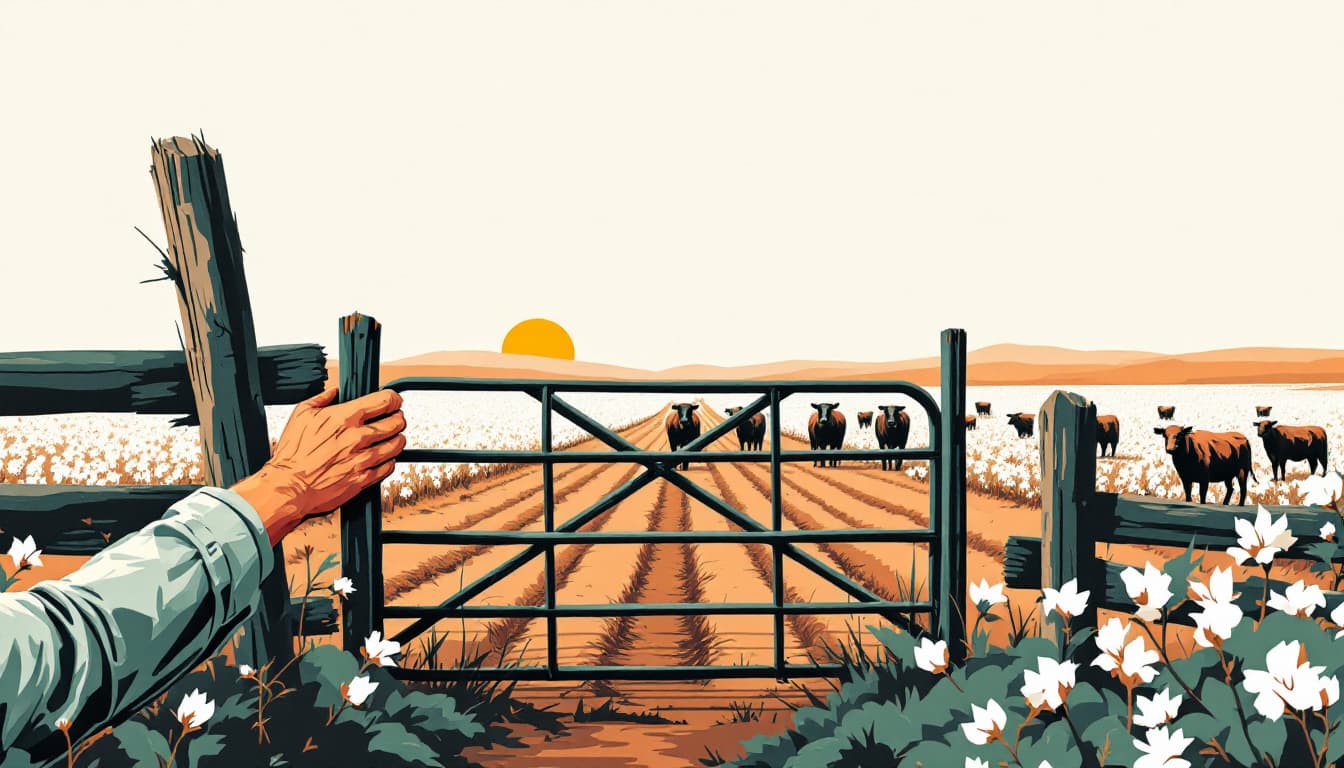
A report this week from Oklahoma Farm Report, featuring OSU Extension beef cattle specialist Paul Beck in the publication's recurring Cow-Calf Corner series, spotlights a practice gaining traction across the southern plains: running cow-calf pairs on cotton fields that failed to produce a harvestable crop. The strategy is being discussed as a practical response to forage shortages heading into the fall and winter grazing period, a recurring pressure point for ranchers in drought-prone regions of Oklahoma and neighboring states.
Failed cotton acres — fields where the crop was damaged by weather, disease, or inadequate moisture and will not be mechanically harvested — still carry residual plant material including stalks, leaves, boll remnants, and volunteer vegetation that cattle can utilize. Beck's guidance, as relayed by Oklahoma Farm Report, addresses how producers can negotiate access to these fields, what to watch for in terms of livestock health risks, and how to estimate the forage value available relative to conventional alternatives like hay or dormant pasture. Cotton crop failures have been a recurring issue in western Oklahoma and the Texas Panhandle corridor, where drought and heat stress regularly reduce yields below economic thresholds, effectively leaving standing biomass with no commercial outlet.
What the general agricultural press tends to underreport is the preparedness dimension baked into this kind of adaptive grazing: a rancher's ability to rapidly identify and contract non-traditional forage sources — failed cash crop fields, cover crop agreements with row-crop neighbors, harvested grain fields with residue — is essentially a food-security buffer for the herd. Livestock inventories that survive a forage gap intact represent stored protein and breeding capital that takes years to rebuild if animals are liquidated at distressed prices. Producers who maintain relationships across both the cattle and crop-farming communities, and who understand the basic nutritional math of residue grazing, are structurally better positioned to carry herds through supply disruptions than those dependent on a single hay vendor or a single leased pasture. This relational and knowledge infrastructure is less visible than a full hay barn but functions in much the same way.
Oklahoma has faced consecutive years of tightening forage supplies, and USDA data from earlier in 2026 showed pasture and range conditions in the state running below five-year averages through much of the summer. The intersection of that persistent dryness with a cotton belt that has seen irregular yields creates conditions where the Beck-described strategy moves from a curiosity to a genuine management tool for a meaningful number of operations.