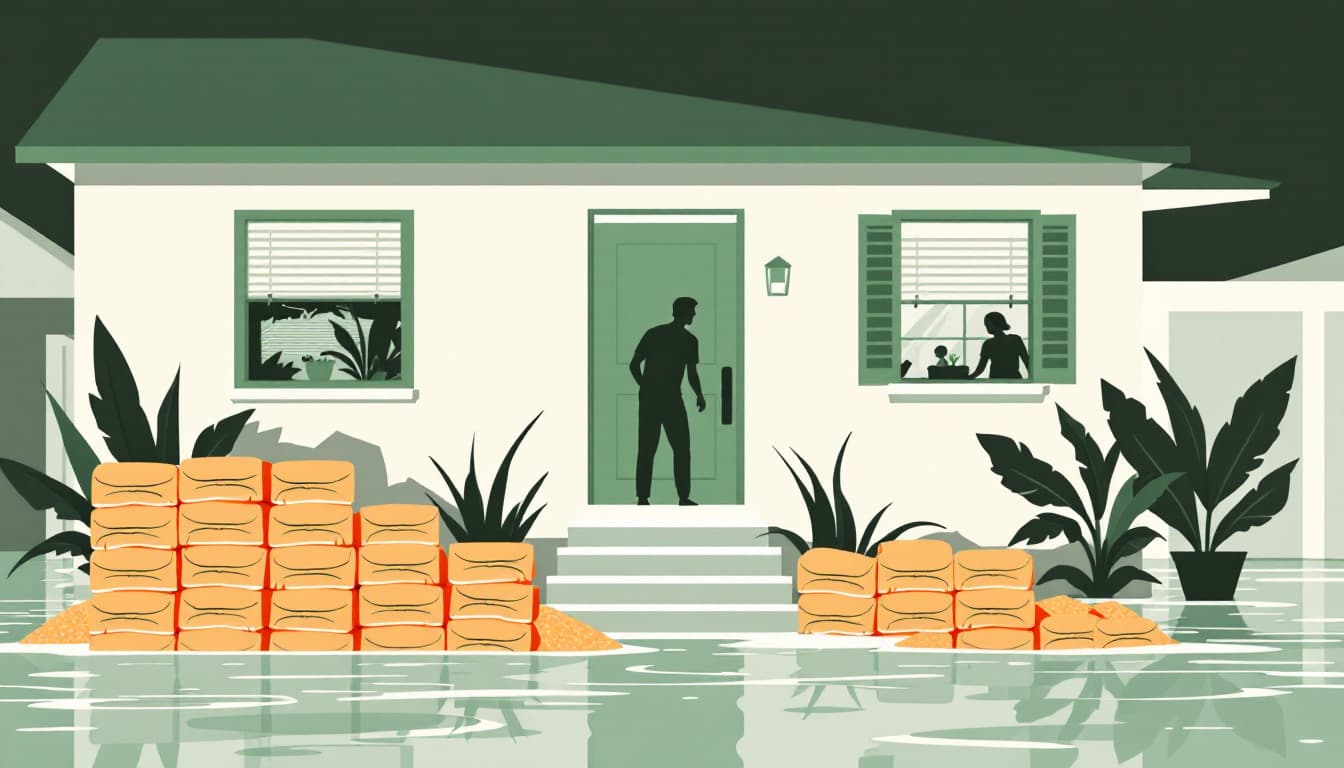
A report from CBS News highlighted a convergence of king tides, rainfall, and gusty winds creating a coastal flooding threat stretching along Southeast Florida's Atlantic shoreline from Fort Lauderdale north through Miami. The event was associated with the astronomically high tides that typically peak in South Florida during October and November, when the gravitational alignment of the Earth, moon, and sun produces some of the highest water levels of the year without any tropical system required.
The affected corridor runs through Broward and Miami-Dade counties, two of Florida's most densely developed coastal counties, where low-lying roadways and neighborhoods sit only marginally above mean sea level. Areas near the Intracoastal Waterway, Biscayne Bay, and barrier island communities in both counties are historically among the most vulnerable to tidal inundation even under calm weather conditions. When additional rainfall and onshore wind fetch compound the tidal surge, water can back up through stormwater drainage systems and push onto streets and into ground-floor structures well inland of the immediate shoreline.
The Florida Division of Emergency Management and county-level emergency offices in Broward and Miami-Dade both monitor king tide events through coordination with the National Weather Service Miami Forecast Office, which issues coastal flooding statements and advisories for the Southeast Florida airshed and shoreline. The South Florida Water Management District also tracks tidal conditions across its canal and water control structure network, as elevated coastal water levels can impair the gravity-driven drainage on which much of the region's flood control infrastructure depends.
For residents and preparedness-minded observers, the significance of king tide events extends beyond the immediate flooding footprint. South Florida's freshwater supply system — anchored by the Biscayne Aquifer, which underlies Miami-Dade and Broward counties — is sensitive to saltwater intrusion, and repeated coastal flooding episodes that saturate low-lying land with brackish water can compromise wellfield buffers that the South Florida Water Management District works to protect. The region's electrical grid, operated largely through Florida Power & Light, also faces localized vulnerability where substations and underground conduit infrastructure sit in flood-prone zones. Observers tracking long-term grid and water-supply resilience in the region, including resources like Middle Class Prepper's coverage of Florida infrastructure, note that king tide frequency and intensity have been measurably increasing along this stretch of coastline over the past two decades, making these events a recurring rather than exceptional stress on critical systems.