A report this week from yoursun.com puts it plainly in a quote from a local: "It's going to take a hurricane to get this water back." The context is Florida's freshwater fishing, which is suffering as lakes, rivers, and marshes drop to levels that stress fish populations and restrict access. But read past the fishing angle and you're looking at something with broader consequences for anyone who pulls water from the ground or depends on a utility that does.
What's actually happening
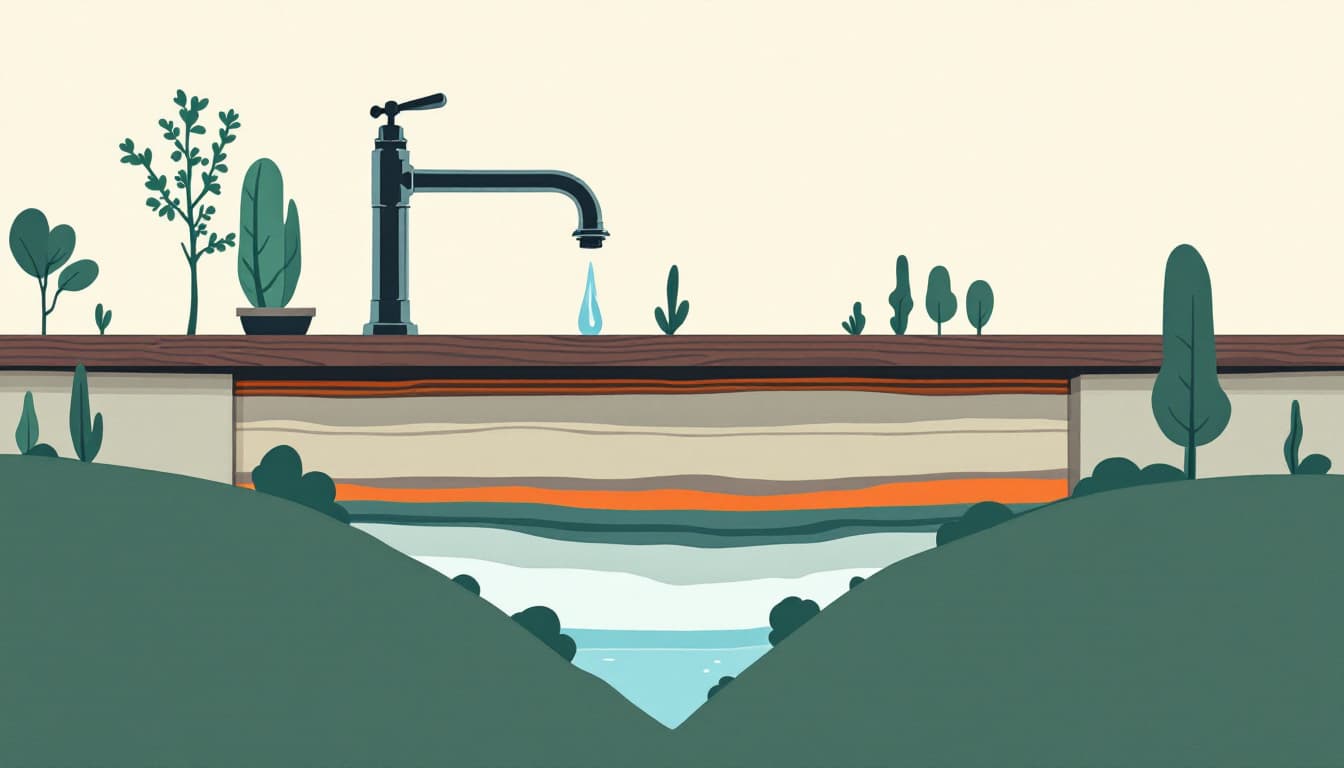
Florida sits on top of the Floridan Aquifer System, one of the most productive freshwater aquifers in the world. It feeds springs, rivers, lakes, and roughly half the state's public water supply. It also supplies the private wells of hundreds of thousands of rural and exurban households, concentrated in areas like Charlotte, DeSoto, Highlands, and Polk counties — exactly the region yoursun.com covers.
Drought depletes the aquifer from two directions at once. Less rainfall means less recharge from above. Higher demand — more irrigation, more municipal pumping — means faster withdrawal from below. When lake levels drop enough that anglers notice fish kills and restricted boat access, the aquifer is already well behind.
The quote about needing a hurricane is not hyperbole for color. It reflects how recharge actually works in Central and South Florida. The wet season and tropical systems do the heavy lifting. A dry spring that runs into a quiet early hurricane season compounds quickly. The South Florida Water Management District and the Southwest Florida Water Management District (SWFWMD) both publish drought indicators and aquifer level data. These are public, updated regularly, and worth checking if you're in their service areas.
What this report doesn't cover is the household dimension: what drought conditions mean for your tap, your water heater, your garden, and your emergency storage.
What we'd actually do
Check your water district's current drought status this week. SWFWMD's website publishes aquifer levels and active water shortage orders by county. If your county is under a Phase II or Phase III restriction, you're already operating in a constrained system. Knowing where you stand takes ten minutes and changes what steps make sense.
Most households don't know whether they're in a water shortage order until a neighbor mentions it or a utility bill arrives with a note. SWFWMD covers a wide band from Pasco and Hillsborough down through Charlotte and Lee. SFWMD picks up south of that. Both agencies can send alerts — sign up now rather than after a restriction tightens.
If you're on a private well, get a water level test done before summer. A driller or licensed well contractor can measure static water level. If it's dropped significantly from prior readings — or from the well log on file with the Florida Department of Environmental Protection — you're at risk of a dry well before a wet season that might arrive late. Filtration systems also underperform when water table minerals concentrate as levels drop. This is a $150–$200 test that tells you a great deal.
Store at least two weeks of drinking water per person in sealed, food-grade containers. The standard recommendation is one gallon per person per day for drinking and sanitation. A family of four needs 56 gallons minimum for two weeks. WaterBOB bathtub liners, stackable five-gallon jugs, or 55-gallon food-grade drums all work. This isn't a drought-specific action — it's baseline hurricane prep that doubles as drought insurance if a utility restricts service or your well drops.
Audit your home's water draw before restrictions hit. Irrigation is the largest residential water use in Florida by a wide margin. If you're running a timer-based system on a schedule set in February, you're likely over-watering in ways that won't be tolerated under Phase II restrictions and aren't efficient regardless. Florida-Friendly Landscaping — a University of Florida IFAS program — publishes county-level irrigation guidelines that are worth downloading.
Talk to your neighbors on shared wells. Rural subdivisions and small communities sometimes share a single well or wellhead between several households. If your neighbor's pump is running hard, your water pressure drops. Drought stress hits shared systems before municipal ones. A five-minute conversation now about coordinating usage is easier than sorting out a failed pump in August.
The bigger picture
The fishing story is a useful proxy. Fish need specific water levels, temperatures, and oxygen concentrations. When those parameters shift enough to hurt populations that locals have tracked for decades, it's a signal the underlying hydrology is under real stress — not a temporary blip. Florida's water system is deeply interconnected, and the state's rapid population growth since 2020 has added sustained demand pressure to a resource that recharges on geological and seasonal timescales, not human ones.
A hurricane will likely refill the aquifer eventually. Waiting for that is not a household water strategy.
The goal here isn't to keep a basement full of freeze-dried meals and a bunker mentality about water. It's to understand your home's actual supply chain well enough that a dry spring doesn't turn into an emergency. That's durability — the kind that costs less than a water delivery service and doesn't require catastrophizing about what comes next.