A freeze warning in June is not a headline you expect to see in South Texas. But kens5.com reported this week that an Extreme Cold Warning for the San Antonio region was extended into Tuesday morning — a cold snap arriving in a month when most households in that part of the country have already stowed their space heaters and stopped thinking about pipes.
That timing gap is the real story here.
What's actually changing
Weather volatility in Texas has followed a pattern that emergency managers now describe with frustrating consistency: the events are getting more extreme at both ends of the thermometer, and they're arriving outside the traditional seasonal windows when households are prepared for them.
The infrastructure problem compounds this. Texas's grid — managed by ERCOT — has received significant investment since the February 2021 freeze that left millions without power for days, but the weatherization requirements that followed applied primarily to generation assets. Distribution lines, home insulation standards, and municipal water systems in older neighborhoods remain largely where they were. A cold event in June finds that infrastructure in its least-ready state: cooling systems running at full load, utility crews focused on heat-demand response, and families whose cold-weather supplies are in a closet somewhere or were never assembled in the first place.
There's also a physiological dimension. Cold kills differently in summer. A family that sleeps with windows open and fans running in June is not thinking about core temperature management. The danger of a late-season cold event isn't just pipes — it's the four hours after midnight when indoor temperatures drop faster than anyone expected.
What we'd actually do
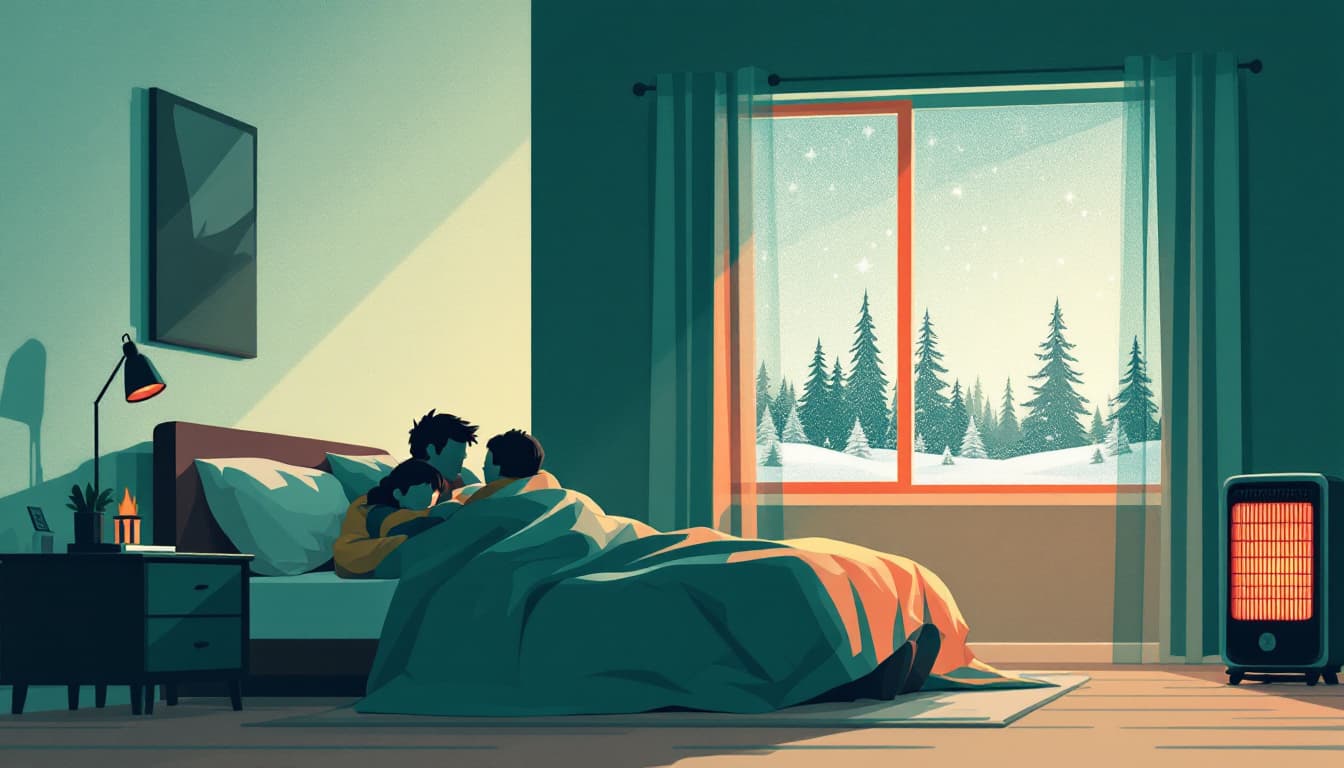
Check your heating redundancy right now, before the season flips back. Most Sun Belt homes have a single heating source — the central HVAC heat pump or gas furnace — and no backup. A Mr. Heater Buddy-style propane unit runs about $90 and can heat a bedroom-sized space safely indoors for hours on a single 1-lb canister. Buy it during summer when it's not sold out, store two or three fuel canisters with it, and test it before you need it. This is not a survival investment. It's the same logic as keeping a spare tire.
Know your pipe vulnerability before temperatures drop. Homes built in South Texas are frequently under-insulated by northern standards because the design assumption is heat management, not cold retention. Exposed pipes under sinks on exterior walls, in uninsulated garages, and along crawl spaces are the ones that fail first. Spend twenty minutes identifying yours. A $6 roll of pipe foam insulation from any hardware store takes fifteen minutes to install and can prevent a repair bill in the thousands.
Audit your emergency heat clothing, not just your gear list. Most preparedness advice focuses on equipment. The simpler intervention is knowing where your wool or fleece layers are on a June night. One warm base layer per person, accessible, not buried in seasonal storage. Adults can manage core temperature with clothing before any equipment becomes necessary.
Confirm your neighbors' situation. Extreme cold events kill disproportionately in the first 24 hours among elderly people who are isolated and in households where someone dismissed the warning. A two-minute check on an elderly neighbor before a cold night costs nothing and has a documented impact on outcomes during localized weather emergencies.
The bigger picture
The San Antonio event is a useful corrective to the mental model most of us carry about seasonal risk. We prepare for winter in October and de-prepare in March. Weather doesn't run on that schedule anymore — and the households most exposed to out-of-season events are the ones who prepared for a single threat model and never revisited it.
Durability means holding a small margin of readiness year-round: not a bunker, not a year of supplies, not panic. Just a propane heater you know how to use, pipes you've thought about, and warm clothes you can find in the dark. The goal is a household that doesn't get badly hurt by a bad week. June freeze warnings in Texas are one more reminder that bad weeks arrive on their own schedule.