In most of the American West, catching rain off your own roof has been either illegal or tightly restricted for generations. Colorado is one of the last states where the prior appropriation doctrine — "first in time, first in right" — has kept even modest residential rainwater collection in a legal gray zone. That is slowly changing, and a CBS News report this month signals a meaningful inflection point: Colorado's first formal rainwater harvesting pilot program is now moving through water court, with researchers citing drought conditions as the reason the practice can no longer be dismissed as a fringe idea.
This matters to households, not because anything changes overnight, but because the window for building legal water resilience in Colorado is opening — and most families aren't positioned to walk through it.
What's actually changing
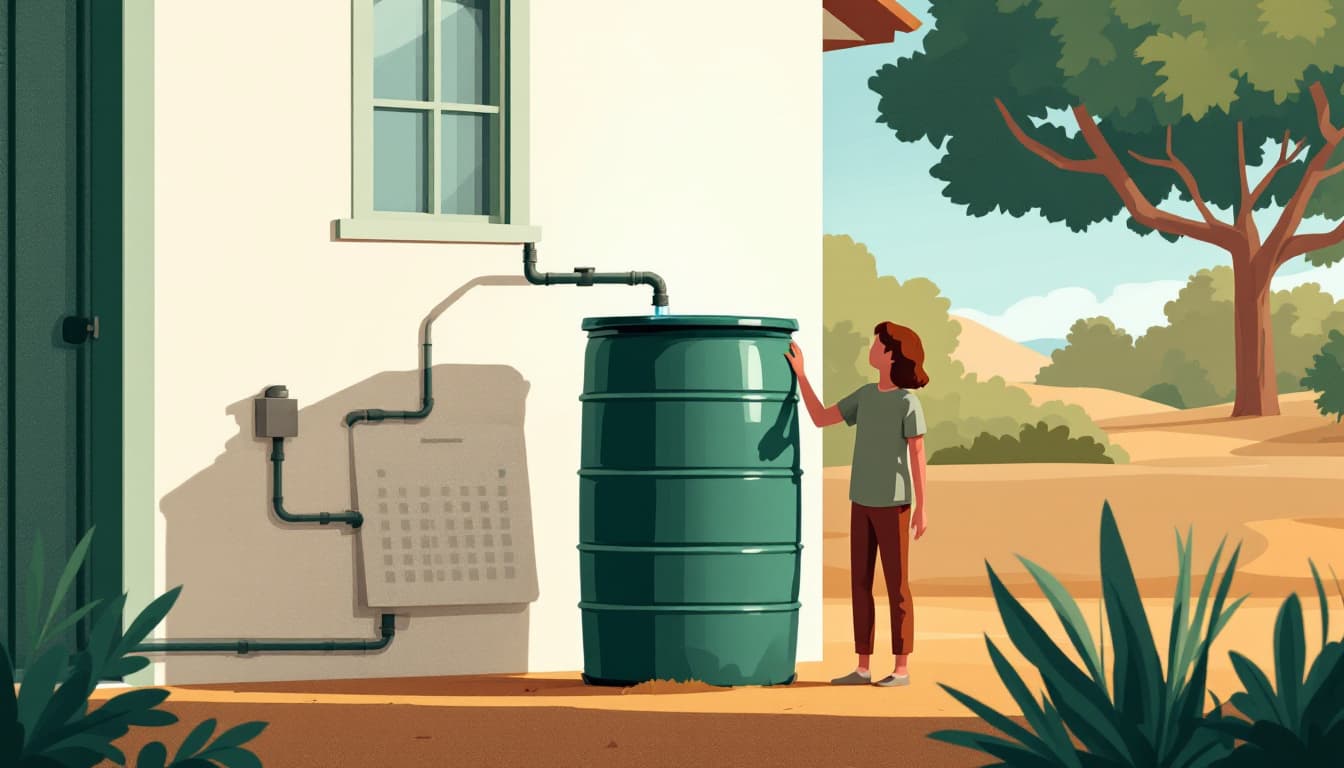
Colorado passed legislation in 2016 allowing single-family homes to collect up to 110 gallons of rainwater using two 55-gallon barrels, strictly for outdoor use on the same property. That was a narrow concession, not a green light. The current pilot program under water court review is broader — it's testing whether larger-scale collection can be shown to cause negligible injury to downstream water rights holders, which is the legal standard that governs any change to Colorado water use.
If water court validates the pilot's methodology, it creates a legal template. Municipalities and eventually individual property owners could gain clearer pathways to expand collection beyond the 110-gallon ceiling. Researchers are also documenting whether widespread small-scale harvesting actually reduces streamflow in meaningful ways — data that has been absent from prior debates.
None of this is fast. Water court proceedings in Colorado routinely take years. But the direction is set.
What isn't changing anytime soon: drought. The Colorado River Basin has been in deficit conditions for more than two decades by most hydrological measures. Recent NRCS snowpack data for several Colorado basins has tracked below the long-term median heading into summer. Municipal water agencies on the Front Range have been tightening tiered pricing structures. The combination of legal evolution and tightening supply is the real signal here.
What we'd actually do
Get compliant with the 2016 law right now, before worrying about what's coming next. Colorado households are already legally permitted to collect 110 gallons of rainwater for outdoor use — the equivalent of two standard 55-gallon barrels — and most families haven't done it. A food-grade 55-gallon drum with a bung spigot runs $30–$60 used from a local food distributor; a purpose-built rain barrel with a screened top and overflow hose costs $80–$150 new. Two barrels connected in series, placed under a downspout on the north or east side of the house, is a compliant, functional setup you can build on a Saturday. Use it for garden watering. This reduces the load on your metered supply during Stage 1 or Stage 2 outdoor watering restrictions, which Front Range municipalities have been invoking with increasing frequency.
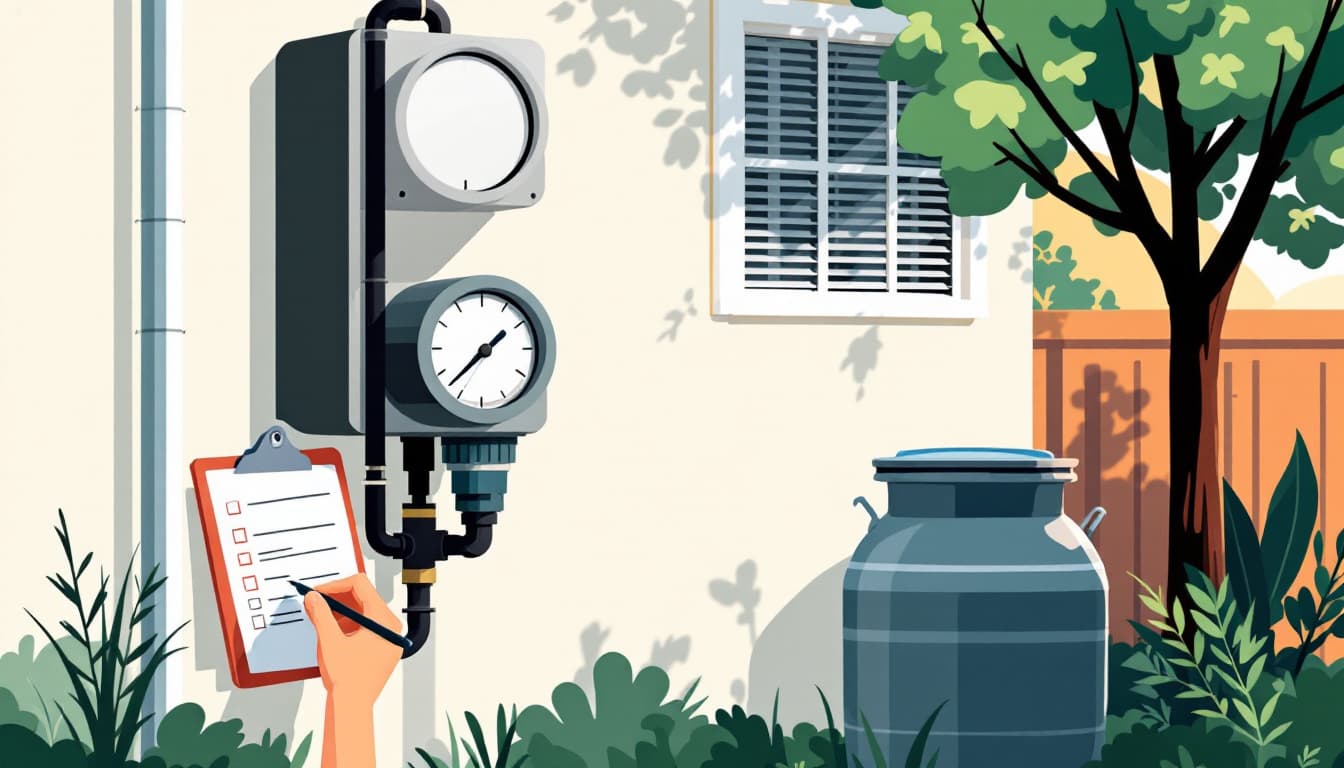
Document your current monthly water usage by season, not just as an annual average. Pull your last 12 months of utility bills and map peak summer usage against your base winter load. The gap tells you how exposed you are to outdoor watering restrictions. Many Colorado households find their July and August bills are two to three times their January usage — almost all of it lawn and garden. If you're in that category, you have a large target for reduction through drip irrigation, mulching, and timed watering, none of which requires waiting for any legal change.
Shift outdoor plantings toward Colorado-native and xeric species in phases, starting with the highest-water areas. The Denver Water xeriscape rebate program and similar programs through other Front Range utilities offer $1–$3 per square foot for turf replacement, depending on the utility and the year. Check your specific provider's current rebate calendar before the summer application window closes. Replacing even 200 square feet of bluegrass with buffalo grass or native perennials meaningfully reduces your outdoor water demand without touching your indoor use.
Follow the water court proceedings through the Colorado Division of Water Resources website. The state publishes water court resume notices monthly, organized by division. Division 1 covers the South Platte (Front Range); Division 5 covers the Colorado River mainstem on the Western Slope. If you live in one of those basins, subscribing to the monthly resume gives you early visibility into how the pilot program's legal arguments are received — and when the window widens.
If you're on a well, test your static water level this summer and record it. Rural Colorado households on private wells are partly outside the municipal water restriction framework, but they're not outside drought. Groundwater levels in many Eastern Plains and mountain-basin aquifers have declined. A licensed well driller can run a static level test for a few hundred dollars. You want a baseline number so you can detect trend over years, not discover a problem when the pump pulls air.
The bigger picture
Colorado water law is among the most complex in the country, and it has historically prioritized agricultural and senior municipal rights over household flexibility. That structure is under pressure — not from ideology but from physics. The water that's there is less than what the system was built around.
The households that will handle this well are not the ones stockpiling water in 55-gallon drums in the basement for collapse scenarios. They're the ones who understand their current usage, reduce what can be reduced, and build small legal buffers while staying engaged with how the rules are evolving. Durability, not drama.