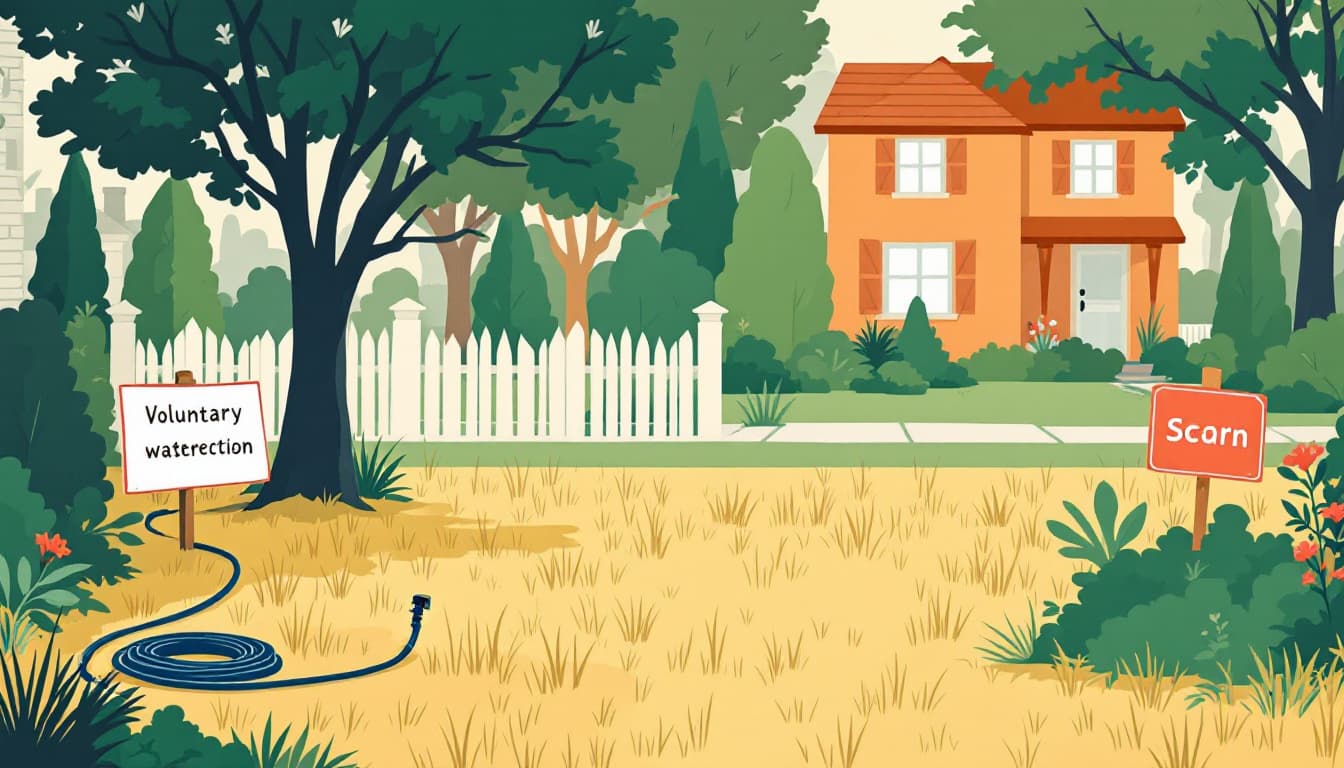
Extreme drought conditions are intensifying across Colorado this summer, and a report amplified this week by coyotegulch.blog — drawing on Denver Post reporting — reveals a striking policy gap: approximately half of the state's largest towns have not enacted mandatory outdoor watering restrictions, instead relying on voluntary conservation measures that produce highly inconsistent results.
The reporting focuses on the uneven response among Colorado's major population centers, which stretch from the Front Range urban corridor — including the Denver metro area, Colorado Springs, and Fort Collins — to smaller but significant communities along the Western Slope and in the San Luis Valley. While some utilities have moved to tiered mandatory schedules enforced by fines, others continue to ask residents to cut back voluntarily, a strategy that water managers and researchers have repeatedly found delivers weaker and less predictable reductions in outdoor water use.
Colorado is currently experiencing drought conditions affecting large portions of its land area, with impacts rippling through the watersheds that feed both the South Platte River Basin, which supplies much of the Front Range, and the Colorado River Basin, which underpins water supplies for millions of people across seven western states. The Colorado Water Conservation Board (CWCB) and the Colorado Division of Water Resources both track drought status and can issue guidance to municipalities, but the decision to impose mandatory restrictions typically rests with local water utilities and city governments, creating the patchwork of policies the Denver Post investigation documented.
Voluntary programs, the reporting notes, yield varying levels of actual conservation depending heavily on local culture, media attention, and the degree to which water managers actively promote them. Communities with mandatory restrictions — backed by enforcement mechanisms such as tiered pricing or warning systems — have generally demonstrated measurable reductions in demand during drought periods.
For households and small-scale preparedness planners, the policy fragmentation carries a water-security dimension that goes beyond lawn care. Colorado's interconnected airshed and river systems mean that drawdowns in reservoirs like Dillon, Ruedi, or Pueblo can affect municipal treatment capacity, fire suppression water availability, and agricultural supplies simultaneously. When a municipality lacks mandatory conservation authority — or chooses not to exercise it — reservoirs may deplete faster than models anticipate, compressing the timeline before more severe emergency measures become necessary. Stored water at home, whether in dedicated containers or a larger gravity-fed system, represents one layer of insulation against the kind of sudden service disruption or pressure reduction that can accompany a rapid drawdown event. The CWCB's Colorado Drought Monitor updates, published regularly, offer the clearest public window into how quickly conditions are evolving across the state's distinct climate zones.