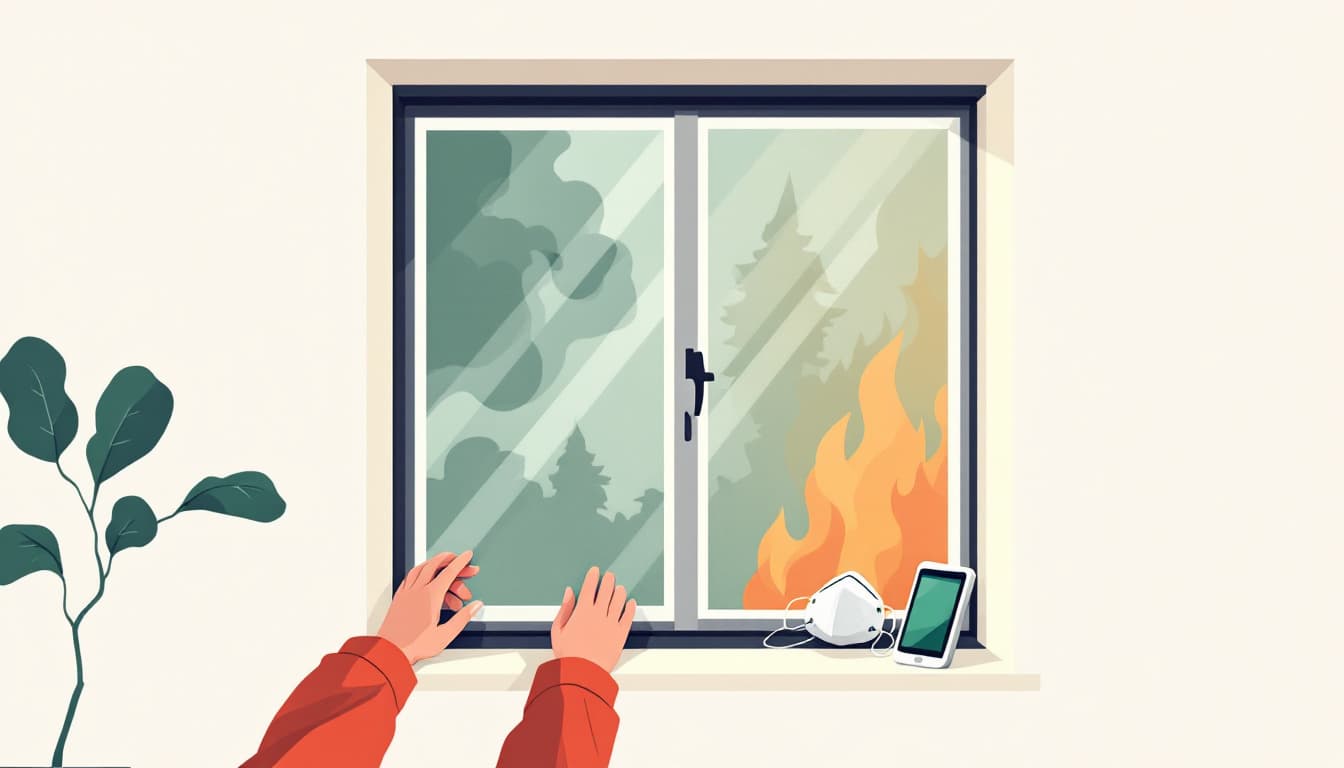
On a clear July morning in Nashville, the air can feel like it has nothing to do with a forest fire burning 1,500 miles away in Quebec. That feeling is unreliable.
A report this week from WSMV asked the question many Middle Tennessee residents hadn't yet thought to ask: will the Canadian wildfire smoke currently pushing air quality indexes into unhealthy ranges across the Northeast eventually drift south and west into Tennessee? The short answer from meteorologists is: it depends on the jet stream. The longer answer, for households, is that by the time the sky turns hazy and the smell arrives, the exposure has already begun.
What's actually changing
Wildfire smoke from Canadian fires — particularly from provinces like Ontario, Quebec, and British Columbia during active burn seasons — has shown a pattern over the past several years of traveling much farther than most Americans expect. The Northeast U.S. has documented this repeatedly since 2023. The smoke doesn't respect state lines, and Tennessee sits downwind of regional pressure systems that can pull particulate matter south across the Appalachians and into the Cumberland Plateau, the Nashville Basin, and the Tennessee River Valley.
The specific hazard is fine particulate matter, measured as PM2.5. These particles are small enough to bypass your nose and throat and lodge in lung tissue. Short-term exposure produces eye irritation and coughing. Sustained exposure over days — which is what happens when a smoke plume stalls — correlates with increased emergency room visits for asthma and cardiovascular events. Tennessee already carries above-average rates of asthma among its adult population according to state health data, which makes any sustained PM2.5 elevation a compounding risk, not a novel one.
The Tennessee Department of Environment and Conservation (TDEC) monitors air quality through a network of stations and posts current AQI readings, but station coverage is uneven. Rural counties between Cookeville and Crossville — communities along and east of I-40 near the Cumberland Plateau's edge — have fewer monitoring stations than Metro Nashville or Knoxville. If smoke enters from the northeast, those areas may see degraded air before the nearest official reading catches up.
What we'd actually do
Check AirNow.gov daily for your specific county, not just the metro. The EPA's AirNow tool lets you enter a ZIP code and returns the current AQI and a forecast for the next day. It pulls from TDEC monitoring stations and gives you a color-coded risk level. A reading above 100 (orange) means sensitive groups — children, elderly adults, anyone with asthma or heart disease — should limit time outdoors. Above 150, that recommendation extends to everyone. Bookmark it now, while the air is clean, so you're not searching for it when it isn't.
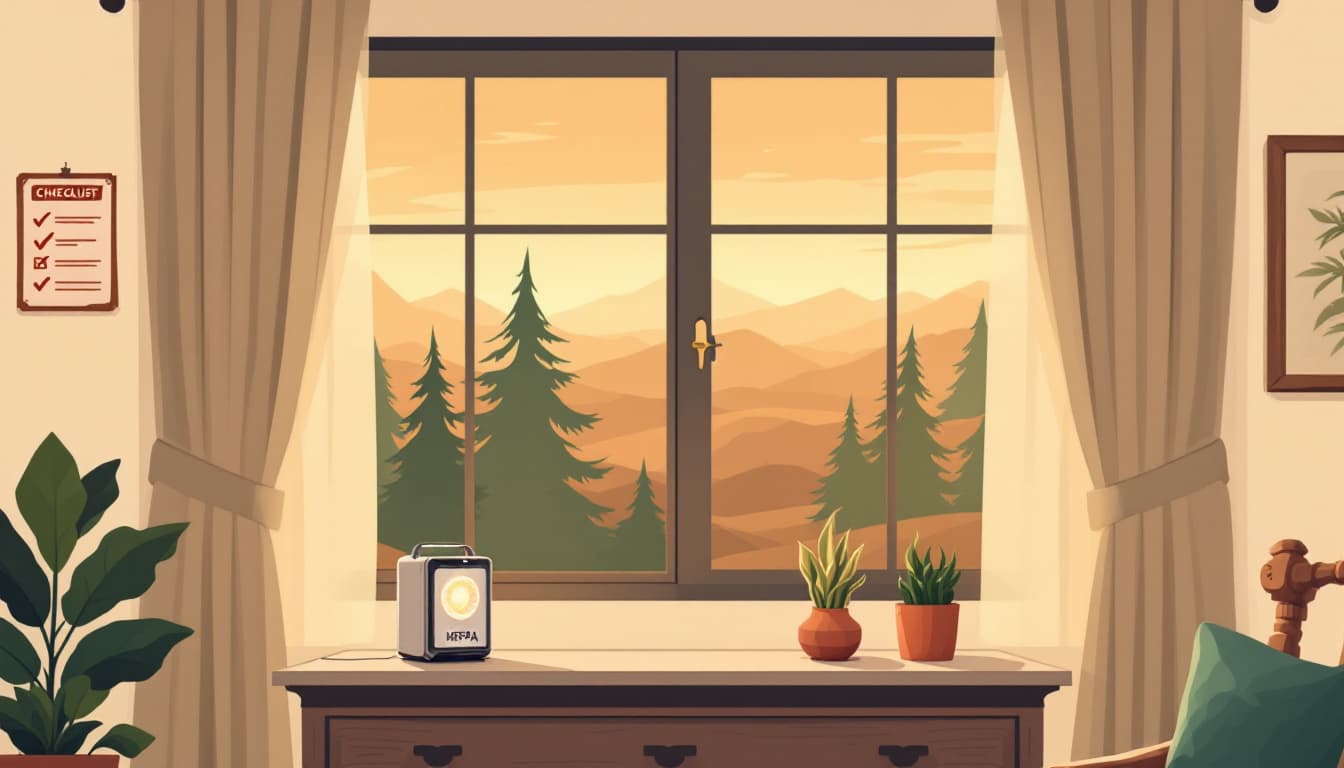
Identify one room in your home you can seal and filter. You don't need a whole-house air purification system. A single interior room — typically a bedroom — where you can close the door, place a rolled towel at the threshold, and run a HEPA-rated air purifier creates a clean-air refuge for the household's most vulnerable members. If you don't own a HEPA purifier, a box fan fitted with a MERV-13 furnace filter using the "Corsi-Rosenthal" design runs under $30 in materials and removes a meaningful fraction of PM2.5. Build one before smoke arrives, not during.
Stock a two-week supply of any respiratory medications. Tennessee households with asthmatic children or adults on inhalers should confirm now that prescriptions are current and that there's enough supply on hand to weather a week or two of elevated air-quality advisories where going to a pharmacy is a lower-priority trip. Call your pharmacy or use your insurer's mail-order option.
Know the difference between a nuisance and an emergency. A scratchy throat and mild eye irritation during a smoke event is expected. Chest tightness, significant shortness of breath, or worsening asthma symptoms that don't resolve within minutes of using a rescue inhaler are reasons to call 911 or go to an ER. Middle Tennessee households should locate the nearest urgent care and emergency department to their home before an event — not by memory, but with an address written down or saved.
The bigger picture
Wildfire smoke traveling into Tennessee isn't a new phenomenon, and it isn't a sign that everything is collapsing. It's a recurring seasonal risk that most households are not yet structured to manage. The families who handle these events best are the ones who did two or three small things in advance: they know where to check air quality, they have one clean room they can retreat to, and they're not dependent on a same-day pharmacy run when half the region is doing the same thing.
Durability isn't about predicting disasters. It's about reducing the number of decisions you have to make under pressure. A smoke event gives you a day or two of warning. Use it.