A column published this week in the Toronto Sun by food industry analyst Sylvain Charlebois lays out a pointed critique of Canada's grocery price freeze initiative: despite the political framing, Canadian consumers are not seeing meaningful reductions — or even stability — in their grocery bills. Charlebois, who directs the Agri-Food Analytics Lab at Dalhousie University, has been one of the most cited voices on Canadian food economics, and his assessment carries weight with both industry insiders and policy observers.
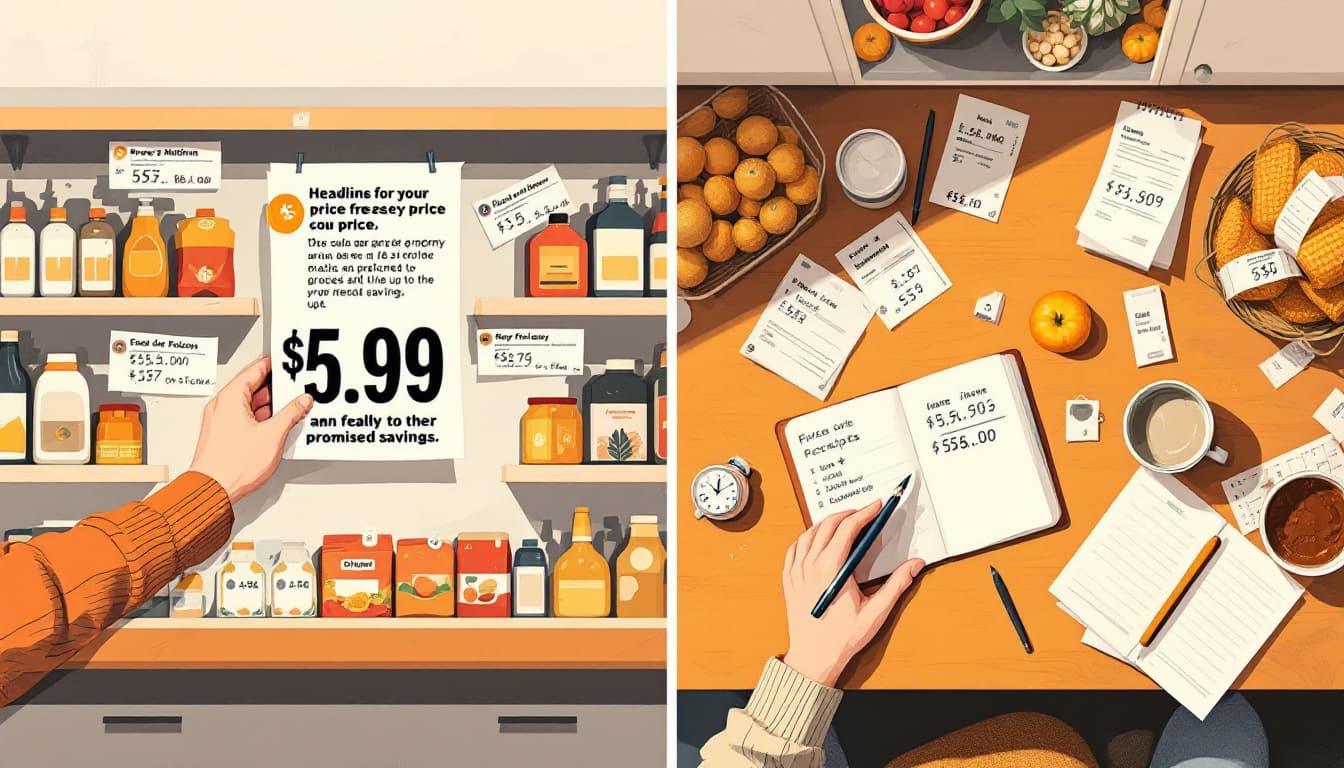
The core problem Charlebois identifies is structural. A "price freeze" as implemented applies to a curated set of products negotiated between government and major grocery chains, not to the broader basket of goods a typical shopper actually purchases. When retailers hold the line on select SKUs, they frequently compensate by adjusting prices on adjacent products, shrinking package sizes — a practice known as shrinkflation — or rotating promotional items off shelves. The result is that the headline freeze number and the real household expenditure number diverge significantly.
Canada's major grocers — Loblaw, Sobeys, and Metro among them — have faced sustained public and parliamentary pressure over profit margins that remained elevated even as consumers absorbed steep food inflation over the past several years. Statistics Canada data has shown food-at-home inflation running well above general CPI for extended periods, making grocery costs a politically sensitive flashpoint. The voluntary price freeze commitments extracted from chains were widely seen as a gesture toward that pressure rather than a structural intervention.
Charlebois's piece also notes that supply chain costs, including transportation, packaging, and ingredient sourcing, have not materially dropped in ways that would give retailers room to pass savings forward — meaning any freeze that does hold is likely being absorbed somewhere else in the margin stack, or cross-subsidized, rather than reflecting genuine deflation in input costs.
For readers who maintain deep pantries or stockpile shelf-stable goods, the mechanics Charlebois describes have a practical dimension that general coverage tends to skip: price freeze programs historically increase volatility in non-frozen product categories. When a retailer is constrained on certain SKUs, procurement and pricing pressure shifts laterally. Staples like dried legumes, canned goods, and cooking oils — the backbone of most long-term food storage — sit outside the politically visible freeze list and have historically been the first category to absorb compensatory price movement. Anyone tracking unit prices on pantry staples over the coming months may see that pattern play out again.