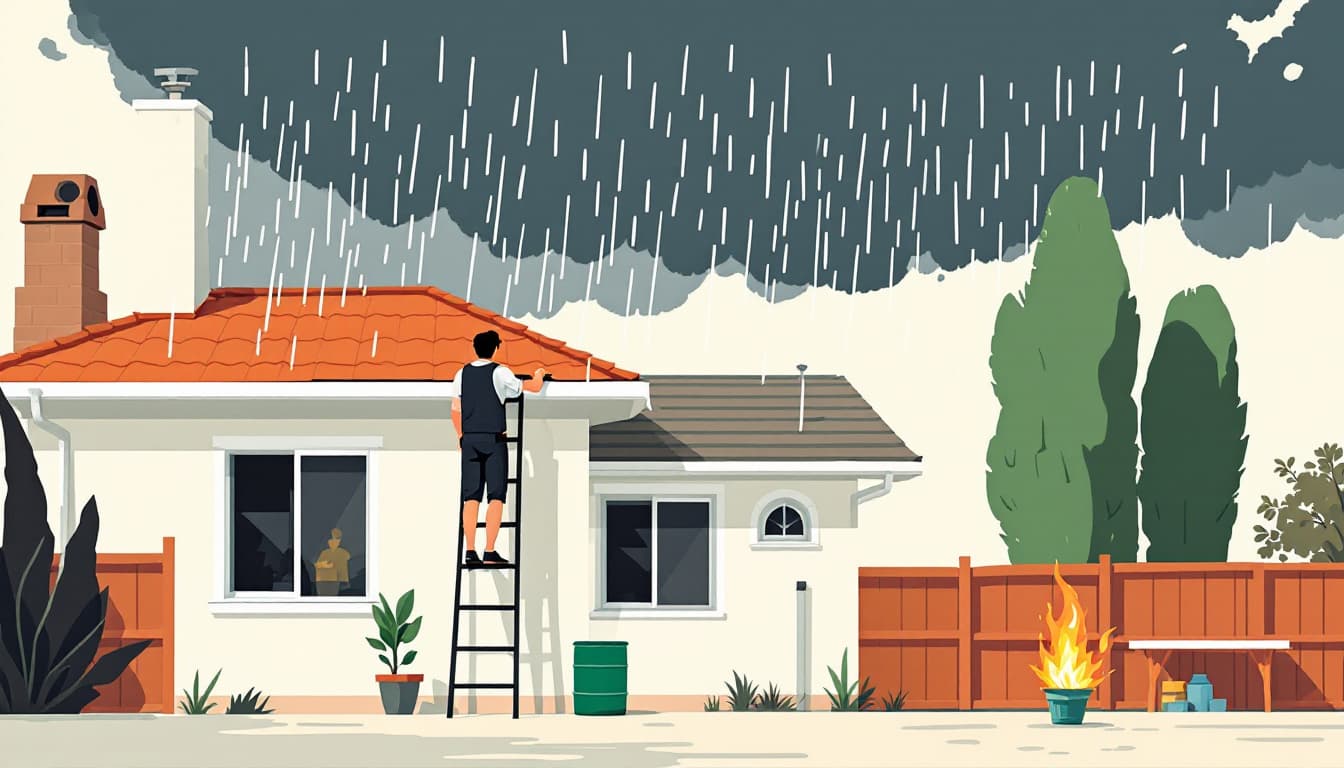
A report this week from Nature World News details that California's governor has declared a statewide emergency in anticipation of a very strong El Niño pattern building in the Pacific Ocean ahead of the coming winter season. The declaration positions the state to unlock emergency funding, pre-position resources, and activate coordination protocols across agencies before storm systems arrive, rather than after damage is already underway.
El Niño events of this classification — categorized by the National Oceanic and Atmospheric Administration as "very strong" when sea surface temperature anomalies in the Niño 3.4 region exceed 2.0°C above the long-term average — historically produce dramatically elevated precipitation across central and Southern California. The 1997–98 and 2015–16 events, both in this tier, caused billions of dollars in infrastructure damage across the state, with particularly severe impacts on the Los Angeles Basin, the Ventura County hillsides, and the Highway 1 corridor along the Big Sur coast, where saturated soils trigger debris flows rapidly after storm onset.
California's Office of Emergency Services (Cal OES), along with the Department of Water Resources (DWR) and Caltrans, are the primary agencies expected to activate under the declaration. DWR manages the State Water Project, a network of reservoirs, aqueducts, and pumping stations running roughly 700 miles from the Feather River watershed in the north to Southern California, and El Niño conditions can both replenish severely depleted reservoirs and simultaneously overwhelm flood control infrastructure if storms arrive in rapid succession. The Sacramento–San Joaquin Delta, a critical junction in California's water conveyance system, is considered particularly vulnerable to levee stress during extended high-inflow events.
California's complex relationship with El Niño underscores why preseason emergency declarations carry operational weight beyond symbolic preparedness signaling. The state's mountain snowpack, which historically supplies roughly 30 percent of California's annual water needs according to DWR figures, can be dramatically rebuilt by a strong El Niño — but the same atmospheric river events responsible for that snowpack can deliver rain at elevations that would normally receive snow, accelerating runoff into river systems faster than reservoirs can safely absorb. The California Air Resources Board has also documented that post-storm flood debris and mold events degrade air quality across the South Coast and San Joaquin Valley airsheds, adding a public health dimension to winter storm preparedness that extends well past the immediate flood risk window. Readers interested in how households build out storm and power-outage redundancy ahead of major weather seasons can find relevant product context at Middle Class Prepper's generator and backup power coverage.
The preseason timing of the declaration is notable. Emergency declarations issued before a disaster strikes give California counties the framework to execute mutual aid agreements and draw on the California Disaster Assistance Act, which can reimburse local governments for eligible preparedness expenditures — a mechanism not available once a storm has passed and damage assessments begin. As of the declaration date, no specific federal disaster designation had been reported, though Cal OES declarations frequently serve as the foundation for subsequent requests to FEMA for federal pre-disaster mitigation funds.