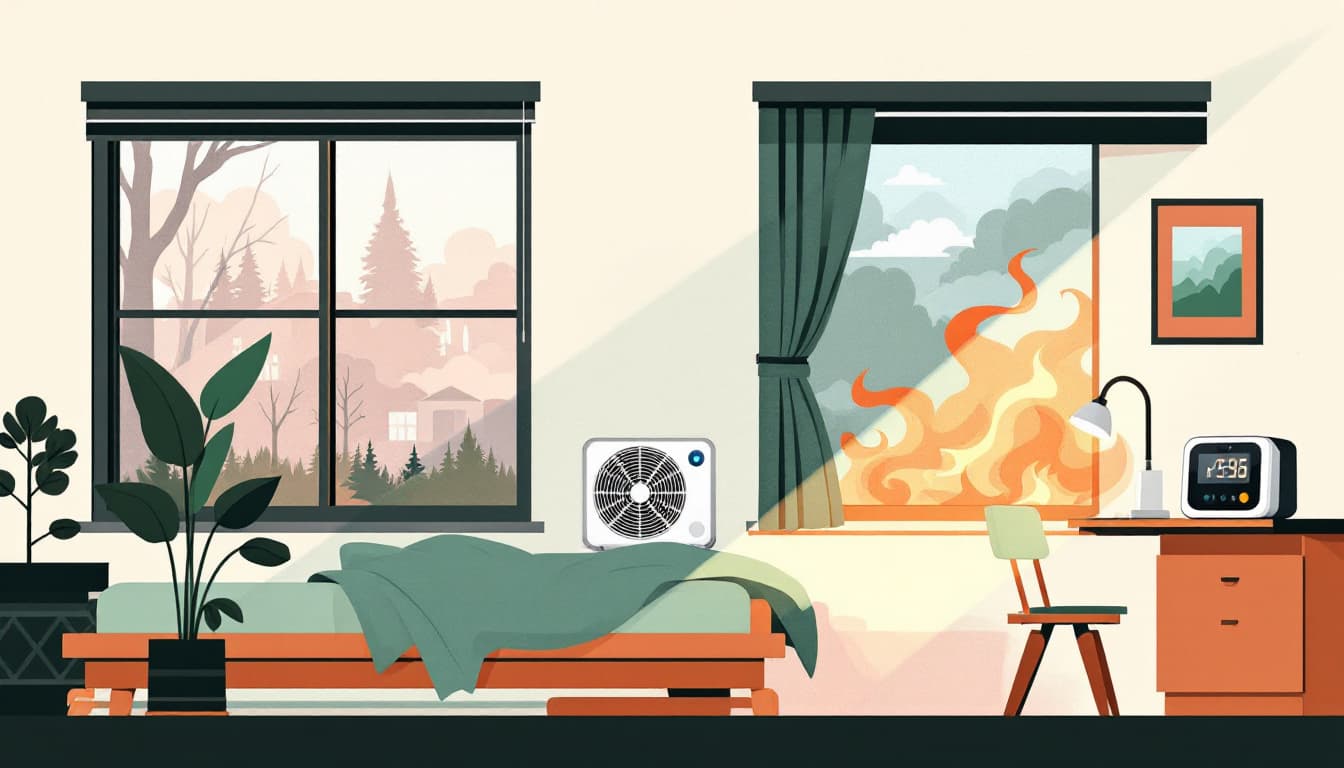
Active wildfires burning in the Big Sur area of California's Central Coast prompted air quality officials to issue a regional advisory, according to a report this week from SFGATE. The advisory covers portions of the Bay Area and surrounding communities where drifting smoke has pushed particulate levels into ranges that health agencies consider problematic for sensitive groups, including people with respiratory conditions, the elderly, and children.
Big Sur's rugged coastal terrain and dense chaparral create fire behavior that can be difficult to contain, and the late-summer timing — when vegetation is at its driest following months without significant rainfall — is consistent with the region's historically active fire season window. Smoke transport from coastal range fires to the north and inland is driven by the same marine layer dynamics that define Bay Area weather, meaning that even fires burning well south of the metro area can deliver sustained smoke concentrations under the right atmospheric conditions.
What general coverage of these advisories typically omits is the performance gap that smoke events reveal in standard home filtration. The particulate matter of primary concern in wildfire smoke — PM2.5, particles smaller than 2.5 micrometers — passes freely through fiberglass HVAC filters rated MERV 8 or below, which are the filters installed in the majority of residential forced-air systems. During a multi-day advisory, occupants running a central HVAC system on "fan" mode with a low-rated filter can inadvertently draw outdoor smoke through the system continuously, actually degrading indoor air quality below outdoor levels. MERV 13 or higher is the threshold at which residential filters begin capturing PM2.5 meaningfully, a detail that matters when smoke advisories extend beyond a single afternoon.