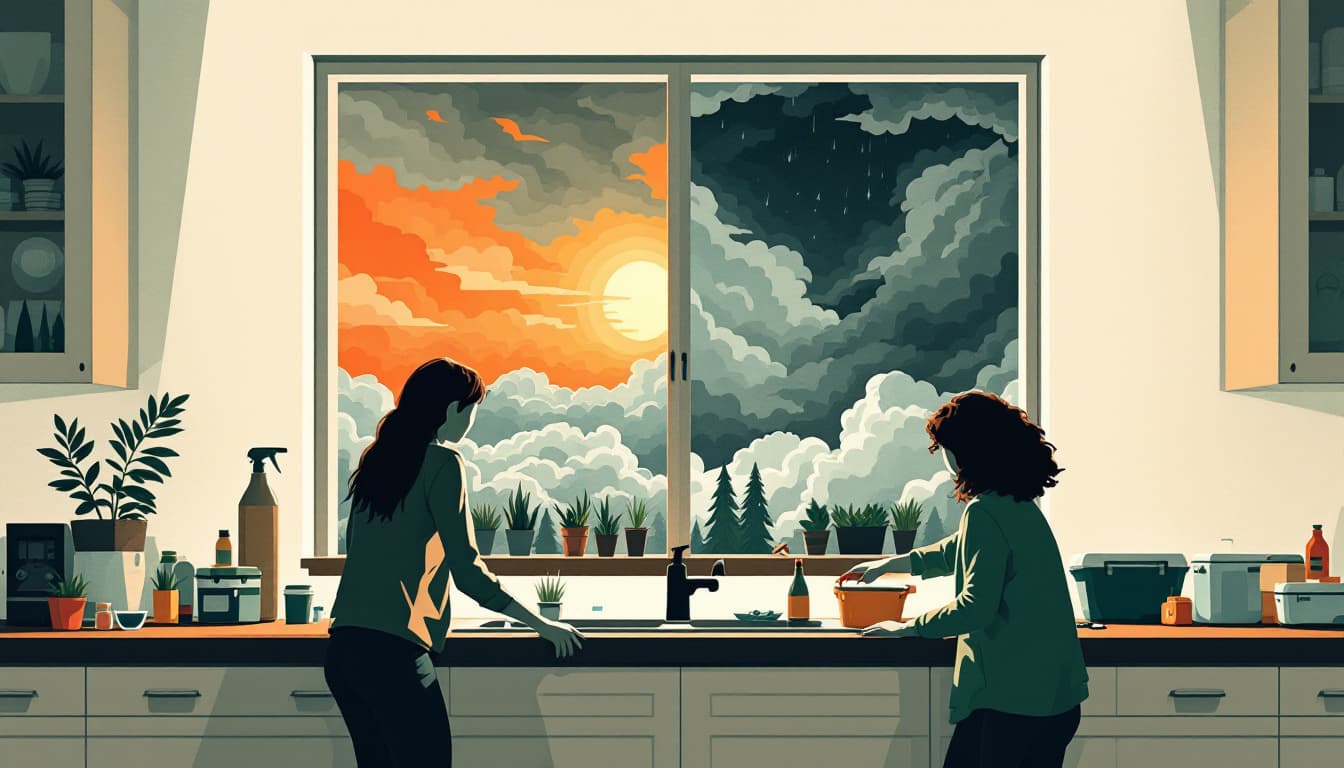
A report this week from AZ Family notes what every longtime Arizonan recognizes by instinct: extreme heat is sitting over the state right now, and monsoon storms are queued up behind it. That transition — not the heat alone, not the storms alone — is the window when things go wrong for households that aren't ready for both at once.
What's actually happening
The North American Monsoon typically arrives in Arizona in early July, and when it does, it doesn't ease the heat so much as layer chaos on top of it. Temperatures stay high between storms. Humidity climbs. Haboobs reduce visibility to near zero on I-10 and US-60. Washes that were bone-dry at noon can carry six feet of water by 3 p.m.
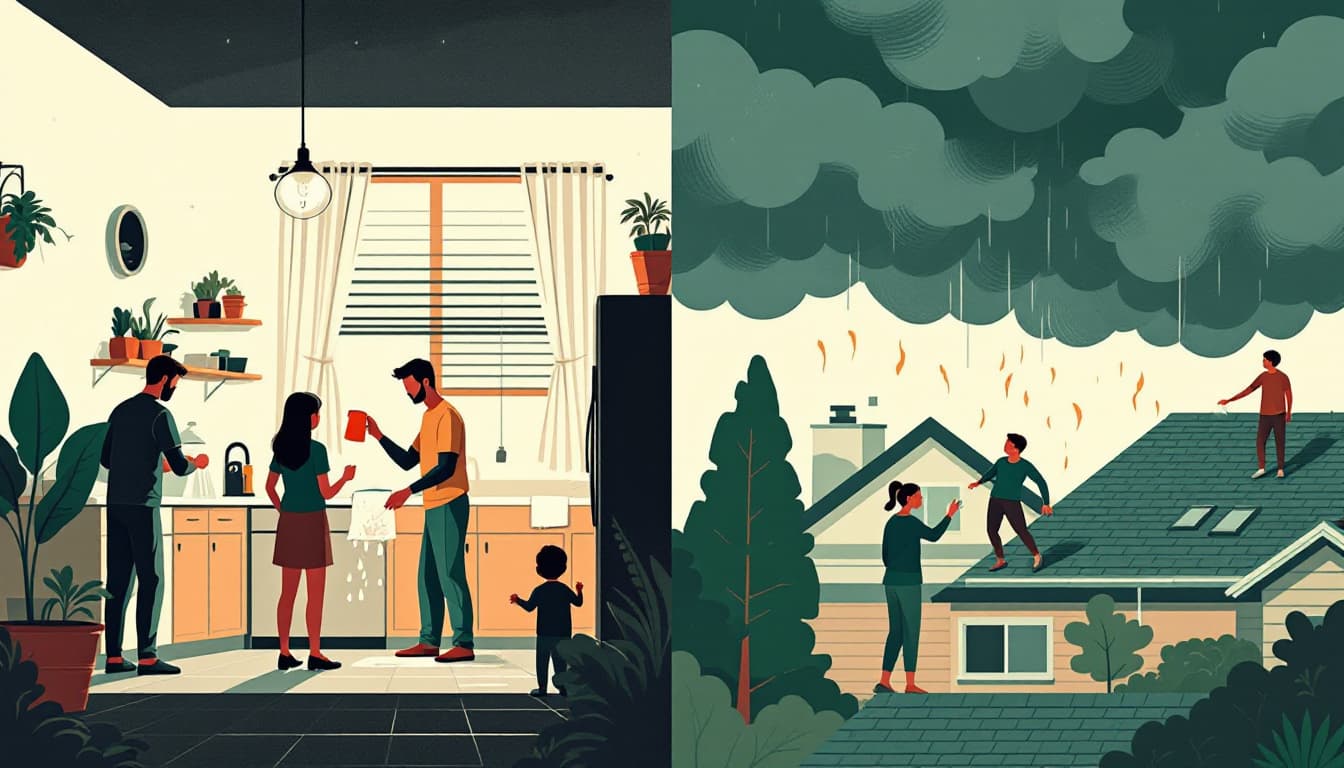
What makes this week specifically difficult is the dual exposure. Households are already stressed from weeks of 110-plus-degree days — bodies taxed, AC units running hard, electric bills elevated. Then a fast-moving storm cell drops two inches of rain in forty minutes, knocks out power to a neighborhood in Chandler or Tucson, and suddenly the home has no cooling during a heat event. That's not a hypothetical sequence. It happens multiple times every monsoon season in Maricopa and Pima counties.
Arizona Public Service and Salt River Project restore most outages within a few hours, but "a few hours" in 115-degree heat without AC is a medical event for elderly residents, young children, and anyone on medications that must stay refrigerated.
What we'd actually do
Confirm your outage plan before the first storm hits, not after. Most Arizona households have a vague sense that they'd "go somewhere" if the power went out during extreme heat. That's not a plan. Name the specific location — a family member's house, a nearby library, a hotel within ten miles — confirm it's available, and make sure every adult in your home knows it. The Maricopa County heat emergency shelter list is updated each summer season and is worth bookmarking now.
Fill the gaps in your medication cold-chain. If anyone in your home takes insulin or other temperature-sensitive medication, a 72-hour power outage is a prescription crisis. A small plug-in cooler that runs off a car's 12V outlet costs under $50 and solves the problem. Buy it before you need it. Check the FDA's guidance on insulin storage outside refrigeration — the answer is more forgiving than most people expect, but knowing the actual numbers matters.
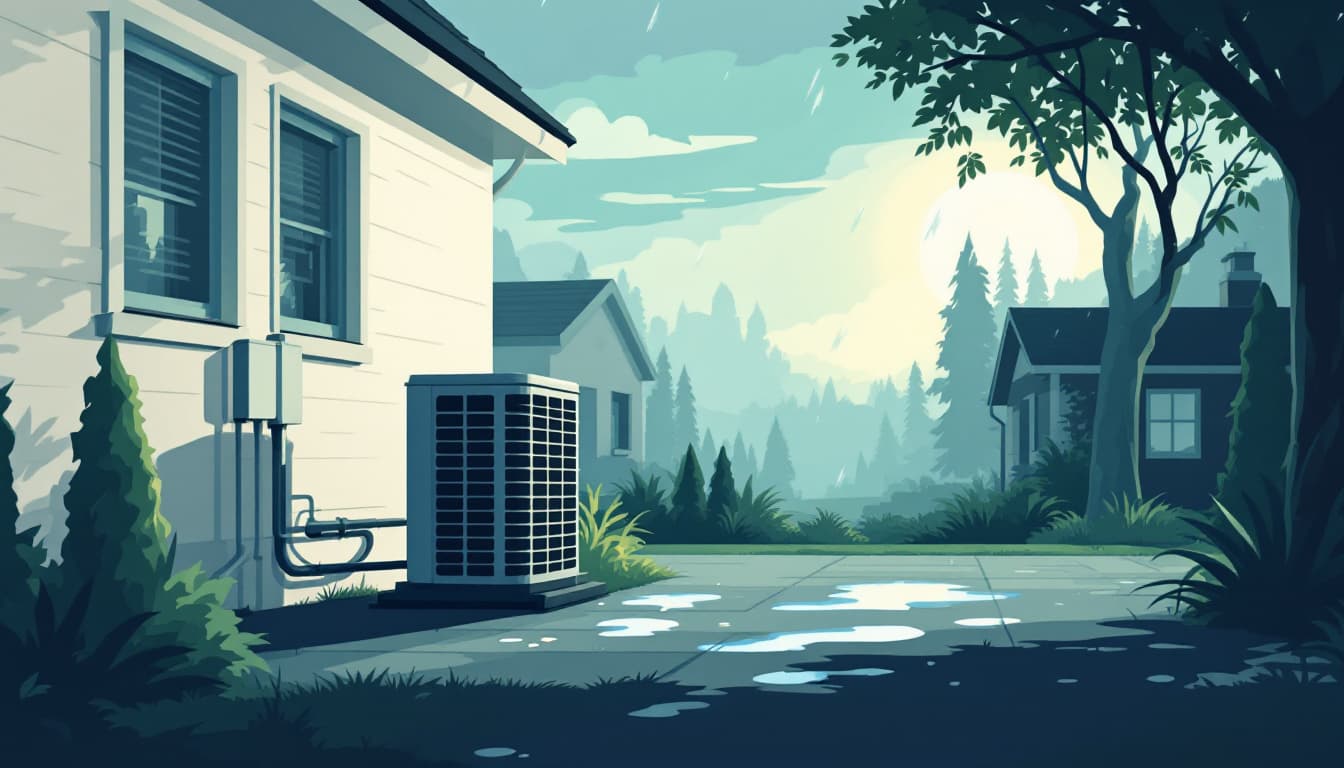
Walk your property for flood and wind vulnerabilities this week. Monsoon storms in Arizona bring straight-line winds that routinely hit 60 mph before the rain even arrives. Patio furniture, unsecured propane tanks, shade sails, and potted plants become projectiles. Gravel yards — nearly universal in the Phoenix metro — become horizontal buckshot. Spend twenty minutes this week securing or storing anything that isn't bolted down. While you're outside, check that your home's entry points and window wells can't funnel water inside; desert soil sheds water rather than absorbing it, and pooling happens fast.
Stock three days of water beyond your normal supply, stored cool. This isn't doomsday math. A boil-water notice after a flood event, a contamination issue, or simply a pressure drop during a widespread outage can interrupt municipal water for 24 to 72 hours. Arizona water utilities are generally well-run, but the margin disappears during compounding events. Three gallons per person per day is the standard figure. Store it somewhere that stays below 90 degrees — a garage in July does not qualify; a closet inside the conditioned space does.
Download the NWS Tucson or NWS Phoenix app and turn on flash flood alerts. The National Weather Service offices covering Arizona issue Flash Flood Warnings that can give you 20 to 40 minutes of actionable lead time. That's enough time to move a car out of an underground garage, pick up a kid from a practice field, or avoid a low-water crossing. The alert is free. Not having it is a choice.
The bigger picture
Arizona households deal with a climate that runs at extremes and then whipsaws between them. The goal isn't to bunker down every July — it's to close the specific gaps that the heat-to-monsoon transition exposes each year. A working outage plan, a medication cold-chain solution, a secured yard, and a water buffer cover the realistic failure modes without requiring a bunker or a generator the size of a small car.
Durability in Arizona isn't about surviving the apocalypse. It's about not being the household that ends up in an AZ Family report for the wrong reason.