A USDA drought disaster designation is not a weather forecast. It is a formal federal finding — one that unlocks low-interest emergency loans through the Farm Service Agency — and it requires documented, sustained damage to qualify. When AZ FREE NEWS reported this month that the USDA had issued those designations for ten Arizona counties simultaneously, the scope was the notable part. This is not one stressed county in the southwest corner of the state. Ten counties represents most of Arizona's agricultural heartland and a significant share of its rural population.
What the designation actually means
The USDA designation is agricultural in focus. It tells farmers and ranchers they can apply for FSA emergency loans. It does not directly affect municipal water systems, household taps, or grocery prices overnight.
But it is a lagging indicator of conditions that have been building. Drought designations require a finding that at least 30 percent of a county's primary crops have suffered losses — meaning the damage is already done. By the time Washington formalizes it, ranchers have already been selling off cattle they cannot afford to water, fields have already gone unplanted, and local groundwater tables have already dropped further than they did the prior season.
For Arizona households, the ripple effects are real but slow. Arizona sources a meaningful share of its winter vegetables — lettuce, broccoli, cauliflower — from the Yuma area, which sits inside the Colorado River Basin system already under long-term allocation pressure. Beef prices track cattle herd size nationally, and the southwest herd has been contracting. Neither effect hits your grocery cart this week. Both effects accumulate over 12 to 24 months.
The other issue is well water. Rural Arizona households on private wells — particularly in Cochise, Graham, and Greenlee counties — are not connected to CAP (Central Arizona Project) infrastructure. When shallow aquifers drop, those households face real disruption before any municipal system does.
What we'd actually do
Check your county's current drought monitor status and ADWR well reports before assuming your water source is stable. The Arizona Department of Water Resources publishes groundwater level data by basin. If you're on a private well, look up your basin's trend line — not just the current reading, but the five-year direction. A well that has dropped eight feet over five years is a different planning problem than one that's been stable. The National Drought Monitor (drought.gov) maps conditions weekly by county and is free.
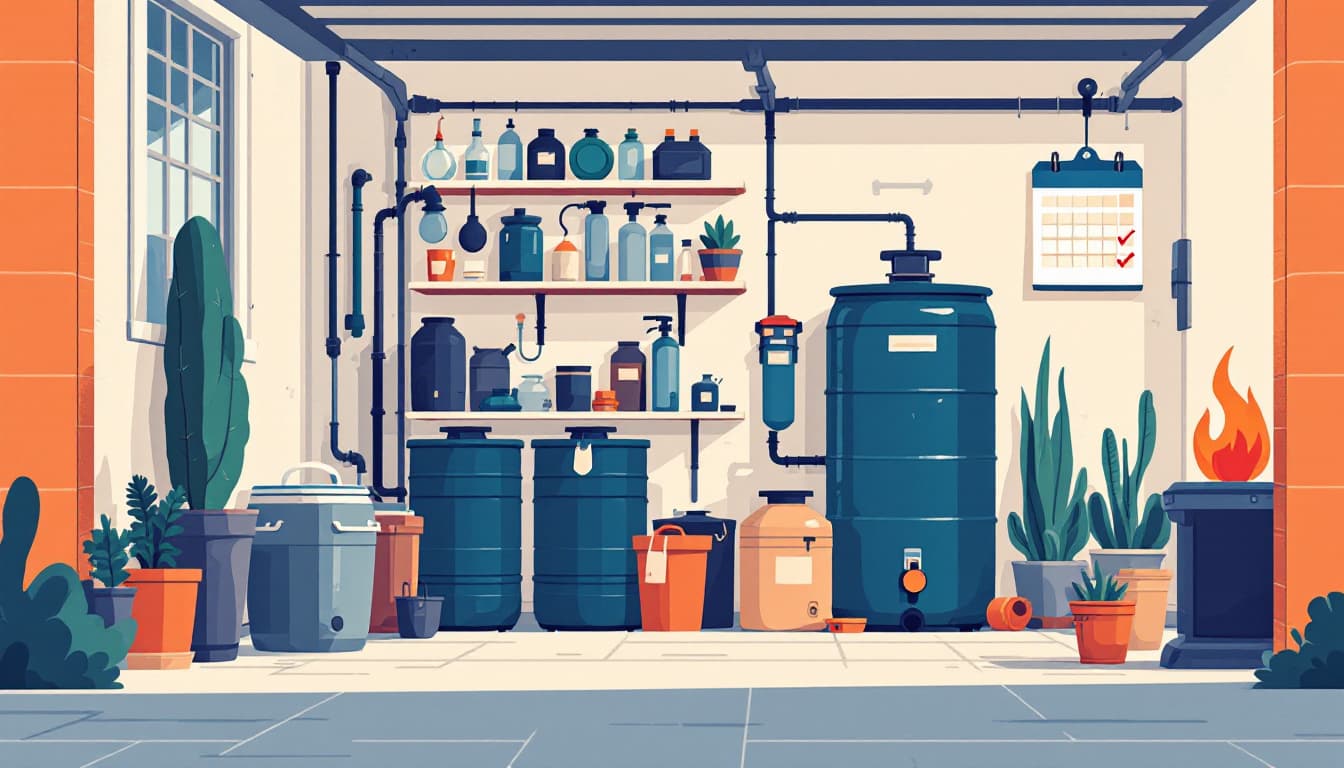
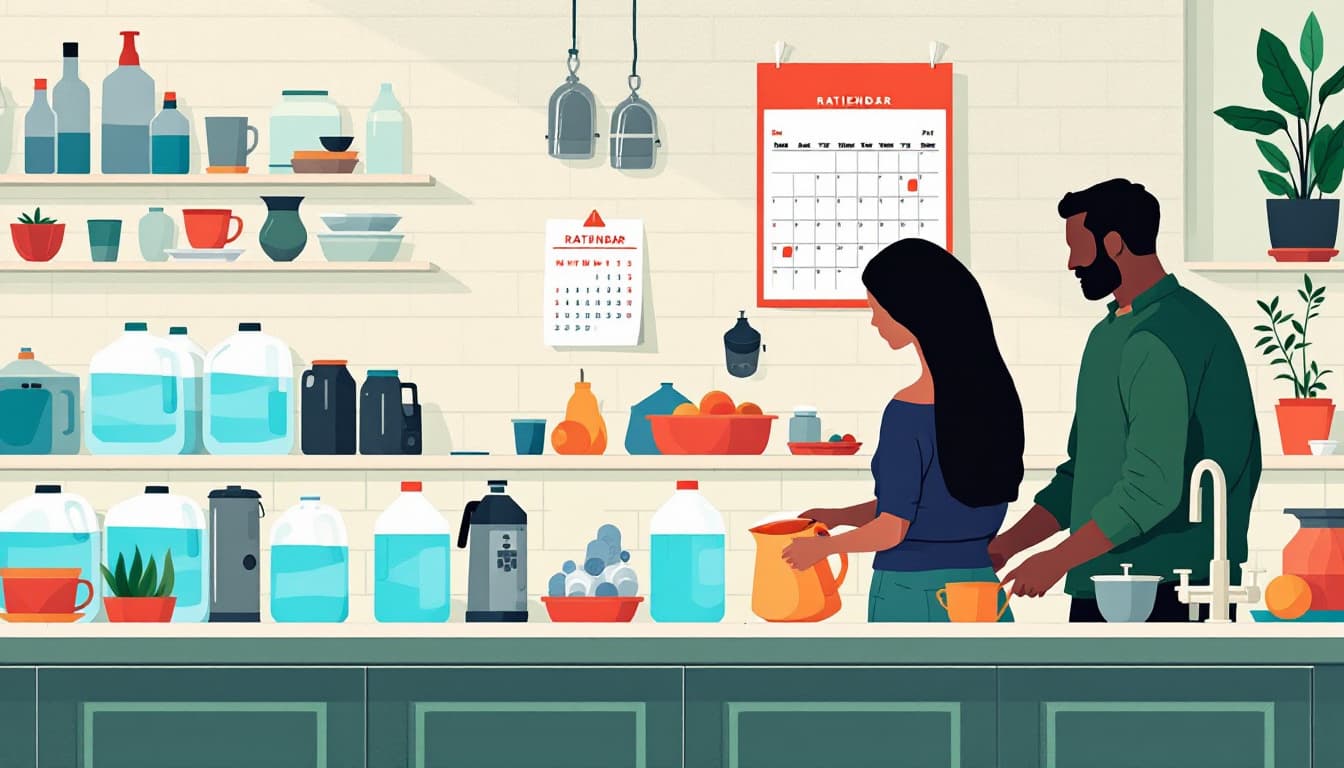
Build a two-week water reserve now, before July heat drives supply issues at retailers. FEMA's baseline guidance is one gallon per person per day. For Arizona in July, that's a floor, not a target — heat-related needs run higher. A household of four should have a minimum of 28 gallons stored, ideally in dedicated food-grade containers rather than repurposed jugs. This is not apocalypse prep; it is the same logic as keeping a spare tire. Water main breaks, well pump failures, and boil-water notices happen every summer across rural Arizona without any drought emergency.
Look at your food staples with a 90-day lens, not a 72-hour lens. The standard "72-hour kit" framing made sense for short-duration disasters. Drought-related disruptions — rising produce prices, supply chain gaps in rural areas, temporary well failures — play out over weeks, not hours. A three-month supply of shelf-stable grains, legumes, and canned goods is achievable for most households under $200 built incrementally. Start with what you already eat. Rotate stock. Ignore the freeze-dried bucket marketing.
If you have outdoor irrigation, audit it this week. Arizona municipalities including Phoenix, Tucson, and Mesa have tiered pricing structures that penalize high summer water use. A drip system running inefficiently can add $60 to $100 to a monthly bill and, more practically, draw down local pressure on stressed distribution systems. A one-hour inspection — checking for broken emitters, overspray, and scheduling overlap — is free and often cuts outdoor use by 20 to 30 percent according to University of Arizona Cooperative Extension research.
Know your local water provider's drought contingency plan. Most Arizona municipal providers are required by the Arizona Department of Environmental Quality to file drought preparedness plans. Call yours or find it on their website. Understand what Stage 1, 2, and 3 restrictions look like in your city — and which stage triggers mandatory outdoor watering bans. Knowing this in advance means you are not making reactive decisions mid-crisis.
The bigger picture
Arizona has been managing water scarcity as a structural condition for decades, not a temporary emergency. The Salt River Project, CAP, and municipal conservation programs have kept large urban systems functional through severe dry spells. That institutional resilience is real, and it is worth acknowledging.
What drought disaster designations at this scale signal is that the margin is compressing. Rural counties feel it first. Agricultural communities feel it next. Urban grocery prices and utility rates follow. None of that is catastrophe — it is a system under increasing stress, which is exactly the kind of slow-developing situation household preparedness is actually built for.
The goal is not to outlast the end of the world. It is to handle a two-week water disruption, a 15 percent spike in produce prices, or a well pump failure without a crisis. That resilience is boring, achievable, and worth building now.