The Colorado River is carrying less water than it did twenty years ago, and Arizona — which holds one of the most junior water rights on the river — has already absorbed mandatory cuts. A report this week from the Tucson Sentinel lays out where state officials are looking next: desalinated water from the Pacific Ocean, piped hundreds of miles inland. The headline number is that it won't be cheap. That's the understatement worth unpacking.
What's actually changing
Desalination isn't a new idea, but it's moving from a long-range contingency into an active budget conversation in Arizona. The state is in preliminary talks about financing a plant on the Gulf of California — in Mexican territory, which adds diplomatic complexity — and then conveying that water to Central Arizona Project canals. The engineering is real. So is the cost: desalinated water consistently prices out at several times what Colorado River water has historically cost municipalities.
The critical thing to understand is the gap between the state's timeline and your household's timeline. State infrastructure projects of this scale take ten to twenty years to permit, finance, build, and operate. The Colorado River cuts are happening now. That gap is where the near-term risk for Arizona households actually lives.
In the meantime, Arizona municipalities are pulling from a mix of groundwater banking, reclaimed water programs, and conservation mandates. Some cities in the Phoenix metro have banked significant groundwater credits over the past two decades — a genuine buffer. Others, especially in newer exurban developments in Pinal and Maricopa counties, are on shakier footing. The Arizona Department of Water Resources has flagged several master-planned communities as having unsubstantiated long-term water supplies. That's not a scare tactic; it's a regulatory designation with real consequences.
What is not speculative: water in Arizona will cost more. Utilities will pass infrastructure costs through to ratepayers. The question is how much, how fast, and whether your household is positioned for it.
What we'd actually do
Find out where your water actually comes from. Call your water utility and ask what percentage of supply comes from Colorado River allocations versus local groundwater or reclaimed sources. This one call tells you your household's real exposure. Cities like Tucson that have historically blended sources are in a different position than newer developments relying on a single supply.
The answer changes what you prioritize. If your utility is heavily Colorado River-dependent, near-term rate increases and potential conservation mandates are more likely. If your utility has deep groundwater banking credits, you have more runway — though groundwater depletion is a slower, separate problem.
Audit your household's water use before the utility does it for you. Mandatory conservation restrictions — odd/even watering days, limits on turf irrigation, restrictions on new pools — are already in place in parts of Arizona and are likely to tighten. A household water audit through your utility (most Arizona utilities offer them free) identifies where the biggest cuts are achievable with the least lifestyle disruption. Outdoor irrigation typically accounts for 60–70% of residential use in the desert Southwest, so that's where the audit pays off.
Price out a greywater system or drip-conversion if you haven't already. Laundry-to-landscape greywater systems are legal in Arizona with minimal permitting requirements. Converting a conventional spray irrigation system to drip typically cuts outdoor water use by 30–50%. Neither of these is free, but both are significantly cheaper than absorbing years of rising water bills without adjusting consumption.
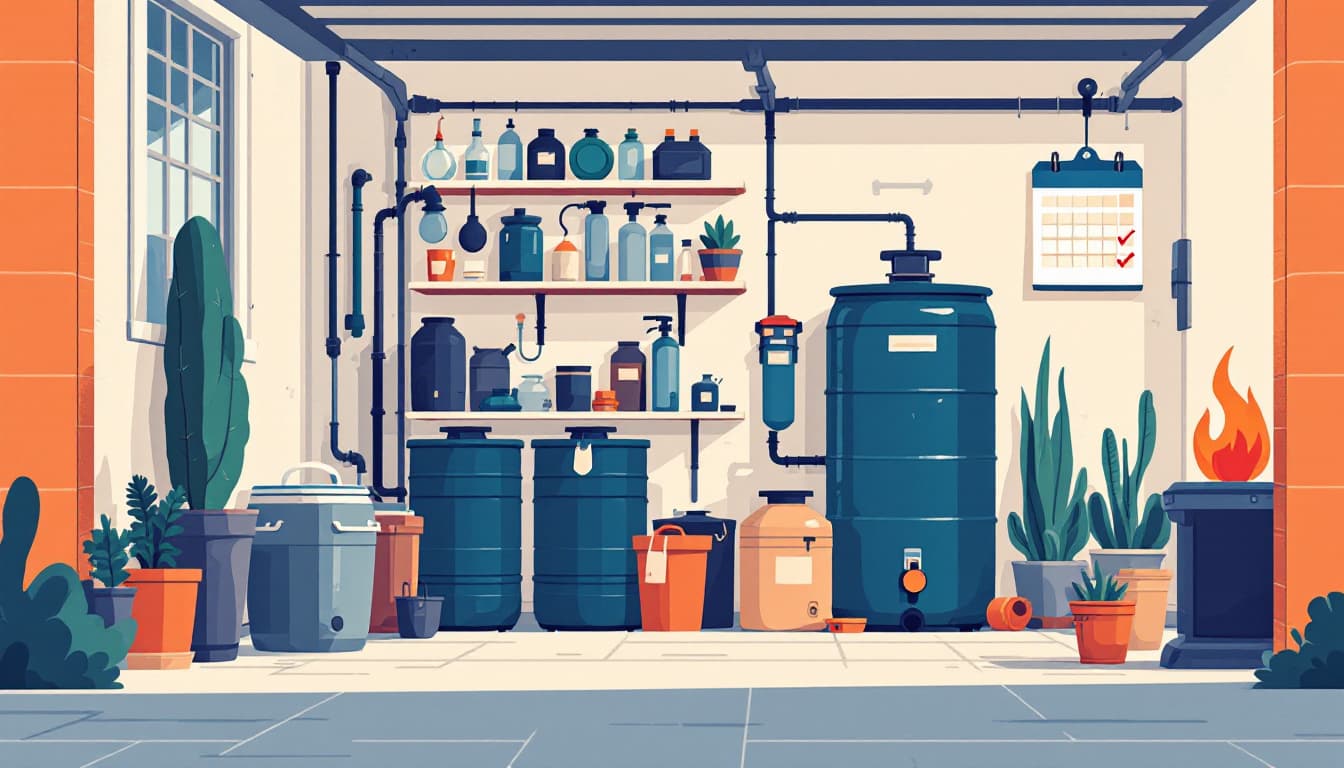
Build a modest stored-water buffer. This is not about surviving a collapse — it's about the same logic as keeping a week of groceries on hand. Water main breaks, well pump failures, and short-term service interruptions happen, and in extreme heat they become emergencies fast. For a household of four, seven gallons per person (28 gallons total) covers drinking and basic sanitation for a week. Dedicated water storage containers rated for potable use run $20–$40 each at most hardware stores.
Watch your property's water rights disclosure if you're renting or buying. Arizona law requires disclosure of water supply status in real estate transactions. The Arizona Department of Water Resources database is public. If you're considering a move within the state, checking that database before signing anything is fifteen minutes well spent.
The bigger picture
Arizona has been managing water scarcity for a long time, and the state does have real infrastructure, real reserves, and real regulatory capacity. The situation is not a crisis that arrives next Tuesday. But the gap between the water supply Arizona has and the water supply Arizona needs is widening, and desalination — for all its engineering ambition — is a decade away from meaningfully closing it.
The households that will handle this best are not the ones stockpiling water in a panic. They're the ones that understood their local supply situation five years before anyone else thought to ask, reduced outdoor water use gradually and sustainably, and built small buffers against short-term disruption. That's durable. That's the goal.