Lake Mead's surface elevation has been measured in feet above sea level on federal dashboards for years now, and Arizona water managers watch that number the way pilots watch fuel gauges. A report this week from ASU News describes a new study — led by ASU researchers — that is refining how we forecast snowpack runoff and flow volumes into the Colorado River system. The science is getting tighter. The outlook is not getting more comfortable.
What's actually changing
The study is about forecasting accuracy, not a new crisis. That distinction matters. Better models mean Arizona water managers at ADWR and CAP (the Central Arizona Project) can plan cut schedules with more lead time and less guesswork. That is genuinely useful.
What it does not change is the underlying math. Arizona holds a junior priority claim on Colorado River water under the Law of the River, which means when the Bureau of Reclamation triggers shortage tiers, Arizona absorbs cuts before California. The state has already been operating under Tier 1 and Tier 2 shortage declarations in recent years. The CAP canal, which moves Colorado River water to the Phoenix and Tucson metro areas, is the delivery mechanism that feels those cuts first.
For most urban Arizona households on a municipal system, the immediate impact is indirect: municipalities are drawing down groundwater reserves and purchased supplies to compensate, and those substitutions cost money. Rate increases are already showing up on bills in several valley cities. That is the near-term household signal worth watching.
Rural Arizona households — particularly those in agricultural communities dependent on irrigation districts supplied by CAP allocations — face more direct exposure. Fallowing payments and voluntary reduction programs have helped buffer some of that, but the programs are not permanent and the structural supply gap is not closing.
The sharper forecasts give planners more time to act. Whether that time gets used well is a governance question, not a hydrology one.
What we'd actually do
Audit your actual household water use, not just the bill. Pull the last 12 months of water bills and calculate your average monthly gallons per person. The City of Phoenix, Tucson Water, and most valley utilities publish their tiered rate structures online. Knowing exactly where you sit in the pricing tiers tells you whether a 10 or 15 percent conservation effort would drop you into a lower cost bracket — and it gives you a realistic baseline if voluntary or mandatory restrictions come.
Identify your utility's supply portfolio. Most Arizona municipal water utilities publish annual water quality and supply reports (required under federal rules). The document will tell you what percentage of your city's supply comes from Colorado River allocations, groundwater, Salt River Project water, and reclaimed sources. If your city is 40 percent dependent on CAP, that is a different risk profile than a city at 15 percent. ADWR publishes these breakdowns as well. This takes 20 minutes and costs nothing.
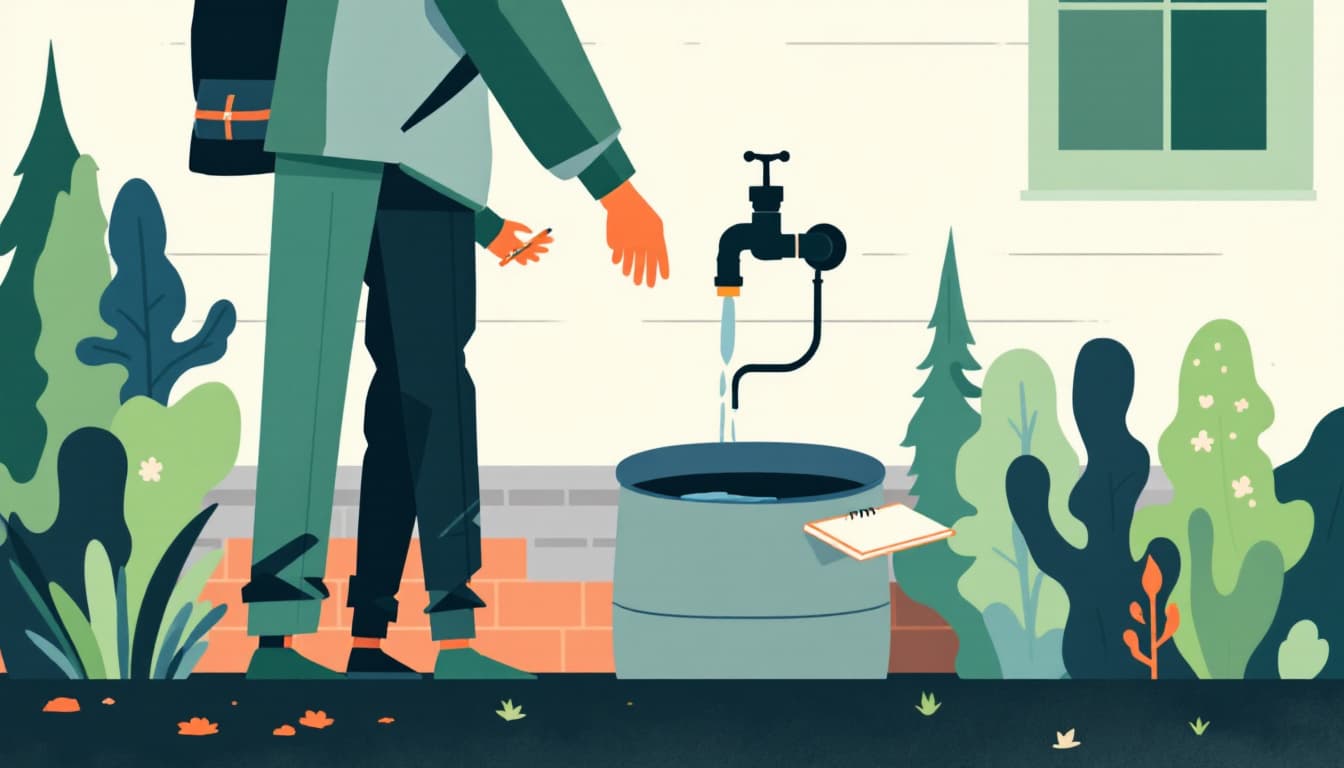
Build a short-term household water buffer. Not a bunker — a buffer. Storing 14 days of drinking and sanitation water for your household is achievable with standard food-grade containers. FEMA's guidance uses one gallon per person per day as a baseline; we'd push that to 1.5 gallons in an Arizona summer given heat and hygiene needs. For a family of four, that's 84 gallons — about four standard 20-gallon stackable containers. This addresses the scenario most likely to matter: a pipe failure, a boil-water notice, or a brief service disruption, not a multi-year collapse.
Plant or replant with the actual climate in mind. Arizona Cooperative Extension publishes low-water landscaping guides specific to Maricopa, Pima, Pinal, and other counties. If you have grass in your yard and you are on a municipal system facing rising tier rates, the math on xeriscaping is changing. Several valley cities still offer rebates for turf removal — check your city's water conservation page before the programs close or funding runs out.
Watch the August 1 Bureau of Reclamation operating conditions announcement. Every year, around that date, the Bureau releases its 24-month study projecting Lake Mead and Lake Powell elevations and triggering shortage tier decisions. That announcement has direct consequences for CAP allocations the following calendar year. Mark it on your calendar. You do not need to act in a panic — you need to act with a year's lead time.
The bigger picture
Arizona has been doing water management at the policy level for decades, and the state's groundwater law framework is among the most developed in the western U.S. That is not a reason for complacency. It is a reason to take the planning institutions seriously and to align your household behavior with the real constraints they are managing.
Better forecasting tools help planners. Durable households help themselves. The goal is not to prepare for the Colorado River running dry next year — it is to be the household that does not blow its budget on emergency bottled water when a disruption happens, and that has already made the low-cost adjustments before rate structures force the issue.
Water scarcity in the Southwest is a slow, documented, structural trend. The appropriate response is slow, deliberate, structural adjustment — starting this week with 20 minutes and your last 12 water bills.