
Why your basement pump deserves more thought than your smoke detector
Most households don't think about their sump pump until three inches of water are creeping toward the water heater at midnight during a thunderstorm. By that point, the difference between the right pump and the wrong one is measured in thousands of dollars of drywall, flooring, and furniture. A basement flood is rarely a catastrophic, once-in-a-lifetime event — for many homes, it's a recurring seasonal risk tied to snowmelt, heavy rain, or a rising water table. Getting the right pump installed before the first incident is one of the highest-return preparedness investments a homeowner can make.
The category also splits into two distinct use cases that are easy to conflate: permanent pit-installed sump pumps (which manage ongoing groundwater intrusion) and portable surface pumps (which remove standing water from flat floors after the fact). Buying the wrong type for your situation wastes money either way.
What actually matters when you're choosing
Flow rate at real-world head height. Manufacturer GPH specs are typically measured at zero feet of lift. The number that matters is flow rate at the actual vertical distance from your pit to the discharge point — usually five to ten feet. A pump that looks adequate on paper can underperform significantly once it's working against real back-pressure.
Housing material. Plastic housings are cheaper to manufacture and fine for light, infrequent use. Cast iron dissipates heat better and survives the continuous-duty cycles that serious flooding demands. If your pump runs for hours at a stretch, the housing material is not a cosmetic choice.
Float switch design. A stuck or failed float switch is the single most common cause of sump pump failure. Vertical float switches require adequate pit diameter to swing freely. If your pit is narrow, confirm compatibility before buying.
Portability versus permanence. If you don't have a sump pit — or if your flooding problem is surface water on a concrete floor rather than groundwater rising from below — a pit-installed submersible pump is the wrong tool. A flat-sitting surface pump is.
Who each tier is for
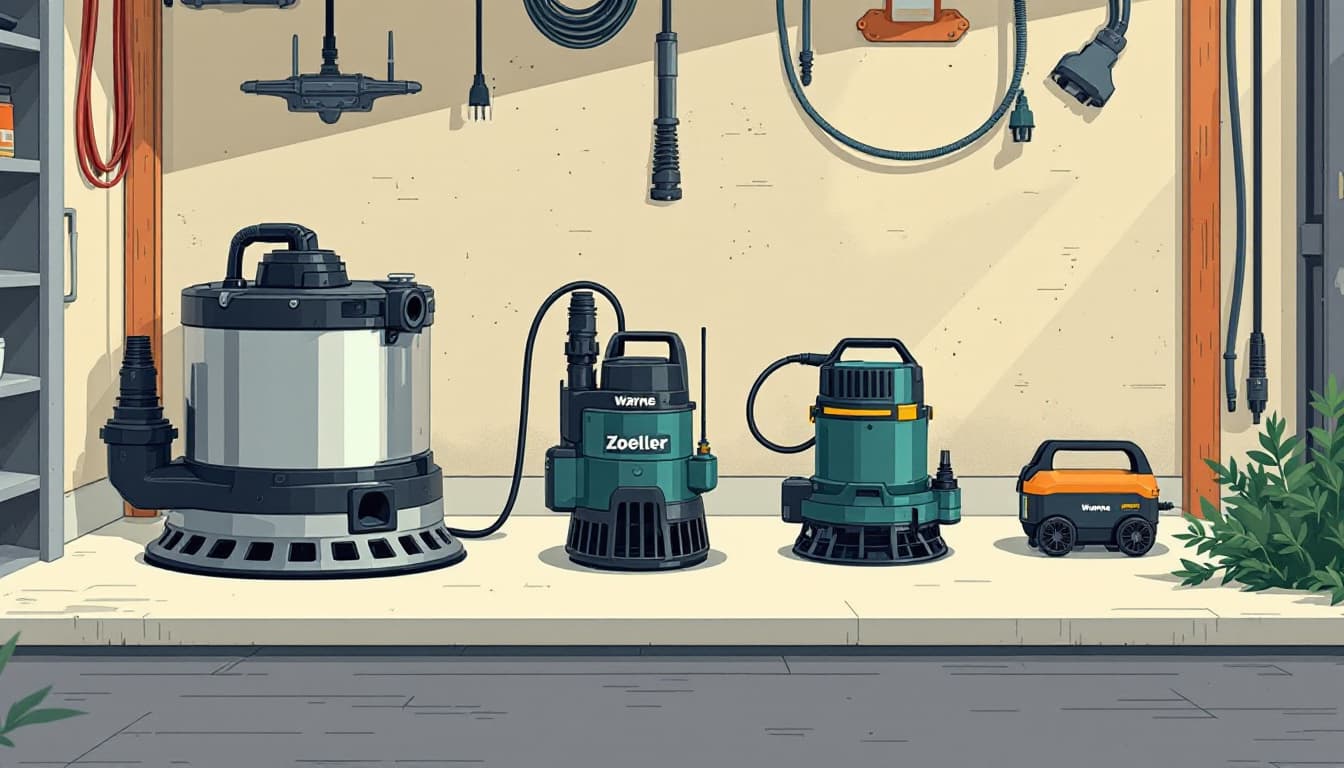
The Wayne CDU980E (~$218) — premium pick. If your property sits on a slope, has a documented history of high water intrusion, or your basement square footage is large enough that a slower pump simply can't keep pace, the CDU980E's 3/4 HP motor and 5,490 GPH capacity give you meaningful headroom. The five-year warranty and USA assembly are genuine differentiators, not marketing language. That said, it requires an eleven-inch-minimum sump pit, and it is genuinely overkill for a house that sees water only during the worst storms of the decade.
The Zoeller M53 (~$185) — value pick and best for most homes. The price delta between the M53 and the CDU980E is modest, but the M53 earns its best-overall designation through a different argument: it is the pump that professional waterproofing contractors default to because it is reliable, all cast iron, and handles the solids and grit that real groundwater carries. Its screenless vortex impeller doesn't clog, its motor is hermetically sealed and oil-filled, and every unit is factory pressure-tested before it ships. At 4.8 stars across more than 3,450 verified reviews as of mid-2026, it has the largest real-world validation of any pump in this roundup. Its 2,580 GPH at five feet of head is sufficient for the vast majority of American basements. Note the float switch needs a pit wider than ten inches to operate correctly.
The Wayne WaterBUG (~$70) — budget pick. Stop here if you're comparing this to the two pumps above, because it is not competing with them. The WaterBUG sits flat on any floor, connects to a garden hose, requires no pit and no plumbing, and drains standing water down to 1/16 of an inch. It is the right answer for a garage that floods during heavy rain, a laundry room with a washer overflow, or any flat-surface water event where the problem is inches of standing water rather than active groundwater intrusion. It stores in a closet, deploys in under two minutes, and costs less than a single service call. Just know its limits: 1,350 GPH is not enough for serious basement flooding, it has no float switch so you must unplug it manually, and it is not a substitute for a permanent sump system in a flood-prone home.

