
Why this category matters
A winter power outage that lasts longer than a few hours stops being an inconvenience and starts being a health risk—particularly for households with young children, elderly members, or anyone with respiratory or cardiovascular conditions. Most homes have no heating system that functions without electricity. A properly rated indoor-safe propane heater fills that gap cleanly: no generator required, no exhaust venting needed, and no scramble to find a hotel room at 2 a.m. when the grid goes down in a snowstorm.
The key phrase is indoor-safe. Not every propane heater qualifies. The heaters in this guide all include an oxygen depletion sensor (ODS) that shuts the unit off before carbon monoxide becomes dangerous in a closed space. That feature is non-negotiable. Even with an ODS-equipped heater, basic ventilation practice—cracking a window an inch or two—is still sensible. But you are not choosing between warmth and safety here. These units are designed and rated for indoor residential use.
What actually matters when you're buying
BTU coverage is the first decision. Square footage ratings are printed on the box, but your real question is: which room will your family retreat to if the heat goes out? A typical bedroom or home office is well within 225 square feet. An open-plan kitchen-living-dining area almost certainly is not. Buy for the space you'll actually heat, not the optimistic number.
Fuel logistics matter more than the heater itself. Every pick here runs on 1 lb propane cylinders, which are easy to find and easy to store. But 1 lb cylinders disappear fast under real load. The Portable Buddy burns through a cylinder in roughly 2.4 hours at high. A 20 lb tank connected via an optional hose adapter changes the math entirely—suddenly you're measuring runtime in days, not hours. The Big Buddy NF and the Portable Buddy both support that setup. The Little Buddy does not, so if you buy the small unit, budget for a healthy cylinder stockpile.
The fan question on the Big Buddy NF. Mr. Heater removed the blower fan from current Big Buddy production in 2025. The unit is now convection-only at its 18,000 BTU peak, which is a real tradeoff worth knowing. Radiant and convection heat still warm a room effectively; you just lose the forced-air distribution that made the original a particularly efficient space heater. For most outage scenarios—where you're sitting still in a closed room—this matters less than it sounds. But if you were specifically counting on that fan, adjust expectations before you buy.
Who each tier is for
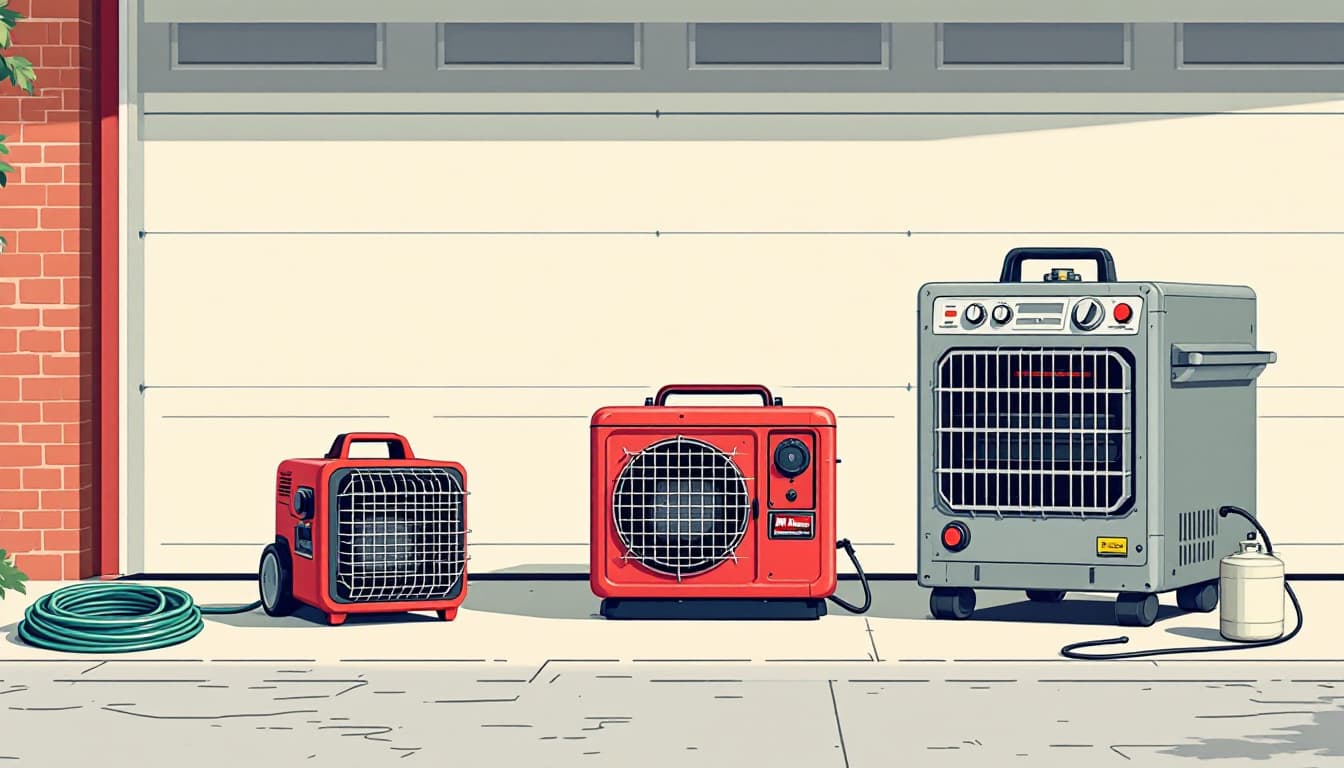
The Little Buddy is a niche buy, not a primary household heater—and it's a good one if you understand what it is. At under 6 lbs with a single-piece handle, it's the unit you grab when you evacuate to a friend's place or need to keep a small bathroom or single bedroom survivable for one person. Renters who can't store a large tank, apartment dwellers, or anyone who needs a secondary unit for a kid's bedroom will find it earns its $65. Just be clear-eyed: 95 square feet of coverage and no tank adapter compatibility means it cannot serve as your household's primary outage plan.
The Portable Buddy is the pick for the overwhelming majority of readers. It has been the category benchmark for years for good reasons: the safety certifications are solid, the ecosystem of accessories and fuel is the widest available, and 9,000 BTU covering 225 square feet handles nearly every closed bedroom or living room a typical household would shelter in. At $90 it's an easy recommendation to make without qualification.
The Big Buddy NF is for households that don't have the luxury of retreating to a single small room—open floor plans, larger families that need one heater to cover a gathering space, or anyone who has done the math and doesn't want to run two smaller units simultaneously. The 3-year warranty, three heat settings for fuel management, and the ability to feed from a 20 lb tank through dual swivel regulators make it a serious preparedness investment at $140. Just account for the fan removal in your expectations, and plan on a larger tank for anything beyond a single cold night.

