
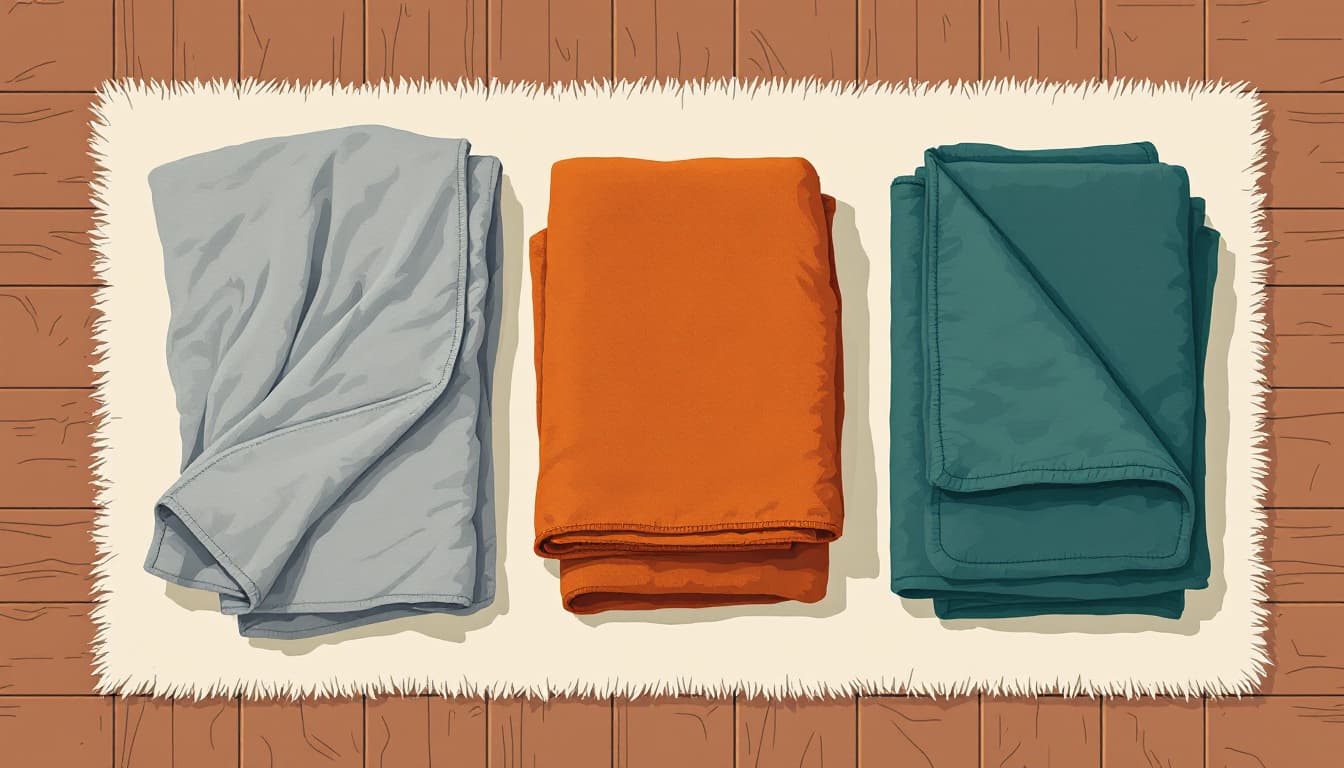
Why a wool blanket belongs in your preparedness kit
A sleeping bag handles one job in one context. A good wool blanket handles a dozen jobs across a decade — on the couch, folded over the passenger seat, stacked in the emergency bin, draped over a shivering kid during a winter power outage. Wool's specific advantages are not marketing: it retains meaningful insulation when wet, it resists ignition without chemical treatment, and it regulates temperature passively in a way that synthetic fleece simply does not. For a household that wants one item to work in normal life and in an unexpected bad week, a quality wool blanket is one of the most defensible purchases in this category.
The question isn't really whether to own one. It's which type of wool construction matches your actual priorities — softness, care convenience, fiber purity, or pack weight — and what you're willing to spend.
What we looked for
We cared about four things, in roughly this order: verified warmth (weight and construction that actually performs in cold-weather conditions), honest durability over years of washing and use, ease of care for a busy household, and price honesty — meaning the value needs to hold up against cheaper fleece alternatives, which are genuinely good at some jobs. We filtered out novelty throws and focused on blankets substantial enough to serve as a primary emergency bedding layer for an adult.
How the three tiers actually differ
The Woolly Mammoth sits at the premium end for a specific reason: 80% recycled Merino is a meaningfully different material than coarser wool blends. It's lighter per cubic inch, far less scratchy against bare skin, and doesn't require a break-in period. The 66 by 90 inch size at 4.3 pounds covers two people adequately in a pinch. The tradeoff is real: hand-wash recommended, US Amazon direct availability can be inconsistent (verify the seller at checkout), and at around $70 it costs considerably more than either alternative. If you'll use it as a household throw that occasionally earns its place in the car or tent, the softness premium is worth it. If it's going to live rolled up in a Rubbermaid tote for two years, it probably isn't.
The Arcturus Military Wool Blanket is the pick for most households, and the review count tells you something — 17,000-plus ratings at 4.6 stars is not a fluke. It holds the number-one Best Seller rank in Amazon Camping Blankets as of late 2026, ships directly from Amazon in multiple colors, and is machine washable, which matters more than most buyers admit when they're evaluating a blanket they'll actually live with. The 550 GSM density at 4.5 pounds is genuinely heavy and warm. Yes, it's an 80% wool blend with polyester and nylon filling the remainder, and some buyers notice a wool odor out of the bag — but both are manageable, and neither compromises the core cold-weather performance. This is the easiest recommendation.
The EKTOS occupies an interesting niche: it costs $5 less than the Arcturus, but its distinguishing feature isn't price — it's that it uses 100% virgin wool with zero synthetic fiber. For households with a specific preference for all-natural materials (or a sensitivity to synthetics near skin), that matters independently of the price. It arrives pre-washed and is machine washable, which puts it ahead of the Woolly Mammoth on care convenience. The honest caveats: virgin wool is typically coarser than Merino, it has a smaller review base than the Arcturus so there's less community data on long-term durability, and it's heavier per square inch than blended blankets, which rules it out for anyone thinking about pack weight.
Who should skip wool blankets entirely
If your emergency priority is a compact, lightweight sleep system for a go-bag or vehicle kit, a sleeping bag rated to a specific temperature will outperform any blanket on pure thermal efficiency per pound. Wool blankets are the right answer for home and vehicle layering, stationary shelter scenarios, and everyday dual-use — not for backpacking or bug-out mobility.

