
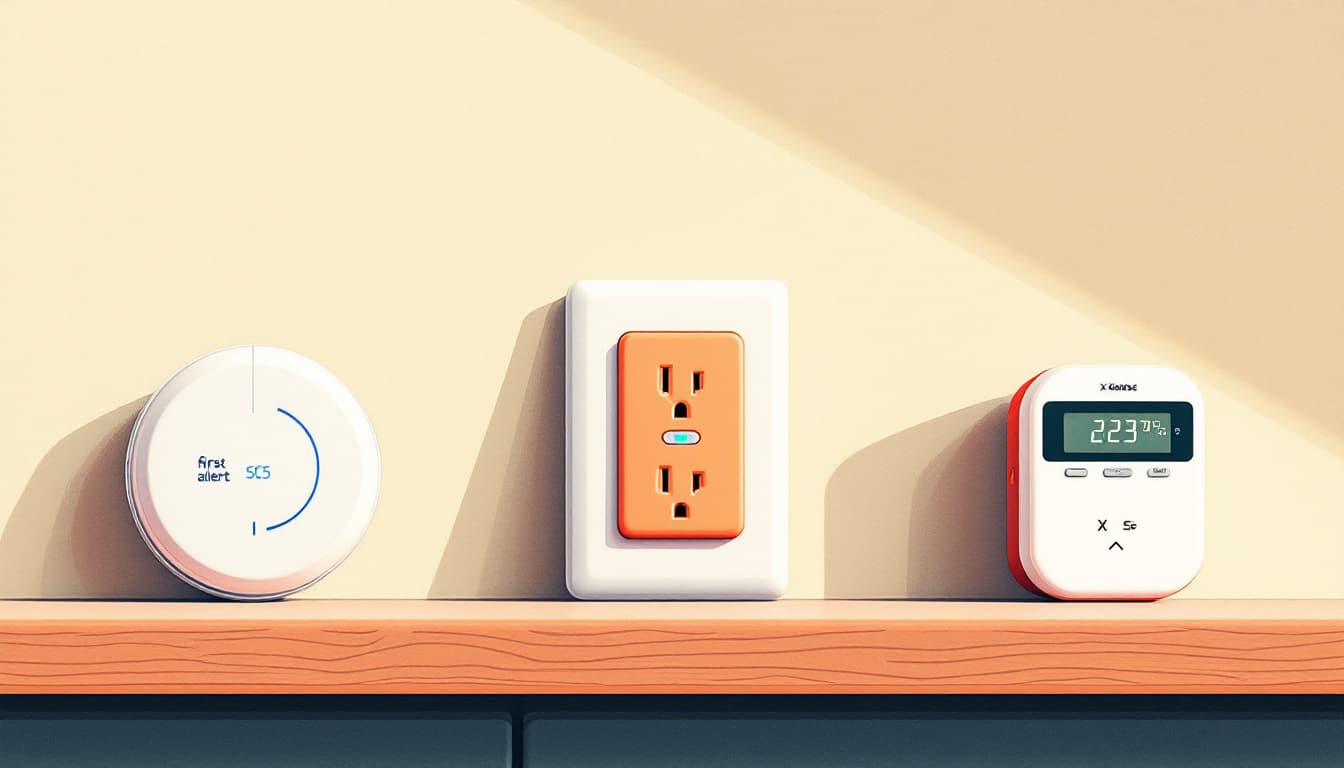
Why CO detection belongs in your preparedness baseline
Carbon monoxide is the emergency that doesn't announce itself. It's colorless, odorless, and moves fast enough that people have lost consciousness before realizing anything was wrong. Unlike a pantry full of canned goods or a hand-crank radio, a CO detector is not a contingency item—it's infrastructure, no different from a smoke alarm. Yet many households still have a single aging unit shoved near the furnace, or worse, nothing at all. For a household that takes preparedness seriously without going survivalist, getting CO coverage right is one of the highest-return investments you can make.
The 2025–2026 buying window added some useful clarity to a market that had grown confusing. Google discontinued Nest Protect, leaving a real gap in the smart-home segment. First Alert filled it directly with the SC5. Kidde's 5th-Edition lineup also refreshed several plug-in SKUs, including the COPDLG, which quietly became the most practical single-unit option for homes with gas appliances. Kidde's AA-powered COBD, meanwhile, quietly became the honest budget option in a category full of cut-rate junk.
What actually matters when you're choosing
Sensor type first. Every pick here uses an electrochemical CO sensor, which is the technology you want—it responds to concentration levels accurately and degrades predictably. Cheaper units sometimes use metal-oxide sensors that are far less reliable. Don't buy a CO detector unless it specifies electrochemical detection or carries UL 2034 certification.
Coverage gaps matter more than features. If your home runs on natural gas or propane, a standard CO detector is not enough. CO is produced by incomplete combustion, but a gas line leak is a different threat entirely—and most CO-only alarms won't catch it. The Kidde COPDLG is the only pick here that covers all three: CO, natural gas, and propane. That alone makes it the right default for a large share of households.
Smart features are useful, not essential. The SC5's voice alerts that name the room and the threat type are genuinely valuable—not a gimmick. If you're sleeping with the door closed, knowing the alarm is saying "carbon monoxide in the bedroom" versus "carbon monoxide in the garage" changes what you do in the next thirty seconds. But if you don't use Google Home or don't want to, the non-smart picks are not compromises on safety. The alarm sound is what saves lives.
Battery traps are a real cost. Some detectors use sealed batteries with a 7- or 10-year life, which sounds convenient until the unit hits end-of-life and you replace the whole thing. The Kidde COBD uses user-replaceable AA batteries—so you're replacing the battery on your schedule, not the manufacturer's. That's worth something when you're covering multiple rooms.
Who each tier is actually for
Premium — First Alert SC5 (~$120): Right for households already invested in Google Home, or anyone replacing a Nest Protect without wanting to rewire. The wireless interconnection means one alarm triggers all of them—useful in a larger home where a basement alarm might not wake someone on the second floor. The cost stings at scale; outfitting a four-bedroom home with these is a real budget commitment.
Value — Kidde COPDLG (~$45): The practical default for any home with gas appliances. Low-level CO sensitivity is a real differentiator if you have children, elderly family members, or pets, all of whom show symptoms at concentrations that wouldn't yet trigger a standard alarm. No Wi-Fi, no app—just a digital display and a loud alarm that works without infrastructure. Its one real limitation is placement: it needs an outlet, so you're working around your wall layout.
Budget — Kidde COBD (~$27): Solid, no-nonsense CO protection for a single room, a rental apartment, or as a supplemental unit placed near a bedroom. The electrochemical sensor is the same class of technology in pricier units, and the freestanding design means you can place it anywhere. It doesn't interconnect, doesn't alert your phone, and doesn't detect smoke or gas—but it does the one job it's supposed to do at a price that makes it easy to put one in every room that needs it.

