
Why storm cleanup is a chainsaw problem worth solving before the storm
A single mature tree across a driveway — or blocking egress from your property — can mean 48 hours of waiting for an overloaded tree service after a major storm. A capable chainsaw turns that into a two-hour morning job. This isn't about playing lumberjack; it's about the difference between being stuck and being mobile when it matters. The category has also genuinely changed in 2026: battery-powered saws from serious brands now match comparable gas models on cutting speed in Consumer Reports testing, which means the old default of "get a gas saw for real work" no longer applies across the board.
That said, chainsaws are the most dangerous tool most households will ever own. Whichever tier you buy, budget a few hours with a YouTube fundamentals course before you need it — technique and chain maintenance matter more than horsepower.
What we actually looked for
For storm cleanup specifically, a few things matter more than raw specs. Bar length determines what diameter trunk you can process in a single pass — a 16-inch bar is adequate for most suburban fallen limbs, but if you have large hardwoods on your property, 18 inches gives meaningful headroom. Runtime and recovery matter because storm cleanup isn't a five-minute job; you want either enough battery capacity to finish the task or, with a corded saw, an uninterrupted power source. Weather resistance is underrated — post-storm conditions are wet, and a saw that quits in the rain is useless exactly when you need it. And chain tensioning and maintenance features separate tools that stay sharp from tools that get abandoned in the garage.
We deliberately excluded entry-level saws under 40V and gas saws under 40cc from this roundup. Both categories exist, but neither is the right first chainsaw for a household that wants dependable performance without a steep learning curve.
Who each tier is for
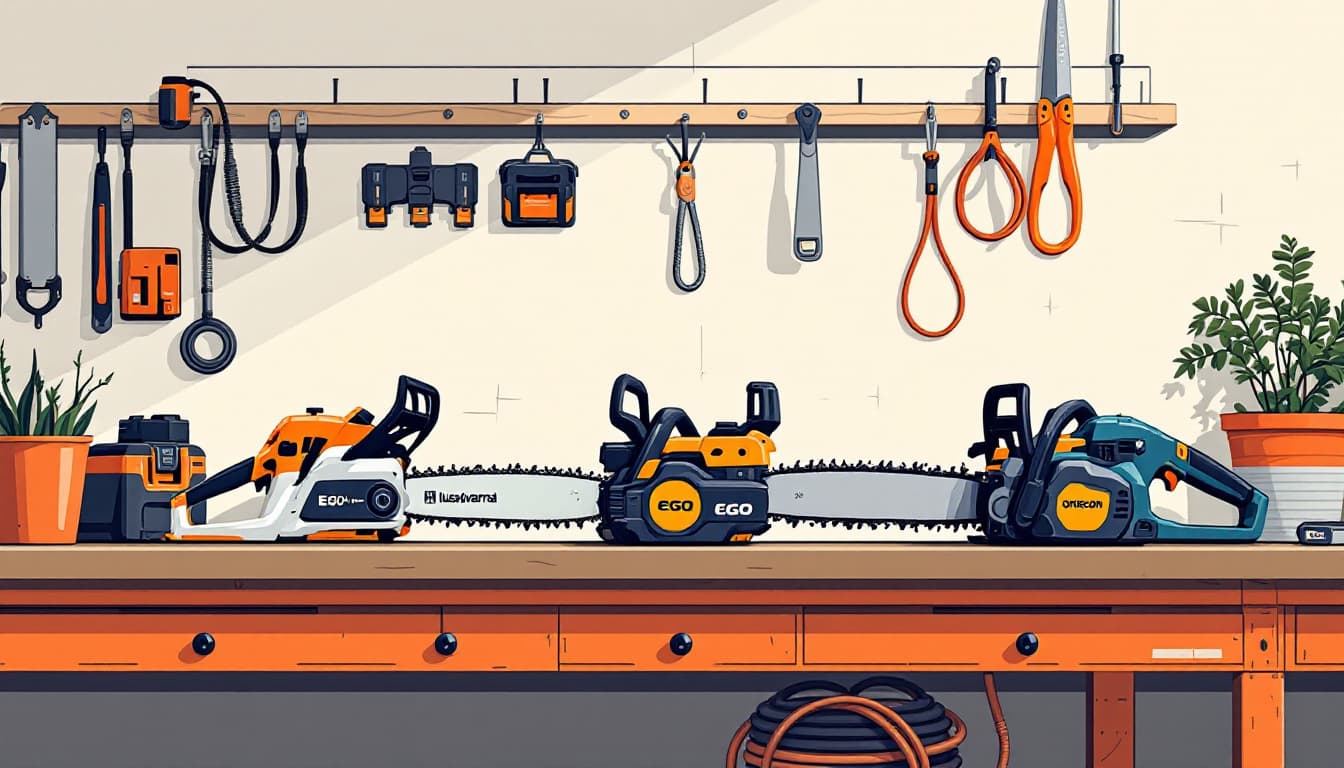
The Husqvarna Power Axe 350i (480 USD) is the right tool if your property has large trees — oaks, maples, anything that puts 14-plus-inch trunks at risk of coming down — or if you process a meaningful amount of firewood each year. The 18-inch X-Cut bar, Boost Mode for dense or green wood, and compatibility with the broader Husqvarna 40V platform make it a long-term investment rather than a single-use purchase. The tradeoffs are real: it's the heaviest saw in the group at 13.6 lbs with battery, the stock charger is slow at roughly 4.5 hours for a full charge, and at 480 dollars it demands commitment. Confirm your existing Husqvarna tools use the same 40V BLi battery platform before buying — the ecosystem benefit only pays off if you're already in it or plan to be.
The EGO CS1613 (249 USD) is the pick for most households, and it's not particularly close. It arrives as a complete kit — 56V 4.0Ah battery and charger in the box — so the price you see is the price you pay. IPX4 weather resistance means it operates reliably in wet post-storm conditions. The claim of up to 220 cuts per charge on dimensional lumber is a reasonable proxy for a morning's worth of debris clearing. The 16-inch bar handles the realistic storm debris profile for most residential properties. Its weak points are honest ones: a single battery limits you on all-day cutting sessions, and trunks above 14 inches in diameter will slow it down. If you have a large wooded lot, step up. If you have a typical suburban or semi-rural property with mixed tree sizes, this is genuinely all you need.
The Oregon CS1500 (120 USD) earns its place with two features nothing else in this roundup offers: unlimited runtime (via extension cord) and an integrated PowerSharp self-sharpening system that re-sharpens the chain in under five seconds without removing it from the saw. If you have power at your cleanup site — processing logs in a yard that didn't lose electricity, for instance — this is a capable, low-maintenance tool at a very honest price. But the critical caveat cannot be overstated: the Oregon CS1500 is functionally useless during an active power outage, which is the primary storm scenario it ostensibly addresses. Buy it as a complement to a battery saw, not as your only chainsaw.

