
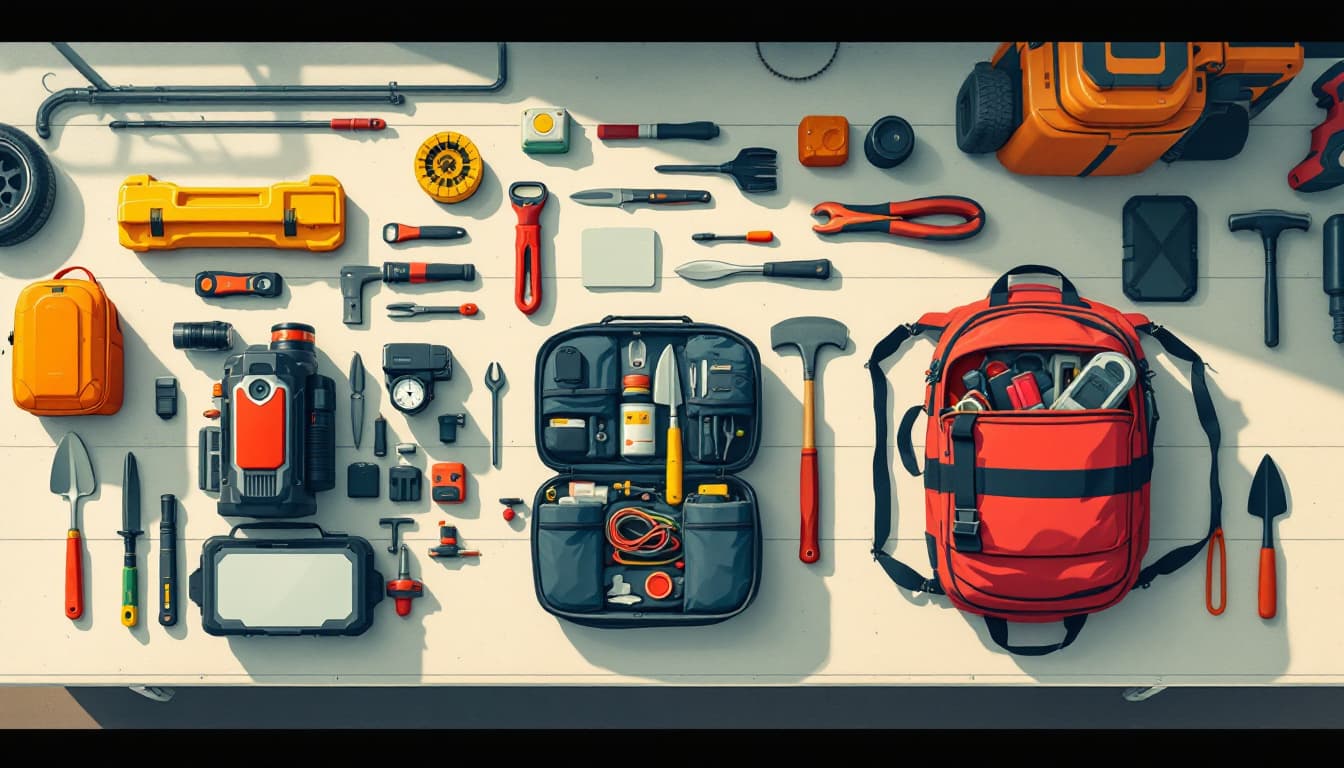
Why your trunk kit is actually an evacuation kit
Most people think of a car emergency kit as something for a flat tire on a Tuesday afternoon — a minor inconvenience, not a life-safety scenario. But the more relevant question for a household is: what happens if you have to leave quickly, traffic is at a standstill, and the situation outside is actively deteriorating? A wildfire evacuation, a winter storm that closes the highway, a multi-car pileup that traps you on the shoulder for hours — these are the scenarios where a thoughtful trunk kit earns its keep. None of them require you to be a survivalist. They just require you to have more than a phone charger and a gas receipt rattling around back there.
The category has matured. You can now get a genuinely useful all-in-one kit for under $75, and the gap between the premium and budget options is real but not dramatic. What matters is matching the kit to your actual geography and threat profile — a folding shovel is nearly useless in Phoenix and nearly essential in Minneapolis.
What we actually looked for
Piece count is a marketing number, not a quality signal. A kit with 104 pieces that includes 40 bandages is not better than a 30-piece kit with a digital tire inflator and a tow strap. We weighted kits on four axes: roadside utility (jumper cables, tire inflation, tow capability), entrapment tools (glass breaker, seatbelt cutter), climate survival (blankets, warmers, fire starter, shovel), and first aid depth beyond token bandage assortments. We also cared about bag quality — a kit that dumps its contents every time you hit a speed bump is worse than no kit at all.
One category-wide gap worth naming: none of these kits include a serious water supply. That's intentional on most manufacturers' part — water is heavy and shelf life is complicated — but if evacuation is a real concern for your household, add a few sealed water pouches to whichever kit you choose.
Who each tier is for
The Everlit earns the premium slot because it's the only kit here that seriously addresses all three scenarios at once. The digital tire inflator alone separates it from most competitors — a flat tire is far and away the most common breakdown event, and being able to handle it without flagging down another vehicle is meaningful. Add the seatbelt cutter and glass breaker for entrapment, the tow strap for getting pulled out of a ditch, and the space blanket and rain poncho for overnight exposure, and you have a kit that genuinely pulls double duty. The 12-foot jumper cables are the one concession to size — they're adequate for most parking-lot situations but short for across-a-lane hood-to-hood connections. At $70, it's the kit we'd recommend to a household that wants to buy once and be done.
The Lifeline 4390 is the pick for anyone who lives somewhere that winter is a genuine hazard. The folding aluminum shovel, 3-piece fleece set, fire starter, ice scraper, and hand warmers are items that rarely appear in kits at this price, and they're the items most likely to matter if you're stranded on a highway in a January ice storm. The AAA engineering endorsement adds real accountability — these aren't random components sourced at the lowest possible margin. The tradeoff is real: no tire inflator, a basic first aid section, and limited utility if you're driving in a climate where the cold-weather gear just adds dead weight. For warm-climate households, the Everlit is a better fit.
The Thrive 104-Piece Kit is an honest budget kit — not a cynically padded one. The 8-gauge jumper cables and escape hammer are legitimate, and the 62-piece first aid kit has actual depth. What it doesn't have is a tire inflator, a tow strap, a flashlight, or any cold-weather survival gear. Those are meaningful omissions, not nitpicks. But for a new driver who has nothing, a second vehicle you want covered without spending $70, or a gift that checks the "emergency kit" box responsibly, it's the right call at $30. Just go in knowing you're starting a kit, not finishing one.

