
The high-concept trap
There's a particular kind of airport thriller that knows exactly what it is and makes no apologies. A.G. Riddle's Winter World, the first installment in his Long Winter trilogy, aspires to something grander than that — it wants to be serious science fiction, the kind where the fate of humanity hinges on minds working at the edge of human knowledge — but it keeps getting pulled back toward the comfortable mechanics of a beach read. The result is a book that is genuinely hard to put down and equally hard to fully respect.
Premise
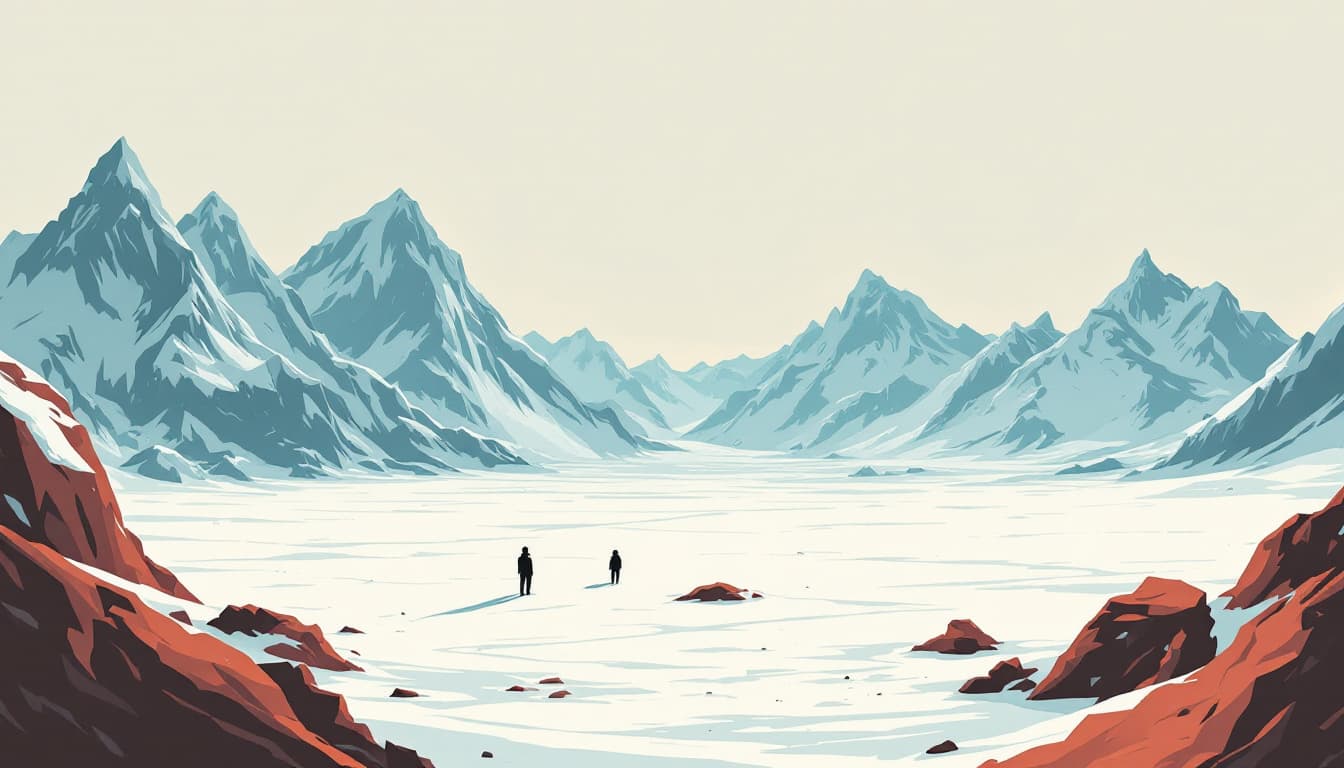
The setup is, credit where it's due, a good one. An unexplained solar event is causing global temperatures to plummet. Crops fail, governments fracture, and civilization begins its slow slide toward extinction. Into this crisis the novel sends two central figures: a scientist with expertise in extreme survival biology and an astronaut and mission commander, both drawn toward a desperate mission to understand — and perhaps reverse — what is happening to the sun. There are mysteries stacked inside mysteries here, and Riddle shows genuine skill in parceling out revelations at a pace that keeps the reader guessing. The science-fictional conceits, when they finally reveal themselves, are ambitious in scope, drawing on real (if speculative) astrophysics and the Fermi paradox in ways that gesture toward the tradition of Arthur C. Clarke.
Craft
That's the generous reading. The harder look is at the prose itself, which is functional at its best and clunky at its worst. Riddle writes in short chapters and shorter sentences, a technique that creates momentum but flattens texture. There's almost no room for a scene to breathe, no moment where the writing itself rewards attention — where you'd want to stop, re-read a passage, and sit with it. The novel is almost entirely plot-delivery mechanism, and when it slows for character, the results are mixed at best.
The two leads are assembled from recognizable parts. The scientist carries the requisite tragic backstory and hidden genius; the astronaut is capable, principled, and blandly appealing. They're likable enough as vehicles, but they don't surprise you. Their relationship — which the novel pushes forward with considerable urgency — develops according to a timetable set by narrative convenience rather than psychological logic. You can feel the author willing them together because the plot needs it, not because you've witnessed the particular accumulation of small moments that makes two people matter to each other.
The supporting cast fares worse. Characters who exist at the margins of the story are essentially labels with speaking roles — "the politician," "the scientist's concerned colleague," "the military commander." They exist to deliver information or generate brief conflict and then recede. In a leaner thriller this might be forgivable. In a novel that runs well over four hundred pages and clearly wants to be taken seriously as speculative fiction, it's a structural weakness.
What works — and what doesn't
Let's be fair to what Riddle does well. The pacing is relentless in the best sense. The extinction-level premise lands with real weight in the early sections, where the collapse of agricultural systems and the cascading failures of infrastructure are sketched with enough detail to feel plausible and unsettling. There are sequences — particularly those involving resource scarcity at a societal scale and the political paralysis of governments facing an unprecedented crisis — where the novel earns its keep. Riddle has clearly done research, and his understanding of how modern societies actually depend on fragile interlocking systems gives the collapse sequences a credibility that pure action-thriller writers rarely achieve.
The book also generates genuine suspense around its central mystery. What is causing the long winter? The answer, when it comes, is conceptually daring, and it's to Riddle's credit that he reaches for something bigger than a geopolitical thriller would have dared. Fans of hard science fiction will find the core conceit interesting enough to forgive a great deal.
But the emotional stakes never quite match the intellectual ones. A civilization in collapse should feel devastating, grief-laden, morally complex. Riddle tends to keep the story moving too fast to let tragedy settle. Characters experience loss and trauma at a narrative arm's length — we're told these things matter, but we rarely feel them. The human cost of the event at the book's center is strangely muted given the scale of what's being depicted.
There's also a romance-novel quality to sections of the story that some readers will find charming and others will find jarring. In a book about the potential extinction of humanity, finding time for will-they-won't-they plotting is a tonal choice, and it doesn't always cohere.
Who it's for
Winter World is probably exactly what it looks like: a fast, engaging, science-flavored thriller for readers who want big ideas delivered with maximum forward momentum and minimal demand on patience. If you've burned through Blake Crouch's Dark Matter or Andy Weir's The Martian and you're looking for the next thing, this will scratch a recognizable itch. If you come to it hoping for the literary weight of something like Kim Stanley Robinson or even the careful character work of Emily St. John Mandel, you'll find yourself wanting. It's not without intelligence, but it deploys that intelligence sparingly, in service of plot rather than meaning.

