
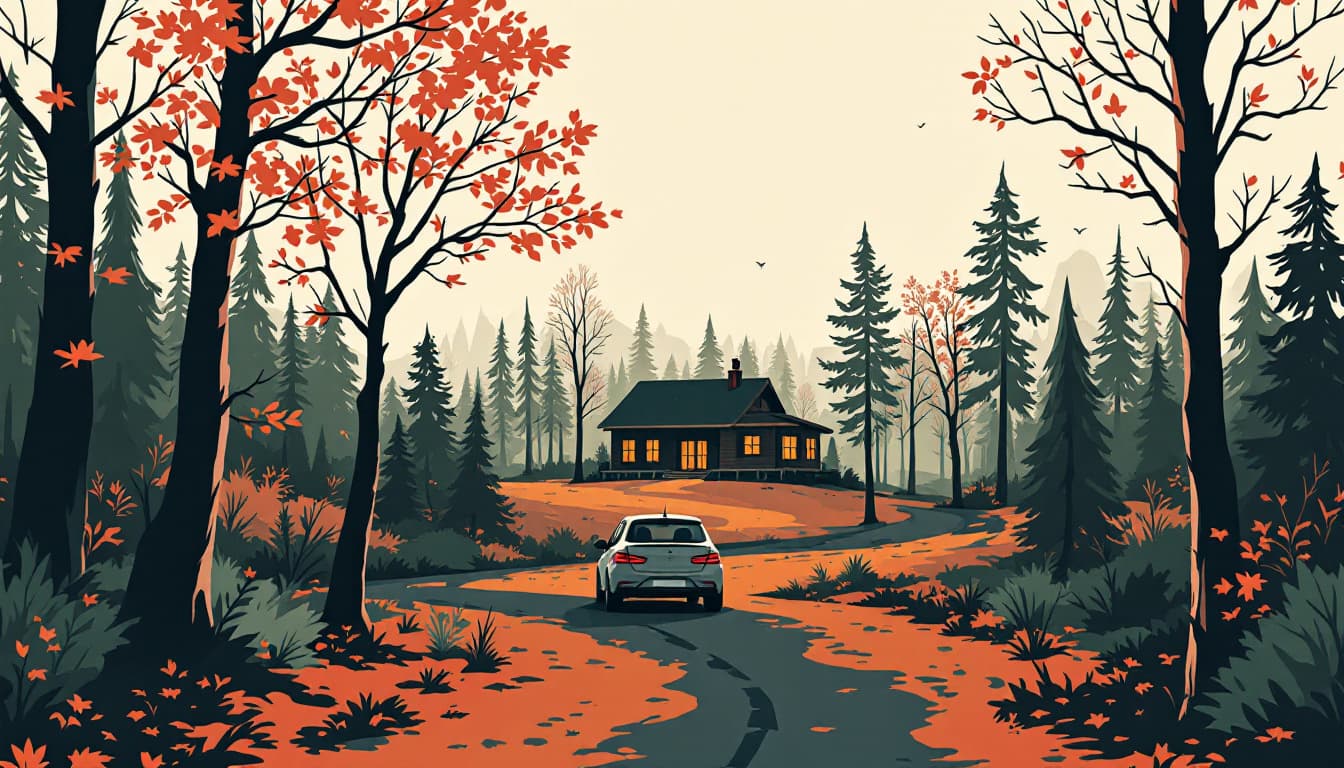
A Russian winter at the end of the world
There is something almost perversely appropriate about a Russian pandemic thriller. The country's literature has always trafficked in catastrophe as a lens for the human soul — Tolstoy, Bulgakov, the whole bleak tradition — and To the Lake (Эпидемия in its original title, meaning simply "Epidemic") arrives on Netflix wearing that inheritance conspicuously. Adapted from Yana Vagner's novel Vongozero, this 2019 series uses the conventions of the outbreak story not to deliver jump scares or action-movie momentum, but to do something more uncomfortable: put ordinary, flawed, bourgeois people under pressure and watch them reveal themselves. The result is frequently compelling and occasionally maddening — sometimes within the same episode.
Moscow falling
The setup is brisk and unsparing. A fast-moving respiratory illness tears through Moscow. Within days the city is functionally paralyzed: roads blocked, hospitals overwhelmed, civil order beginning its ominous slide. Our central figure is Sergei, a comfortable middle-class Muscovite whose life is already complicated by divorce, remarriage, and the kind of knotted family resentments that plague dramas love to exploit. When the epidemic makes staying in the city untenable, he organizes a convoy — his new wife and their young son, his ex-wife and their teenage son, his cantankerous alcoholic father, and a neighbor couple whose presence becomes increasingly fraught — to drive north toward a remote lake property where they hope to wait out whatever is coming.
That's the engine. What To the Lake is actually about is the negotiation of who belongs in the group, who gets to make decisions, and what moral compromises people accept when survival becomes the organizing principle of every moment.
Craft under grey skies
Visually, the show is genuinely accomplished. Director Pavel Kostomarov (who also serves as showrunner) has a documentarian's eye — he made his name in nonfiction filmmaking — and that background lends the early Moscow sequences an almost unbearable authenticity. Empty highways, abandoned cars still running, the specific texture of a city holding its breath: this is pandemic atmosphere done right, without the lazy shorthand of exploding buildings or roving gangs (those come later, and feel somewhat less original). The cinematography keeps returning to long, cold, beautiful establishing shots of the Russian landscape: birch forests draped in snow, ice roads, the iron-grey lake itself. It's gorgeous and alienating in exactly the right proportion.
The ensemble is strong, if not uniformly developed. The lead performance as Sergei is quietly effective — this is a man who is decent but not heroic, competent but not infallible, and the show is smart enough not to turn him into a conventional action protagonist. The ex-wife is arguably the more interesting character: reactive, sharp-tongued, and carrying a grief that the show handles with more delicacy than you might expect. The teenage son, sullen and volatile in the way of teenagers who have been handed a catastrophe in place of a normal adolescence, generates some of the series' most genuinely tense scenes.
Where the show struggles is with its more melodramatic impulses. The family-drama mechanics — the jealousies, the old wounds, the pointed silences over campfires — are sometimes handled with real psychological nuance, and sometimes feel like they've wandered in from a primetime soap. A subplot involving the neighbor couple leans heavily on villain-coding that grows tiresome, and there are stretches in the middle of the season where the human conflicts feel artificially prolonged in ways that test patience rather than deepen character.
What works, what doesn't
What To the Lake does best is the texture of collective decision-making under duress. Who eats? Who sleeps in warmth? Who do you turn away at the roadblock? These questions are posed without easy answers, and the show deserves credit for resisting the urge to redeem everyone or damn anyone completely. Even its most aggravating characters are given moments of genuine vulnerability.
What it does less well is plot mechanics. The series occasionally relies on coincidences and confrontations that feel engineered rather than earned, and a late-season shift in tone — toward something more overtly thriller-ish — doesn't entirely cohere with the quieter, more introspective mode of the early episodes. The pacing is also a genuine issue: eight episodes that could have been six, with the middle section carrying noticeable drag.
The language question is worth raising for anglophone viewers: To the Lake benefits enormously from watching in Russian with subtitles. The dubbed version flattens performances considerably, and this is the kind of show where the specificity of an actor's delivery matters. The emotional register is particular, not universal, and the dubbing strips away exactly the quality that makes Russian drama feel distinct rather than interchangeable with any other European genre product.
Who should watch it
If you have patience for slow-burn family drama wrapped in genuine atmospheric dread, To the Lake is worth your time — especially if you've exhausted the better-known English-language entries in the pandemic genre. It's not The Last of Us in ambition or execution, and it lacks the narrative control of the best Scandinavian prestige television it superficially resembles. But it has its own distinctive voice, and there are individual sequences — a night crossing on thin ice; a hospital visit early in the series that crystallizes the scale of what's happening — that stick in the memory long after the plot mechanics have faded.
Go in expecting mood and moral texture, not thriller efficiency, and you'll find a worthwhile piece of work.

