
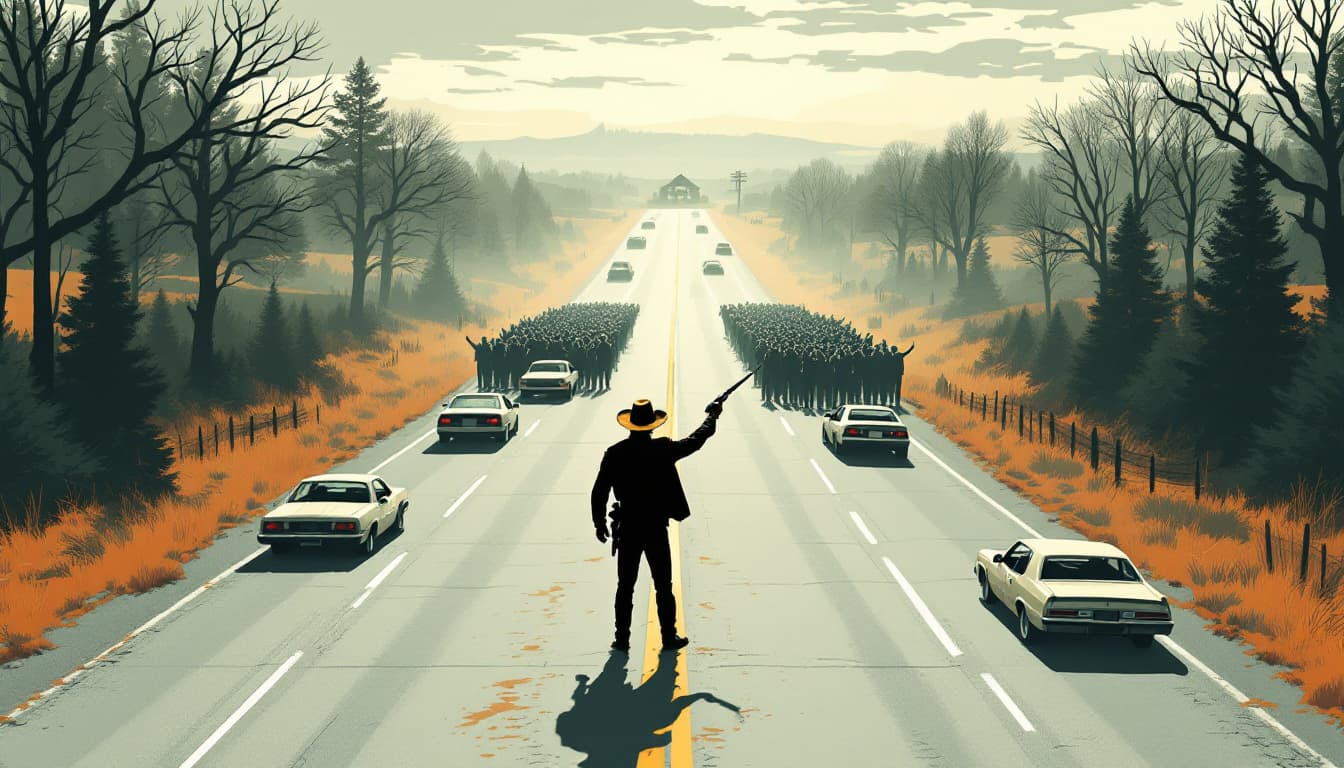
A giant that cast a long shadow
When The Walking Dead premiered on AMC in October 2010, it arrived with unusual pedigree for a zombie story. Frank Darabont, the man who adapted The Shawshank Redemption and The Green Mile, was at the helm. The source material was Robert Kirkman's long-running comic series, which had spent years building a reputation for moral seriousness beneath its splatter-fiction surface. And AMC was in the middle of a golden run — Mad Men and Breaking Bad were redefining what cable drama could do. The expectations were real, and for a while, the show met them.
What followed was eleven seasons, an enormous cast turnover, multiple spinoffs, and a cultural footprint that few genre shows have matched. Looking back from any distance, The Walking Dead is a genuinely complicated legacy: one of the most gripping first seasons in recent television history attached to a body of work that grew increasingly uneven, repetitive, and finally exhausted. Both things are true simultaneously, and any honest assessment has to hold them together.
The premise
A sheriff's deputy wakes from a coma into a world already ended. The dead are walking. Civilization has collapsed. He finds survivors — including, eventually, his own family — and the show's real subject quickly reveals itself: not the zombies, but the question of what human beings do to one another when the structures holding society together are gone. Do we remain recognizably human? What does that even mean? The Walking Dead, at its best, is a sustained argument about community, leadership, and moral compromise in extremis. The dead are the weather; the living are the story.
Craft — the peaks and the valleys
Darabont's pilot episode is, even now, remarkable television. Shot on film with a cinematic patience rarely seen in genre TV, it is essentially a forty-five-minute short film — quiet, melancholy, genuinely frightening in the way that good horror always is, which is to say emotionally rather than merely viscerally. The scene in which the deputy encounters the first walker he will have to put down — a woman, half a body, dragging herself across a park — is heartbreaking before it is horrifying. That tonal register, grief-soaked and human, was the show's highest achievement, and it largely sustained through the first two seasons.
Andrew Lincoln's performance as Rick Grimes is the load-bearing column of the entire structure. Lincoln is a British actor playing an American southerner, and the performance is so committed and so physically specific that it rarely feels like either. What he does particularly well is convey a man who is trying to hold himself to standards that the world no longer rewards — a man for whom decency is not a luxury but a compulsion, and who is slowly, painfully educated about the cost of that compulsion. It is a genuinely complex characterization, and Lincoln earns it over many seasons.
The supporting ensemble, at its strongest, is one of the richest in cable drama. Characters who might have been stock types — the redneck, the preacher, the aggressive survivor — are developed with enough specificity and contradiction to reward attention. The show's willingness to genuinely kill significant characters, a practice still relatively novel in prestige TV at that time, gave each episode real stakes. Losses landed because the show had done the work of making you care.
What works and what doesn't
The decline, when it came, was gradual and then total. The structural problem is essentially this: The Walking Dead told the same story too many times. The pattern — survivors find community, community faces external threat, community is destroyed or fractured, survivors regroup and find new community — was powerful once and diminishing thereafter. By the middle seasons, attentive viewers could almost set a clock by the cycle. The show responded by escalating the villainy of its antagonists, and while one particular villain introduced in the later seasons brought a jolt of energy, it also pulled the show toward a kind of theatrical cruelty that edged away from the moral complexity that had distinguished it.
Pacing was a persistent problem. The show's willingness to sit in quieter character moments, an early strength, curdled into a habit of treading water across extended mid-season stretches. Episodes that felt meditative in season two began to feel like filler by season six. The writers' room, expanded to cover a much larger production, produced work that was visibly inconsistent in quality from episode to episode. Some installments felt like they belonged to the show's best years; others felt like obligation.
There is also an argument, worth taking seriously, that the show never fully solved the problem of consequence. The threat of character death, used effectively early on to generate genuine tension, eventually became almost numbing — a narrative crutch rather than a storytelling risk. When loss comes too reliably, it stops feeling like loss.
Who it's for
If you have never watched The Walking Dead, seasons one and two are close to essential genre television and hold up genuinely well. Season three through four are uneven but contain some of the series' most memorable sequences. After that, the honest recommendation is to follow your own interest and be willing to disengage without guilt. The show rewards patience only up to a point, and that point arrives earlier than eleven seasons.
For readers of survival fiction, or anyone interested in how post-collapse social structures actually function in narrative, the early seasons offer something that few genre texts manage: a portrait of improvised community that feels thought-through rather than convenient.

