
The book that changed zombie fiction
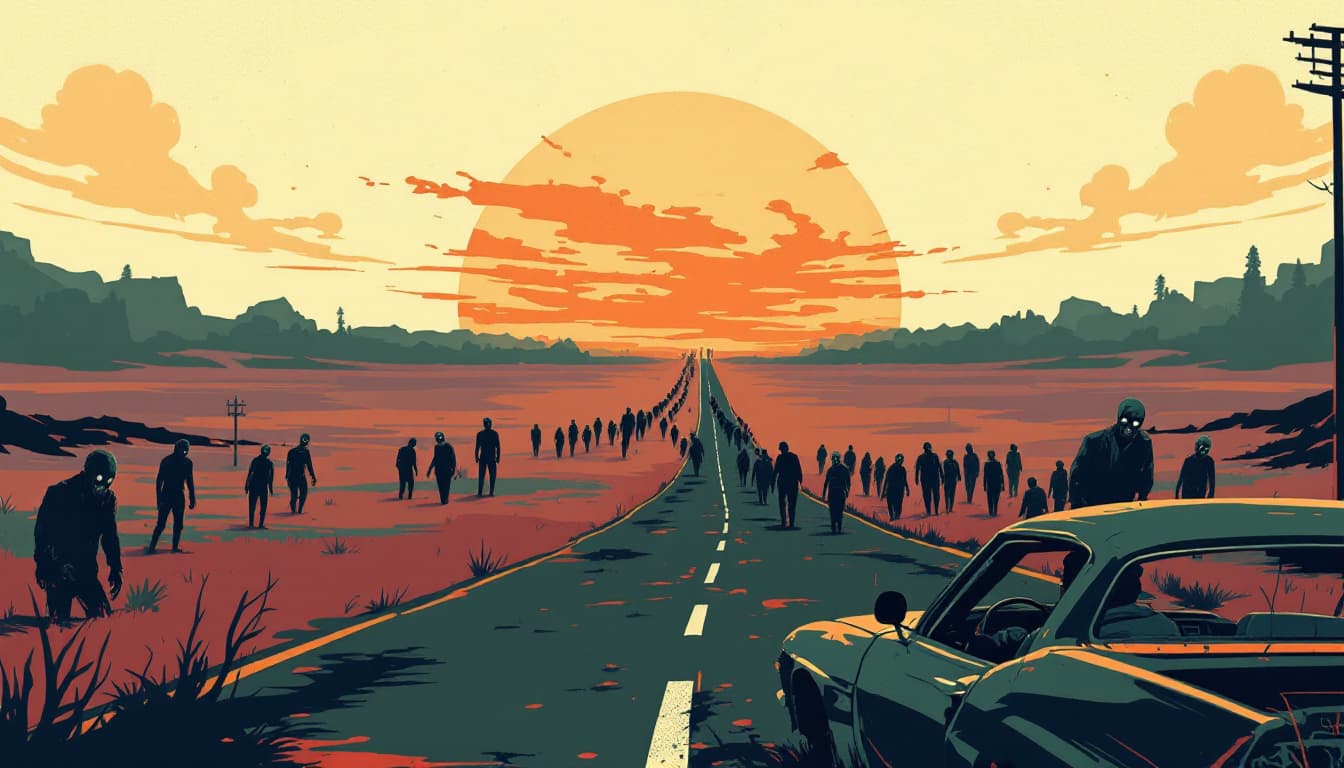
Before The Rising, zombies mostly shambled. They were Romero's shambling metaphor for consumerism and conformity — relentless but slow, a tide rather than a threat. Brian Keene's 2003 debut novel changed the terms of engagement. His undead run. They talk. They remember you. They use weapons. When this book landed, it hit the horror community like a brick through a window, and Keene — a Pennsylvania writer working largely outside the mainstream publishing apparatus at the time — became, almost overnight, a name to reckon with. Twenty-three years on, revisiting The Rising is an interesting exercise: it's still ferocious, still inventive, still marked by a raw narrative energy that genre fiction doesn't always manage. It's also more uneven than legend suggests.
What the story is
The setup is elemental: something has torn a hole in the barrier between the living world and whatever lies beyond. The dead are rising, possessed by demonic entities that retain the memories of the bodies they inhabit — which makes them far more dangerous than brainless shamblers. Jim, a father cut off from his young son, crosses an apocalyptic American landscape to reach the child. That's the spine of it: a parent's love against the end of the world. Keene layers in other travelers, other perspectives, other griefs, building something that functions as both chase narrative and an extended meditation on faith, evil, and what it might mean for a universe to be genuinely, cosmologically broken.
Craft: prose, pacing, structure
Keene writes with a kind of blue-collar directness that can be a genuine virtue. His sentences are clean and fast; the book moves. He has a real instinct for escalation — just when you think the situation can't get worse, it does, and the turn usually feels earned rather than arbitrary. The novel's structure, cutting between Jim's journey and several other characters navigating the collapse, creates a mosaic of ruin that accumulates dread effectively. You're never in one place long enough to feel safe.
The horror setpieces themselves are the book's strongest suit. Keene has a gift for the moment of shock — the wrong thing in a familiar place, the domestically grotesque — and he deploys it frequently. There's a sequence involving a child's bedroom early in the novel that is quietly devastating, and the mechanics of how the possessed dead function (that disturbing retention of memory, that capacity for cruelty that is also personal) generate a specific kind of horror that purely mindless zombies cannot. When a revenant recognizes you, knows your weakness, calls you by name — that is philosophically darker than simple hunger.
Where the craft falters is in characterization. Jim is believable as a grief-driven father, and the urgency of his mission keeps the reader invested. But several of the supporting cast feel sketched rather than rendered, their backstories delivered in exposition-heavy passages that slow the propulsive rhythm Keene works so hard to establish elsewhere. The novel wants to expand its emotional range through these secondary characters; it doesn't always succeed. You feel the intent — a panoramic portrait of a society coming apart — without quite experiencing it.
The theology problem
The Rising is, in a way, a theological horror novel. Keene's cosmology posits a universe that is not merely indifferent to human suffering but actively structured around malevolence — a multiverse in which evil has genuine, organized agency. This is interesting territory, and Keene pushes into it with real conviction. The difficulty is that conviction can tip into lecturing. There are passages where the novel pauses its narrative momentum to have characters articulate the theological stakes in terms that feel more like authorial argument than organic dialogue. Horror works best when its philosophical dimensions are embedded in action and image rather than explained; The Rising sometimes forgets this.
That said, the core idea — that the horror is not random but purposeful, not a natural disaster but an invasion — gives the book a distinctive texture. Keene's universe feels genuinely malign in a way that adds something to the familiar apocalyptic template.
What works, what doesn't
The book's energy is its greatest asset and, paradoxically, part of its limitation. Keene is so committed to forward momentum that he sometimes sacrifices the quieter moments that give horror its full weight. The rare instances when he does slow down — a conversation between characters who know they are probably going to die, a small act of tenderness in the ruins — are among the most affecting pages in the novel. There's a warmth buried in this very dark book that doesn't always get the space it deserves.
The violence is extreme. This is not a criticism, exactly — The Rising is avowedly extreme horror, and readers who pick it up knowing that will find the carnage purposeful. But it is worth flagging for readers who come to the book expecting something more restrained. Keene is not trying to unsettle you gently.
Who should read it
If you have any affection for horror fiction and have not read The Rising, you should. It is a genuine landmark — the book that demonstrably shifted the genre's relationship with the undead and launched a significant career. Horror readers will want it on their shelves. Readers who enjoy apocalyptic fiction more broadly — McCarthy, King, Matheson — will find enough here to justify the time. Those who like their genre fiction quieter and more character-driven may find it too relentless.

